
When onion and celery soften in butter, the kitchen starts to smell like a proper pan of Southern dressing. I like that this version begins with homemade cornbread, then combines it with plain dried white bread cubes; neither bread has to carry the whole texture on its own.
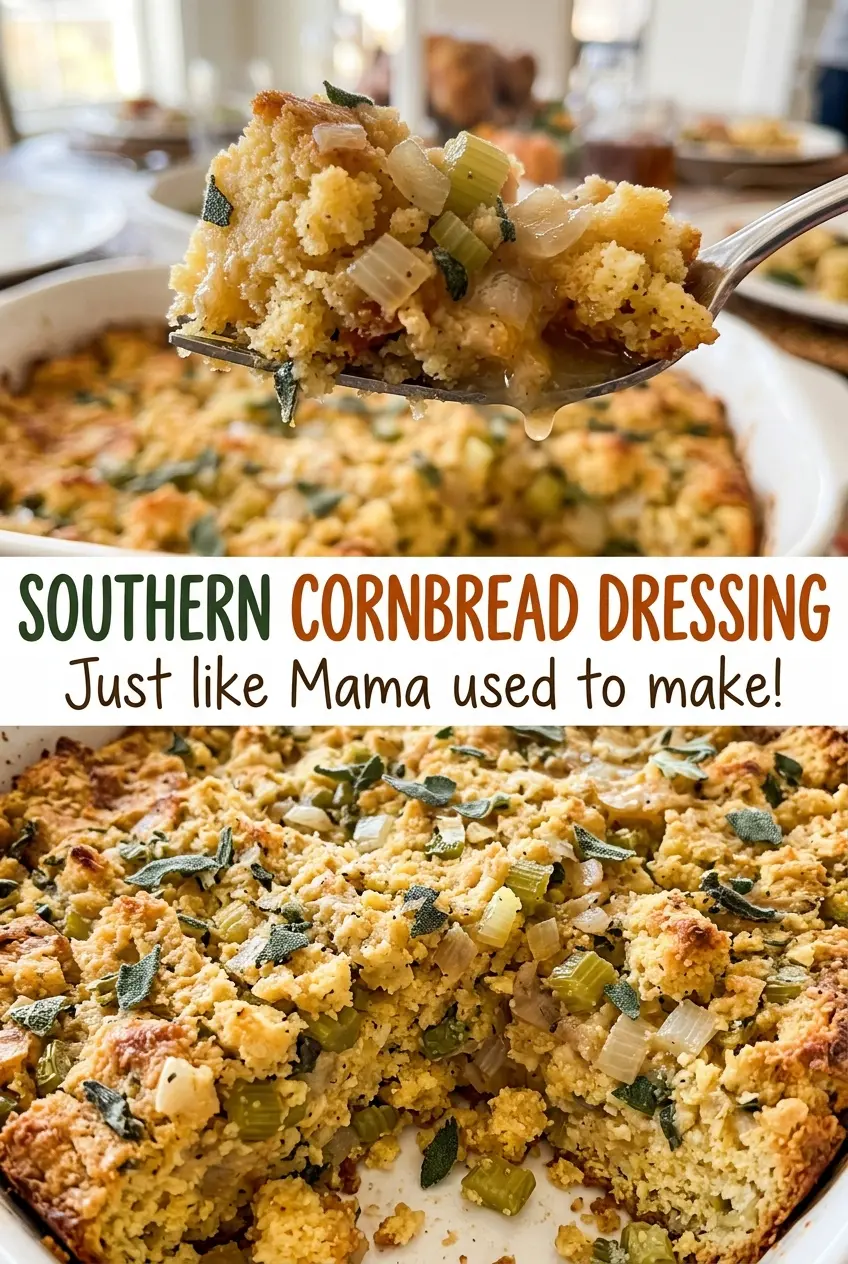
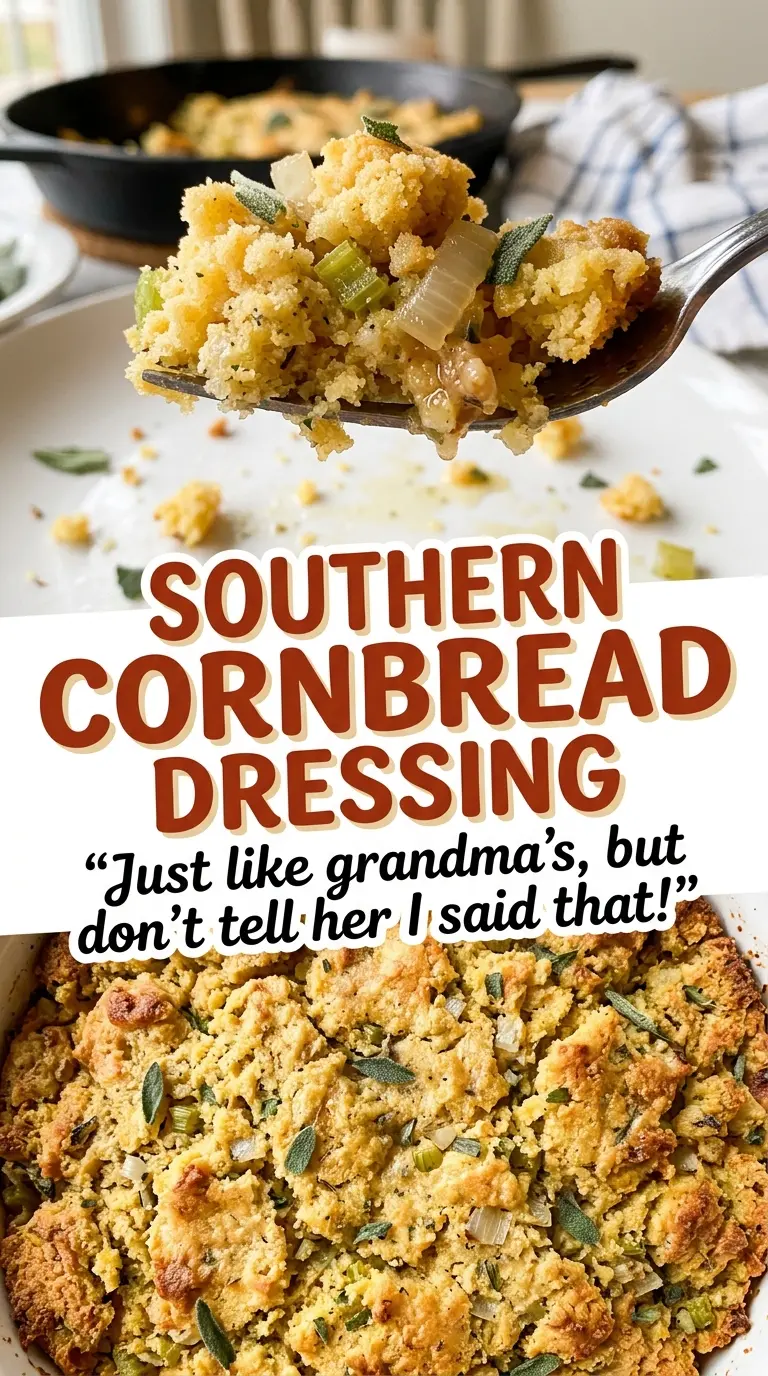
The cornbread brings a tender, corn-rich crumb, while the dried bread gives the mixture structure as it takes up broth. Sage and thyme season the whole pan without covering up the buttery vegetables. After baking, the top turns golden and the middle stays soft enough to scoop, with each bite carrying a little of both breads.
Kitchen Note
Let the cornbread cool completely before you crumble it. Warm pieces break down more easily when you fold in the broth, and the cooled crumb is much easier to work with.
Save this Southern Cornbread Dressing for a meal that calls for a golden top, tender center, and plenty of sage-scented flavor.
Why This Dressing Needs Two Kinds of Bread
Using cornbread and dried white bread together gives this pan a better balance than relying on either one by itself. The cornbread brings the distinctive corn flavor and soft, crumbly texture. Plain dried bread cubes are sturdier, so they absorb the broth without turning the whole dish into a uniform paste.
The texture depends on folding, not beating. Once the broth and eggs go in, mix just enough to moisten the bread throughout. You want the mixture evenly damp, not mashed smooth; a few visible pieces of cornbread and bread cubes are welcome. In the oven, the eggs help the dressing set, while the surface dries and turns golden.
- All cornbread can make a softer, more fragile pan. The white bread cubes add a little more structure.
- Seasoned bread cubes would change the balance. Plain dried cubes let the sage, thyme, and vegetables stay in charge.
- Even moisture matters more than vigorous mixing. Fold carefully so the bread takes up the broth without losing all its shape.
What Each Ingredient Adds to the Dressing
- Yellow cornmeal and all-purpose flour build a cornbread with both corn flavor and enough structure to crumble into the dressing. Fresh cornmeal has a cleaner, fuller taste; white cornmeal can stand in for yellow if you don’t mind a milder color and flavor. Keep the all-purpose flour for the most reliable tender crumb.
- Buttermilk gives the cornbread its tang and helps keep it tender. Use cultured buttermilk for the closest result; a thin milk substitute won’t give the same flavor or texture, so this is one ingredient I wouldn’t swap casually.
- Plain dried white bread cubes soak up the liquid while holding their shape. Another plain, dried white bread cube works, but seasoned cubes bring extra herbs and salt that can throw off the seasoning. Their dryness is useful here, so don’t replace them with soft fresh bread without drying it first.
- Rubbed sage and dried thyme give the dressing its familiar savory character. Rubbed sage is softer and more dispersed than finely ground sage, so use the form listed for a balanced seasoning. Check that both herbs still smell fragrant; old, flat herbs won’t contribute much once mixed into the bread.
- Onion, celery, and unsalted butter make the aromatic base. Finely chopping the vegetables helps them soften evenly and disappear into each scoop. Unsalted butter gives you more control over seasoning, and dividing it lets some coat the baking dish while the rest cooks with the vegetables.
- Low-sodium chicken broth and eggs supply moisture and help the dressing set. Low-sodium broth leaves room for the salt already in the cornbread, and vegetable broth is the practical swap for a vegetarian pan. The eggs bind the soaked bread; leaving them out would change the set and make the center much looser.
Build the Dressing in Four Stages
Mix and Bake the Cornbread
Heat the oven to 400°F and line the bottom of an 8-inch square baking pan with parchment. Whisk the cornmeal, flour, baking powder, and salt in one bowl, then whisk the buttermilk, egg, and vegetable oil in another. Stir the wet mixture into the dry ingredients only until no dry pockets remain; overmixing can make the cornbread tough. Bake for 20–25 minutes, until the top is golden and a toothpick inserted in the center comes out clean.
Cool and Crumble the Bread
Leave the cornbread in its pan for 10 minutes, then move it to a wire rack and let it cool completely. Reduce the oven temperature to 350°F and grease a 9×13-inch baking dish with 1 tablespoon of butter. Crumble the cooled cornbread into a large bowl, then add the dried white bread cubes, sage, thyme, and black pepper. Toss gently until the herbs are spread through the bread.
Soften the Vegetables in Butter
Melt the remaining 7 tablespoons of butter in a 12-inch skillet over medium heat. Add the finely chopped onion and celery, then cook for 8–10 minutes, stirring as they soften. The vegetables should be tender rather than browned; if they start taking on dark color, lower the heat. Fold the vegetables and all the butter from the skillet into the bread mixture.
Moisten, Bake, and Rest
Whisk the chicken broth and eggs together in a medium bowl, then pour them over the bread mixture. Fold until the bread is evenly moistened, without crushing it into a paste, and transfer everything to the prepared baking dish. Bake for 45–55 minutes, until the top is golden and the center reaches 160°F. Rest the dressing for 15 minutes before serving so the center settles and scoops more cleanly.
Two Helpful Ways to Adapt This Pan
Make It Vegetarian with Vegetable Broth
Replace the chicken broth with vegetable broth, keeping the same amount. The dressing stays moist and savory, though the broth may give it a slightly lighter, less poultry-forward flavor. Choose a low-sodium vegetable broth so the seasoning remains balanced.
Use Gluten-Free Bread and Baking Flour
For a gluten-free version, use a 1:1 gluten-free baking flour in the cornbread and plain gluten-free dried white bread cubes in the dressing; use broth labeled gluten-free as well. The cornbread may crumble more readily and the finished dressing may be a little more delicate, so fold gently.
Storage and Reheating
- Refrigerator: Cool and refrigerate leftovers within 2 hours. Keep them covered for 3–4 days; the top will soften as the dressing sits.
- Freezer: Freeze baked portions in an airtight container for up to 2–3 months. Thaw overnight in the refrigerator for more even reheating.
- Reheating: Cover the dish with foil and warm it in a 325°F oven until the center reaches 165°F. Leaving it uncovered the whole time can dry the edges before the middle is hot.
Questions That Come Up While Making Cornbread Dressing
Southern Cornbread Dressing
Ingredients
Equipment
Method
- Heat the oven to 400°F and line the bottom of an 8-inch square baking pan with parchment paper.
- Whisk the cornmeal, flour, baking powder, and salt in a medium bowl.
- In a separate bowl, whisk the buttermilk, egg, and vegetable oil, then stir the mixture into the dry ingredients just until no dry pockets remain.
- Pour the batter into the pan and bake for 20–25 minutes, until the top is golden and a toothpick inserted in the center comes out clean.
- Cool the cornbread in the pan for 10 minutes, then transfer it to a wire rack to cool completely.
- Reduce the oven temperature to 350°F and grease a 9x13-inch baking dish with 1 tablespoon of the butter.
- Crumble the cooled cornbread into a large bowl; add the bread cubes, sage, thyme, and black pepper and toss to combine.
- Melt the remaining 7 tablespoons butter in a 12-inch skillet over medium heat; add the onion and celery and cook for 8–10 minutes, until tender.
- Fold the cooked vegetables and butter into the cornbread mixture.
- Whisk the chicken broth and eggs in a medium bowl, pour over the cornbread mixture, and fold until evenly moistened.
- Transfer the mixture to the prepared baking dish and bake for 45–55 minutes, until the top is golden and the center reaches 160°F.
- Rest for 15 minutes before serving.
