
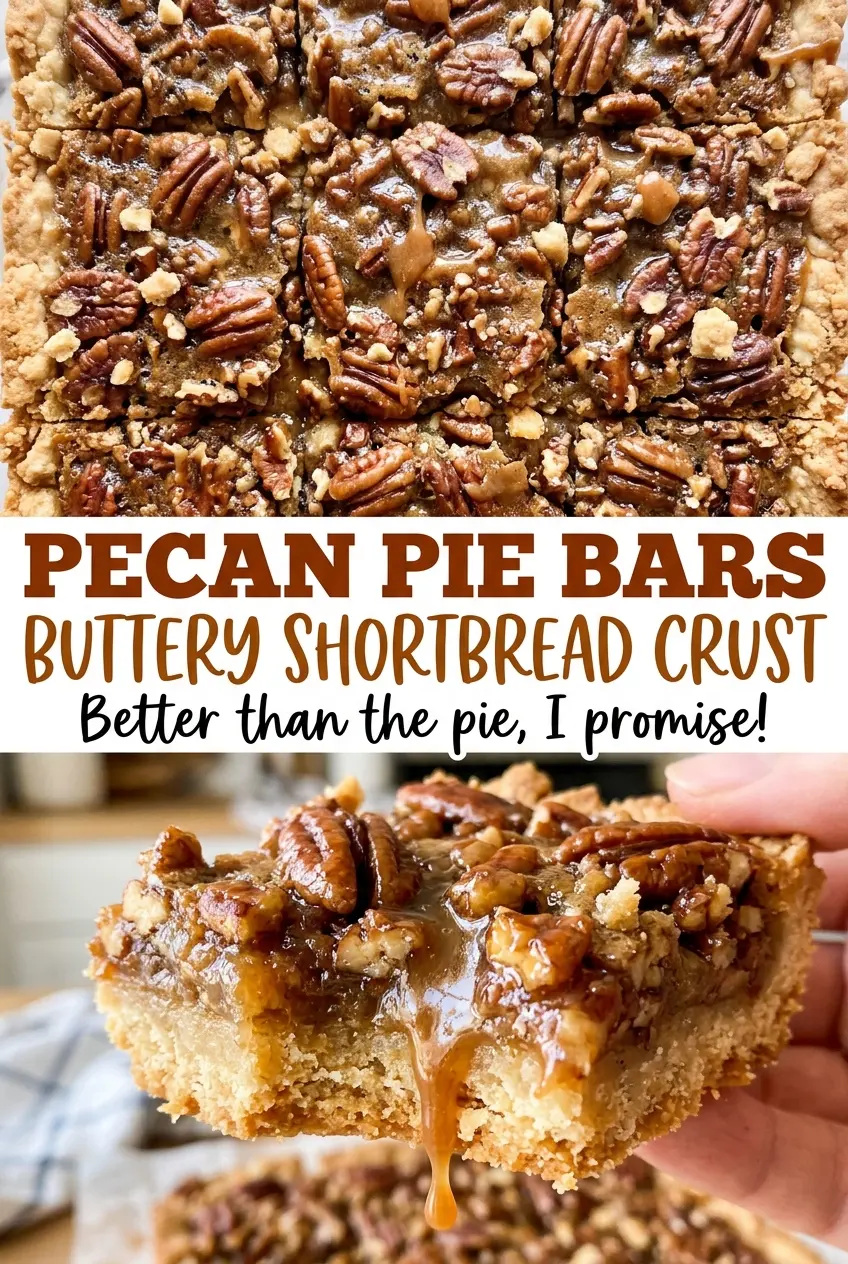
The shortbread edges should be just turning golden when the timer goes off; that’s the point where I pull the pan and add the filling. Waiting for the crust to cool first just stretches out the bake. These pecan pie bars with buttery shortbread crust layer a crisp, tender base under a sweet filling that sets into neat squares once it cools.
I press the crust mixture firmly enough that it holds together when pinched, but I don’t knead it into a smooth dough. That coarse, buttery texture is what bakes into a shortbread base instead of a dense, tough layer. The filling comes together in one bowl, and roughly chopped pecans give each bar plenty of crunch without making the top difficult to cut.
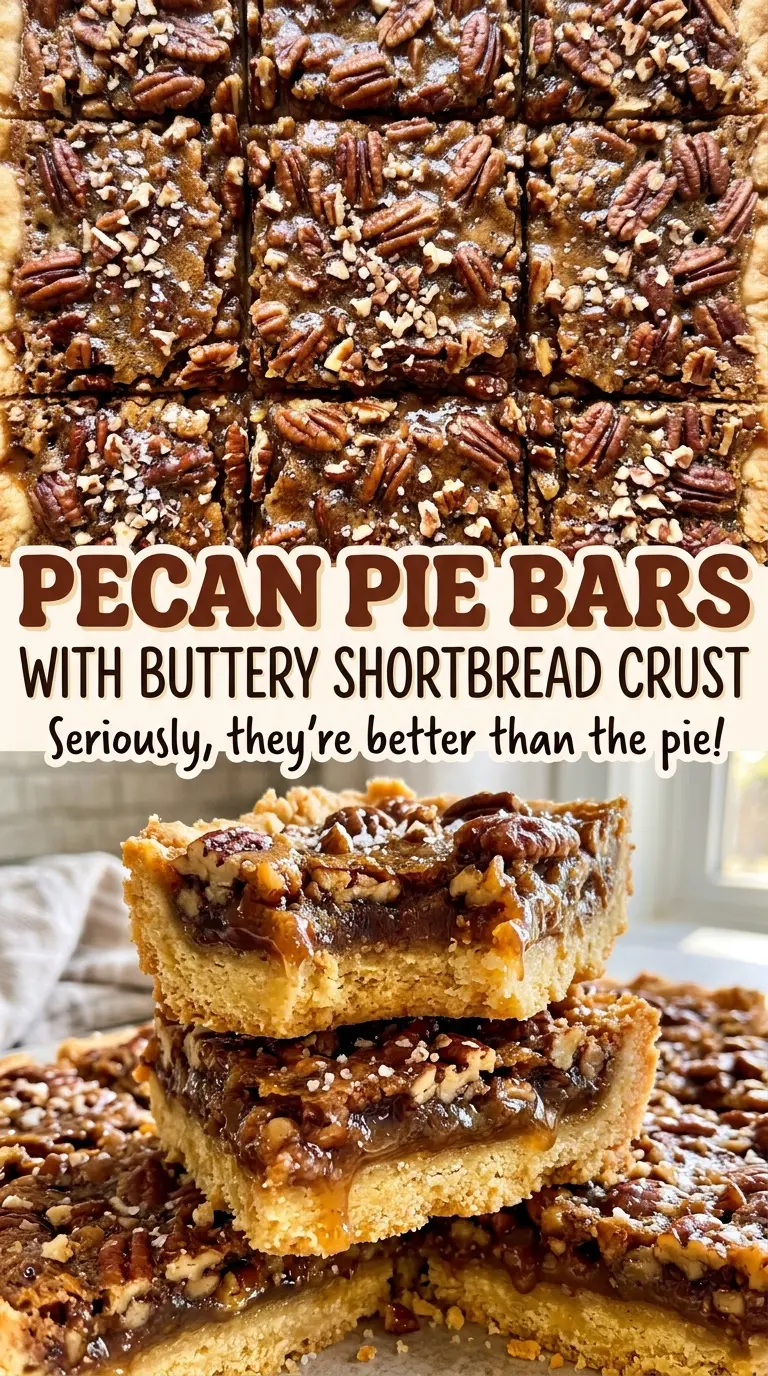
Give the bars time to cool completely before slicing. The filling needs that time to settle, and the shortbread is much less likely to crumble when you lift the slab from the pan. Once cut, each square has a clean buttery base beneath the glossy pecan layer.
Kitchen Note
Whisk the filling just until it looks smooth, then fold in the pecans. Vigorous whisking can leave extra bubbles on the surface, so there’s no need to beat air into it.
Save these pecan pie bars for a bake-ahead treat with crisp shortbread and a glossy, nut-filled top.
Why the Crust Needs to Be Baked Before the Pecan Filling Goes On
The filling is wet and syrupy, so it needs a crust that has already started to set. Baking the shortbread first gives the flour and butter time to form a firm base before the pecan mixture covers it. If you skip that first bake, the lower layer won’t have the same chance to firm up underneath the filling.
Watch the edges rather than waiting for the entire crust to turn deeply golden. They should be lightly golden after 18–22 minutes, while the middle can remain paler. That’s enough baking for this stage; the crust will go back into the oven under the filling for another 30–35 minutes.
The second bake has a different cue. The center should stop rippling when you gently shake the pan. It may still look soft, but the filling will continue to set as the bars cool. Taking the pan out when the center no longer moves helps avoid baking the pecans and edges longer than they need.
What the Butter, Syrup, and Pecans Bring to These Bars
- All-purpose flour — It gives the shortbread enough structure to support the sticky filling. A standard bag works well here; there’s no need for specialty flour. For a gluten-free batch, use a cup-for-cup gluten-free flour blend intended to replace all-purpose flour, as described below.
- Unsalted butter — Butter provides the crust’s rich flavor and tender, crumbly texture, and the melted butter helps the filling bake up smoothly. Use softened butter for the crust so it works into the dry ingredients evenly; melted butter won’t give you the same coarse-crumb mixture. A dairy-free baking stick is the most practical substitute, though the crust may be a little less rich.
- Light corn syrup — This gives the filling its smooth, chewy set. Light syrup keeps the flavor relatively neutral so the brown sugar and pecans come through. Maple syrup changes both the flavor and the way the filling sets, so I don’t recommend it when you want bars that slice neatly.
- Light brown sugar — Its mild molasses flavor complements the pecans without overpowering them. Break up any hard lumps before mixing so the filling doesn’t have little pockets of sugar.
- Pecans — Fresh pecans have a sweeter, buttery taste; if they smell stale or oily, that flavor will stand out in the finished bars. Roughly chop them so they’re distributed through the filling and easier to cut through. Walnuts can replace them in the same amount, with a slightly earthier taste.
How to Bake the Shortbread Base and Set the Pecan Layer
Prepare the pan and press the shortbread
Heat the oven to 350°F and line a 9×13-inch baking pan with parchment, leaving an overhang on the two long sides. Lightly coat the parchment with cooking spray so the baked slab releases cleanly. Whisk the flour, granulated sugar, and salt, then work in the softened butter until the mixture looks like coarse crumbs. Press it evenly into the pan; if it won’t hold together when pressed, keep working the butter through before baking.
Parbake until the edges turn golden
Bake the crust for 18–22 minutes, looking for lightly golden edges rather than a dark top. A uniformly pale crust may still be underbaked at the edges, while a deeply browned one can bake too far during the second trip to the oven. Use the visual cue along with the time range, since ovens don’t all brown at precisely the same pace. Keep the crust in the pan for the filling stage.
Pour on the filling and bake until it stops rippling
Whisk the eggs, corn syrup, brown sugar, melted butter, and vanilla until smooth, then stir in the roughly chopped pecans. Pour the mixture over the hot crust and return the pan to the oven for 30–35 minutes. Gently shake the pan to check the middle: the filling should be set and no longer ripple. If the center is still moving, give it more time rather than relying only on the edges.
Cool the slab before cutting
Leave the bars in the pan until completely cool, about 3 hours. The filling firms as it cools, which makes it easier to lift the whole slab using the parchment overhang. Set it on a cutting surface and slice into bars once it has cooled through. Cutting while the filling is warm makes the layers more likely to shift.
Three Smart Ways to Adapt These Pecan Pie Bars
Make the shortbread gluten-free
Replace the all-purpose flour with the same volume of a cup-for-cup gluten-free baking blend designed for baking. The crust may be a little more delicate, so press it evenly into the pan and let the finished slab cool fully before lifting it.
Use dairy-free baking sticks
For a dairy-free version, substitute unsalted dairy-free baking sticks for the butter in both the crust and filling, using the same amounts. Soften the portion for the crust and melt the portion for the filling as you would with butter. Choose a firm baking stick rather than a tub spread; the bars may have a slightly less buttery flavor.
Switch to dark corn syrup
Use dark corn syrup in place of light corn syrup in the same amount for a deeper, more molasses-like flavor and a darker filling. The bars will still have the same layered shortbread-and-pecan format, but the syrup’s richer taste will be more noticeable.
Storage and Reheating
- Refrigerator: Store the bars in an airtight container for up to 4 days. The filling firms when chilled, and the shortbread softens slightly.
- Freezer: Freeze the cut bars in a tightly sealed container, with parchment between layers, for up to 2 months. Thaw them in the refrigerator before serving.
- Reheating: These bars are best chilled or at room temperature, so reheating isn’t necessary. Microwaving can make the syrupy filling hot and soft before the shortbread warms evenly.
Questions That Come Up When Baking Pecan Pie Bars
Pecan Pie Bars with Buttery Shortbread Crust
Ingredients
Equipment
Method
- Heat the oven to 350°F.
- Line a 9x13-inch baking pan with parchment paper, leaving an overhang on the two long sides.
- Lightly coat the parchment with cooking spray.
- Whisk the flour, granulated sugar, and salt in a medium bowl.
- Work in the softened butter until the mixture looks like coarse crumbs and holds together when pressed.
- Press the crust mixture evenly into the prepared pan.
- Bake for 18–22 minutes, until the edges are lightly golden.
- Whisk the eggs, corn syrup, brown sugar, melted butter, and vanilla in a large bowl until smooth.
- Stir in the pecans.
- Pour the filling over the hot crust.
- Bake for 30–35 minutes, until the filling is set in the center and no longer ripples when the pan is gently shaken.
- Cool completely in the pan, about 3 hours.
- Lift out using the parchment and cut into bars.
