
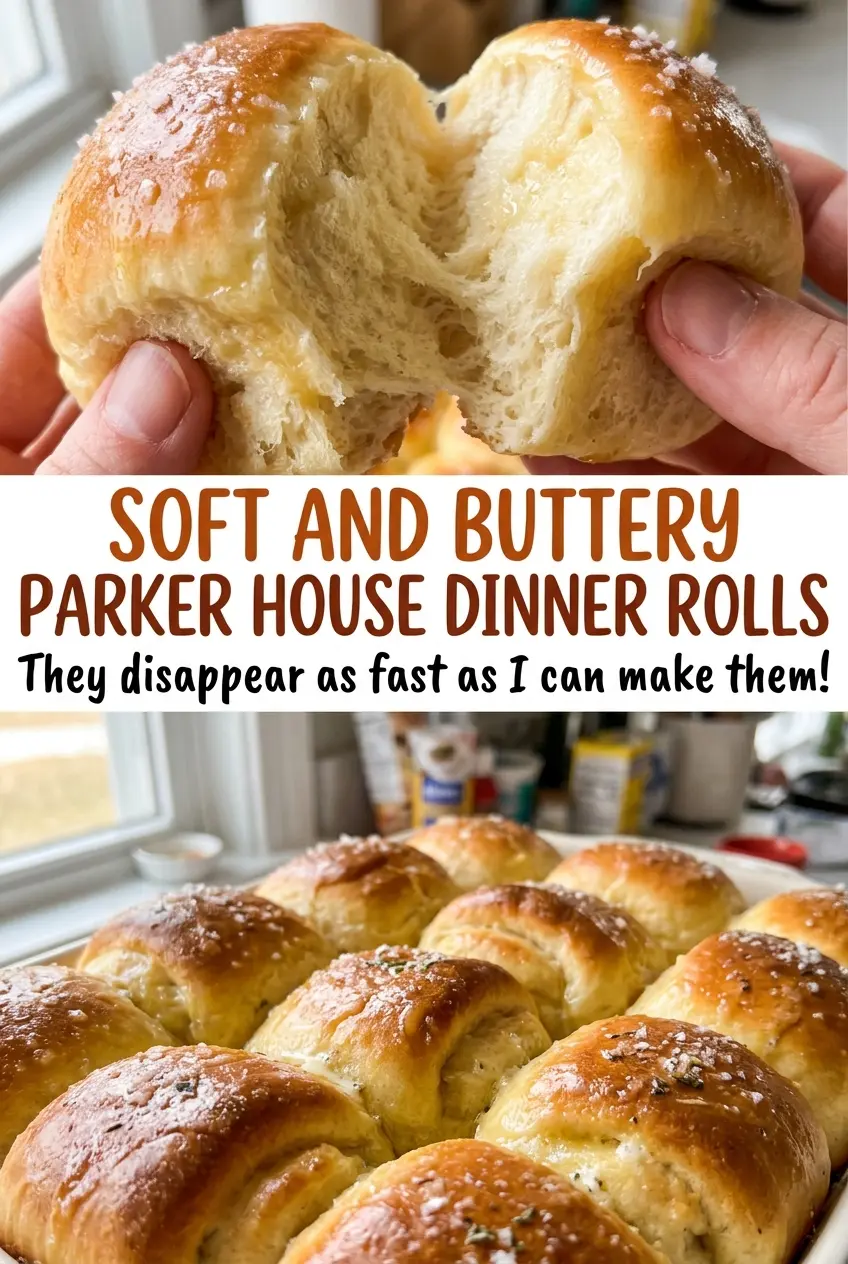
The folded edges are the first clue that these rolls are different from a plain dinner roll: each one opens just enough to show the soft, buttery center. I watch for golden tops as they bake, then brush on the last bit of butter while the rolls are still hot. These soft and buttery Parker House dinner rolls pull apart easily, with a tender crumb that belongs beside just about any dinner.
The fold isn’t there only for looks. Brushing one side of each oval with melted butter before folding leaves a delicate buttery layer inside, while pressing near the edge helps the shape hold. Keep the fold facing up in the pan, and you’ll get the familiar little opening on top instead of a roll that bakes into a smooth ball.
Give the dough time to rise until it’s visibly doubled and puffy; the clock is a guide, but the dough’s size tells you more. That patience pays off in rolls that feel light rather than tight, with soft sides that separate cleanly after baking.
Kitchen Note
Let the melted butter cool slightly before whisking it with the egg. Butter that’s still hot can cook little bits of egg before the dough even comes together, so I give it a few minutes while the yeast mixture foams.
Save these Parker House dinner rolls for a table that needs soft, buttery pull-apart bread with a lovely folded top.
Why the Fold Matters More Than a Perfectly Smooth Top
A Parker House roll gets its signature shape from a simple fold, not from elaborate shaping. The melted butter goes on one half of each oval, and the other half folds over it. That buttered seam gives the inside a tender, easy-to-pull-apart quality while leaving the top with a visible crease.
Press lightly near the edge to help the two sides stay together, but don’t mash the fold flat. Set each roll in the dish with its folded edge facing up. The rolls sit close together in four rows, so they support one another as they rise and bake; the sides stay soft while the exposed tops turn golden. A smooth round bun can still be lovely, but it won’t have the same folded shape or buttery seam. Here, the small shaping detail is what makes these rolls unmistakably Parker House.
The Milk, Egg, and Butter That Keep These Rolls Tender
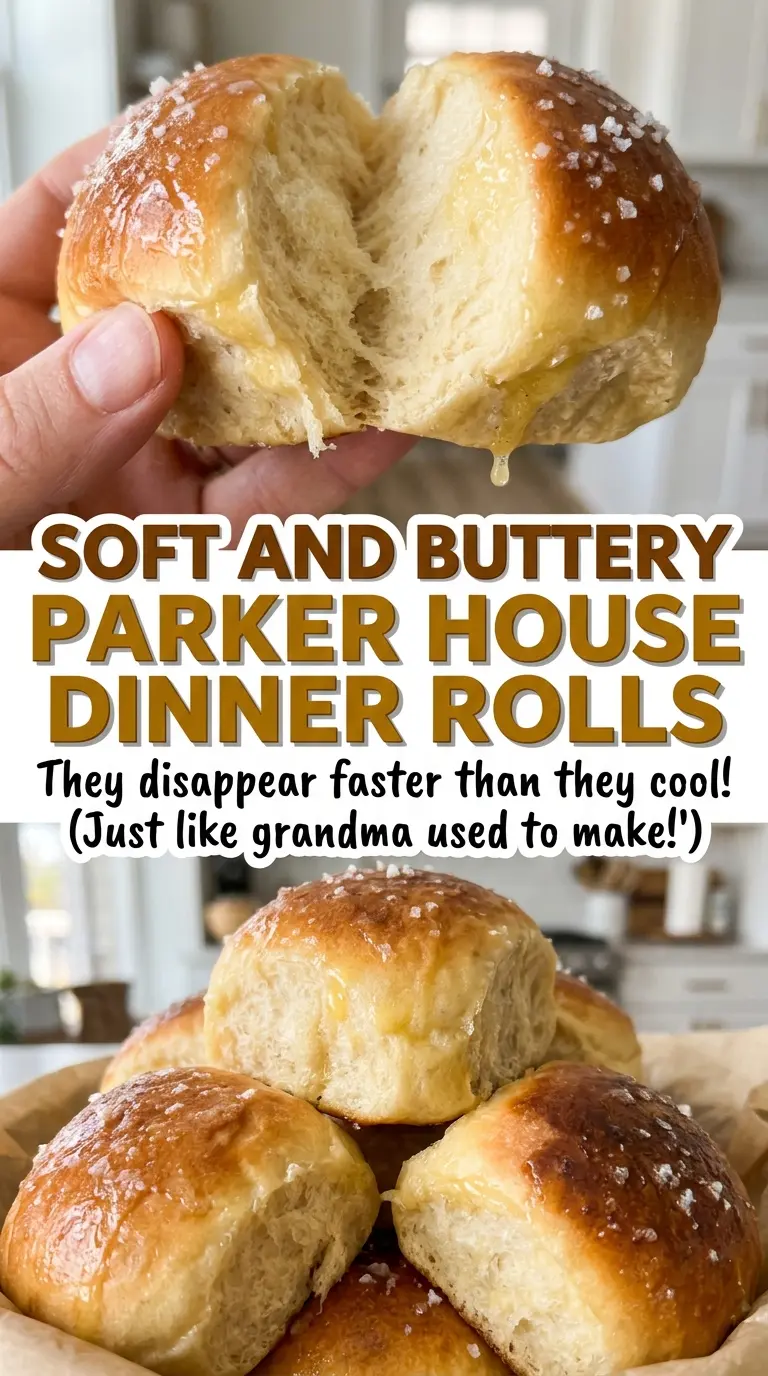
- Whole milk — Milk gives the dough richness and helps the baked crumb stay tender. Whole milk is the best fit for the plush texture; 2% milk works if that’s what you have, though the rolls will be a little less rich. Warm it to the stated range before mixing so the yeast can get started without being exposed to excessive heat.
- Active dry yeast and sugar — The sugar gives the yeast something to feed on and lends a gentle sweetness. Fresh yeast should foam after standing in the warm milk and sugar; that visible activity is useful reassurance before you add the other ingredients. Instant yeast can replace active dry yeast in the same quantity; it can be mixed with the flour instead, though you won’t get the same foam check.
- Egg — The room-temperature egg adds structure and tenderness, helping the rolls feel soft without crumbling. Take it out ahead of mixing so it blends smoothly with the butter and yeast mixture. There isn’t a simple egg-free swap that keeps the same texture, so I wouldn’t leave it out and expect an identical roll.
- Unsalted butter — Butter brings the characteristic rich flavor, and dividing it lets it work in the dough, the folded seam, and the finish. Standard grocery-store butter is fine; there’s no need for a specialty brand. Salted butter can stand in, but reduce the table salt slightly to keep the rolls from tasting too salty.
- All-purpose flour — It gives these rolls a soft, familiar crumb without making them as chewy as bread-flour rolls can be. A basic all-purpose flour works well; spoon it into the measuring cup and level it rather than packing it down, which can leave the dough too dry.
From Foamy Yeast to Folded Tops: The Roll-Building Stages
Wait for the yeast to foam
Stir the warm milk, active dry yeast, and sugar together in a large bowl, then leave the mixture for 5–10 minutes. It should look foamy on the surface, not just like milk with a few scattered bubbles. If it stays completely flat, check that the milk was within 105–110°F and that the yeast is fresh before moving on. Once it foams, whisk in the slightly cooled melted butter and room-temperature egg.
Knead until smooth, then let the dough double
Stir in the flour and salt until the mixture forms a shaggy dough, then knead it on a clean work surface for 8–10 minutes. At first it may look rough, but it should become smooth, elastic, and slightly tacky as you work it. Coat a large bowl lightly with cooking spray, turn the dough in the bowl to coat, cover it, and let it rise for 1–1 1/2 hours. Look for dough that has doubled in size rather than relying on the clock alone.
Shape each oval and keep the fold visible
Gently deflate the risen dough and divide it into 16 equal pieces. Roll each piece into an oval about 3 inches by 4 inches; try to keep the pieces similar so they rise and bake at the same pace. Coat a 9×13-inch baking dish with cooking spray, melt the butter for shaping, and brush it over half of each oval. Fold the unbuttered half over the buttered side, press lightly near the edge, and arrange the rolls fold-side up in four rows of four.
Let the rolls puff before baking
Cover the shaped rolls loosely and let them rise for 30–45 minutes, until they look puffy. Heat the oven to 375°F during the final 15 minutes of this rise. Bake for 18–22 minutes, watching for golden-brown tops rather than waiting for a pale surface to darken further. Melt the remaining butter, brush it over the hot rolls, and let them rest in the dish for 5 minutes before serving.
Three Ways to Change the Shape, Flour, or Dairy
Make the rolls dairy-free
Use an equal amount of unsweetened soy milk in place of the whole milk and dairy-free butter sticks in place of the butter. Keep the egg; this makes the rolls dairy-free, not egg-free. The crumb will still be soft, though the buttery flavor depends on the plant butter you choose.
Use a little whole-wheat flour
Replace 1/2 cup of the all-purpose flour with whole-wheat flour and keep the rest of the flour all-purpose. The rolls will have a nuttier taste and a slightly heartier crumb, with less of the cloud-soft texture of the all-white-flour version.
Shape them as round dinner rolls
For a round shape, roll the 16 portions into balls instead of ovals and arrange them in the prepared dish. Skip the buttered fold, since there’s no seam to fill. You’ll keep the soft, buttery dough but lose the distinctive Parker House crease.
Storage and Reheating
- Refrigerator: Bread stales faster in the refrigerator, so keep the rolls at room temperature if you’ll eat them within a couple of days. If you need to refrigerate them, seal them well and use within 3 days; expect a firmer crumb.
- Freezer: Once completely cool, wrap the rolls tightly and freeze in a freezer-safe bag for up to 2 months. Thaw them at room temperature while still wrapped.
- Reheating: For several rolls, cover them loosely with foil and warm in a 300°F oven for about 8–10 minutes. Avoid heating them uncovered for too long, which dries the edges before the centers warm through.
Questions That Come Up While Making Parker House Rolls
Soft and Buttery Parker House Dinner Rolls
Ingredients
Equipment
Method
- Stir the milk warmed to 105–110°F, yeast, and sugar together in a large bowl.
- Let the mixture stand for 5–10 minutes, until foamy.
- Melt 4 tablespoons of the butter and let it cool slightly.
- Whisk the melted butter and egg into the yeast mixture.
- Add the flour and salt and stir until a shaggy dough forms.
- Knead the dough on a clean work surface for 8–10 minutes, until smooth, elastic, and slightly tacky.
- Lightly coat a large bowl with cooking spray.
- Add the dough to the bowl and turn it to coat.
- Cover the dough and let it rise for 1–1 1/2 hours, until doubled in size.
- Gently deflate the dough and divide it into 16 equal pieces.
- Roll each piece into an oval about 3 inches by 4 inches.
- Lightly coat a 9x13-inch baking dish with cooking spray.
- Melt 2 tablespoons of the remaining butter.
- Brush the melted butter over half of each oval.
- Fold the unbuttered half over the buttered half and press lightly near the edge.
- Arrange the rolls fold-side up in the prepared dish in 4 rows of 4.
- Cover the rolls loosely and let them rise for 30–45 minutes, until puffy.
- Heat the oven to 375°F during the final 15 minutes of the rise.
- Bake for 18–22 minutes, until the rolls are golden brown.
- Melt the remaining 2 tablespoons of butter and brush it over the hot rolls.
- Let the rolls rest in the dish for 5 minutes before serving.
