
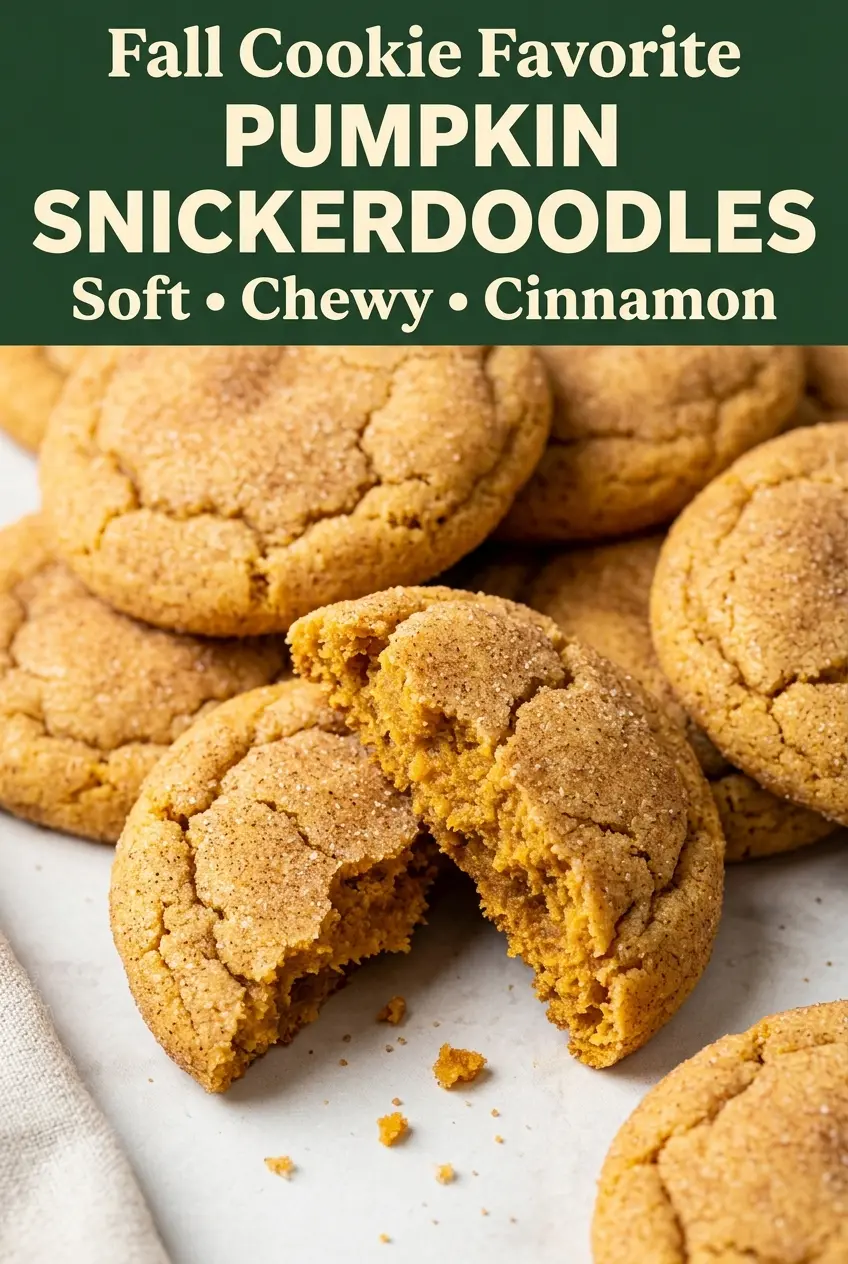
Pumpkin Snickerdoodles bake up soft in the middle, lightly crackled on top, and coated in that classic cinnamon-sugar shell that makes a snickerdoodle taste like a snickerdoodle. The pumpkin gives them a deeper, warmer flavor than a plain sugar cookie, but the texture stays chewy instead of cakey when the dough is mixed and chilled the right way. They’re the kind of cookie that disappears from the cooling rack faster than you expect.
The trick here is keeping the pumpkin in check. Pumpkin puree adds moisture, which is great for tenderness, but too much of it can turn these cookies fluffy and bread-like instead of chewy. That’s why this dough uses just an egg yolk, not a whole egg, and why the chill time matters — it helps the flour hydrate and keeps the cookies from spreading too much in the oven.
Below, I’ve laid out the small details that make the biggest difference, from the role of cream of tartar to the best way to get that cinnamon-sugar coating to stick evenly. If you’ve ever had pumpkin cookies bake up puffier than you wanted, the notes here will help you get the texture you were after.
The cinnamon sugar stayed on beautifully, and the centers were soft and chewy instead of cakey. I chilled the dough for 40 minutes like you said, and they held their shape perfectly.
Save these soft Pumpkin Snickerdoodles for the days when you want real pumpkin flavor, a chewy center, and that crackly cinnamon-sugar finish.
The Reason Pumpkin Snickerdoodles Stay Chewy Instead of Cakey
The biggest mistake with pumpkin cookies is treating pumpkin puree like it behaves the same way as butter or eggs. It doesn’t. Pumpkin brings water into the dough, and if the dough is too wet, the cookies puff up into little domes instead of baking with that soft, bendy center a good snickerdoodle should have. The flour amount here is tight enough to hold the cookies together without drying them out.
Cream of tartar matters just as much. It gives snickerdoodles their familiar tang and helps keep the crumb tender. Without it, you’ll still get a cinnamon-sugar cookie, but not that classic snickerdoodle texture that stays soft after cooling. The chill time is part of the structure, too — skip it and the dough will spread too fast before the edges set.
What Each Ingredient Is Actually Doing in This Dough
- Unsalted butter — Softened butter whips air into the dough, which gives the cookies lift before they set. Salted butter works in a pinch, but the texture is best when you control the salt yourself.
- Pumpkin puree — Use plain pumpkin puree, not pumpkin pie filling. Pie filling is already sweetened and spiced, which throws off both the texture and the balance of the cookie.
- Egg yolk — The yolk adds richness and chew without the extra water from a whole egg white. If you use a whole egg, the cookies will lean more cakey.
- Cream of tartar — This is the snickerdoodle ingredient that gives you the classic tang and soft bite. There isn’t a true one-to-one substitute, and that’s why it’s worth keeping in the dough.
- Warm spices — Cinnamon, nutmeg, and ginger support the pumpkin without making the cookies taste like pumpkin pie filling. The cinnamon also ties the dough to the coating so the flavor carries all the way through.
Building the Dough So the Cookies Don’t Lose Their Shape
Start with the butter and sugars
Beat the butter, granulated sugar, and brown sugar until the mixture looks lighter in color and fluffy around the edges of the bowl. That usually takes 2 to 3 minutes, not 30 seconds. If you stop too soon, the cookies bake up denser and flatter because you never built the structure that holds the dough together.
Mix in the pumpkin without overworking it
Add the pumpkin puree, egg yolk, and vanilla and mix until the batter looks smooth and cohesive. It may look slightly loose at this stage, and that’s fine. The dough comes together when the dry ingredients go in, so don’t keep mixing just because it still looks soft.
Stop as soon as the flour disappears
Whisk the dry ingredients separately, then add them gradually. Once the last streaks of flour disappear, stop mixing. Overmixing at this point develops more gluten than you want, which turns a tender cookie into something tougher and drier than it should be.
Chill before shaping and baking
Thirty to forty-five minutes in the fridge makes the dough easier to scoop and roll. It also firms up the butter so the cookies don’t melt across the pan before the centers are set. If your dough still feels sticky after chilling, let it sit another 10 minutes rather than adding extra flour, which can make the cookies dry.
Make Them Extra Spiced
Increase the cinnamon in the dough by 1/2 teaspoon and add a small pinch of cloves. That pushes the cookies closer to a classic pumpkin spice profile without burying the snickerdoodle tang from the cream of tartar.
Dairy-Free Version
Use a dairy-free baking stick in place of the butter. Pick one that’s meant for baking and not a soft tub spread, since the spreadable versions add more water and can make the cookies puffier and less chewy.
Gluten-Free Swap
Use a cup-for-cup gluten-free flour blend that includes xanthan gum. The cookies will still be soft and flavorful, but they may spread a little less and have a slightly more delicate edge.
Storage and Reheating
- Refrigerator: Store in an airtight container for up to 5 days. The cinnamon-sugar coating softens a little after the first day, but the cookies stay chewy.
- Freezer: These freeze well. Freeze baked cookies in a single layer, then move them to a bag or container for up to 2 months, or freeze the shaped dough balls and bake from frozen with 1 to 2 extra minutes.
- Reheating: Warm a cookie for 8 to 10 seconds in the microwave if you want it soft again. Any longer and the centers go sticky instead of tender.
Answers to the Questions Worth Asking
Pumpkin Snickerdoodles
Ingredients
Equipment
Method
- Beat softened unsalted butter, granulated sugar, and packed light brown sugar for 2–3 minutes until light and creamy.
- Add pumpkin puree, large egg yolk, and vanilla extract, then mix until smooth.
- Whisk all-purpose flour, cream of tartar, baking soda, ground cinnamon, ground nutmeg, ground ginger, and salt in a separate bowl.
- Add the dry ingredients gradually to the pumpkin mixture and mix just until a soft dough forms.
- Chill the dough for 30–45 minutes to make it easier to shape.
- Preheat the oven to 350°F and line two baking sheets with parchment paper.
- Combine granulated sugar and ground cinnamon for the coating in a shallow bowl.
- Scoop dough into 1½-tablespoon portions, roll into balls, and coat thoroughly in cinnamon sugar.
- Arrange cookies about 2 inches apart on the prepared baking sheets.
- Bake for 10–12 minutes until the edges are set while the centers remain soft.
- Cool for 5 minutes on the baking sheet, then transfer cookies to a wire rack to finish cooling.
