
Lemon ricotta pasta lands in that sweet spot between comfort food and something you can still eat when you want dinner to feel light. The sauce turns silky and clings to the noodles instead of sitting in a heavy layer underneath them, and the lemon keeps the whole bowl bright from the first bite to the last. It tastes clean, creamy, and just sharp enough to wake up your appetite.
The trick is treating the ricotta like the base of a proper sauce, not a topping. Warm pasta water loosens the cheese, helps the Parmesan melt in, and gives you that glossy texture that coats spaghetti or linguine without turning gluey. Fresh lemon zest does more work here than extra juice alone, because it brings the fragrant citrus note without making the sauce thin or aggressively sour.
Below, I’ve included the small details that keep this dish smooth instead of grainy, plus a few ways to adapt it if you want to make it dairy-free, add protein, or stretch it for leftovers.
The ricotta turned into a smooth sauce after the pasta water went in, and the lemon flavor was bright without being sour. My husband kept going back for “just one more bite” until the bowl was empty.
Lemon ricotta pasta stays silky, bright, and fast enough for a weeknight, so it’s worth pinning for the nights when you want something creamy without a heavy sauce.
The Reason Ricotta Stays Smooth Instead of Turning Grainy
Ricotta gets blamed for grainy sauces, but the problem usually starts with heat, not the cheese itself. If you dump cold ricotta straight onto hot pasta and stir hard over the burner, the proteins tighten up before the sauce has a chance to come together. The result is a broken, chalky coating instead of a glossy one.
Here, the pasta water does the heavy lifting. A little of it goes into the ricotta mixture first, which warms the cheese gently and helps the Parmesan dissolve into the sauce. Then the hot pasta finishes the job off the heat, where the starch in the water thickens everything just enough to cling to the noodles.
- Hot pasta water — This is the ingredient that turns ricotta from thick paste into a sauce. The starch in the water helps emulsify the cheese and oil, so don’t skip the reserve step.
- Whole-milk ricotta — This gives the sauce body and a softer texture. Part-skim ricotta works in a pinch, but it’s drier and can taste a little flat, so you may need a bit more pasta water to loosen it.
- Finely grated Parmesan — Use the real finely grated stuff here, not big shreds. It melts into the sauce more evenly and brings the salty, nutty finish that ricotta alone can’t provide.
- Fresh lemon zest and juice — Zest gives you the bright citrus aroma without thinning the sauce. Juice sharpens the flavor, but too much can make the dairy taste thin, so measure it instead of squeezing until it looks right.
Building the Sauce Before the Pasta Goes In
Whisk the Base Until It Looks Loose, Not Thick
Start with the ricotta, Parmesan, lemon zest, lemon juice, olive oil, garlic, salt, pepper, and red pepper flakes in a large bowl. The mixture should look rough and thick at first. Once you add about half a cup of hot pasta water, whisk until it turns creamy and pourable. If it still looks clumpy, keep whisking for a few seconds longer before adding the pasta.
Let the Pasta Finish the Sauce Off the Heat
Slide the drained pasta straight into the bowl while it’s still hot. Toss hard so the sauce coats every strand, but don’t put the bowl back over the burner. High heat is what makes ricotta sauces seize or split. Add more pasta water a splash at a time if the noodles look dry; the sauce should look glossy and clingy, not soupy.
Fold in the Herbs at the End
Add the basil and parsley after the pasta is coated. Fresh herbs lose their punch fast if they sit in hot sauce too long, and basil especially can darken and turn muddled. A quick toss at the end keeps the flavor fresh and the green color bright.
How to Adapt It Without Losing the Creamy Texture
Make it dairy-free
Use a thick dairy-free ricotta and a vegan Parmesan-style cheese. The sauce won’t have quite the same savory depth, so lean on lemon zest, garlic, and a little extra salt to keep it lively. The texture is still creamy, but it tends to need a touch more pasta water to loosen properly.
Add protein without muddying the sauce
Grilled chicken, shrimp, or crispy white beans all work well here. Add them at the very end so they stay distinct and don’t soak up the sauce before it hits the table. Heavy, heavily sauced proteins can flatten the lemon flavor, so keep the add-ins seasoned simply.
Use a different pasta shape
Spaghetti and linguine give you that classic silky coating, but short shapes like rigatoni or shells catch the sauce in all the ridges. If you swap shapes, keep the pasta water handy because short pasta often needs a little more loosening once it’s mixed with the cheese.
Storage and Reheating
- Refrigerator: Store leftovers in an airtight container for up to 3 days. The sauce firms up as it chills, so the pasta will look a little tighter the next day.
- Freezer: I don’t recommend freezing this one. Ricotta-based sauces usually separate after thawing, and the texture turns grainy.
- Reheating: Warm it gently in a skillet over low heat with a splash of water or milk, stirring until the sauce loosens again. The common mistake is blasting it in the microwave, which dries out the pasta and makes the cheese clump.
Questions I Get Asked About This Recipe
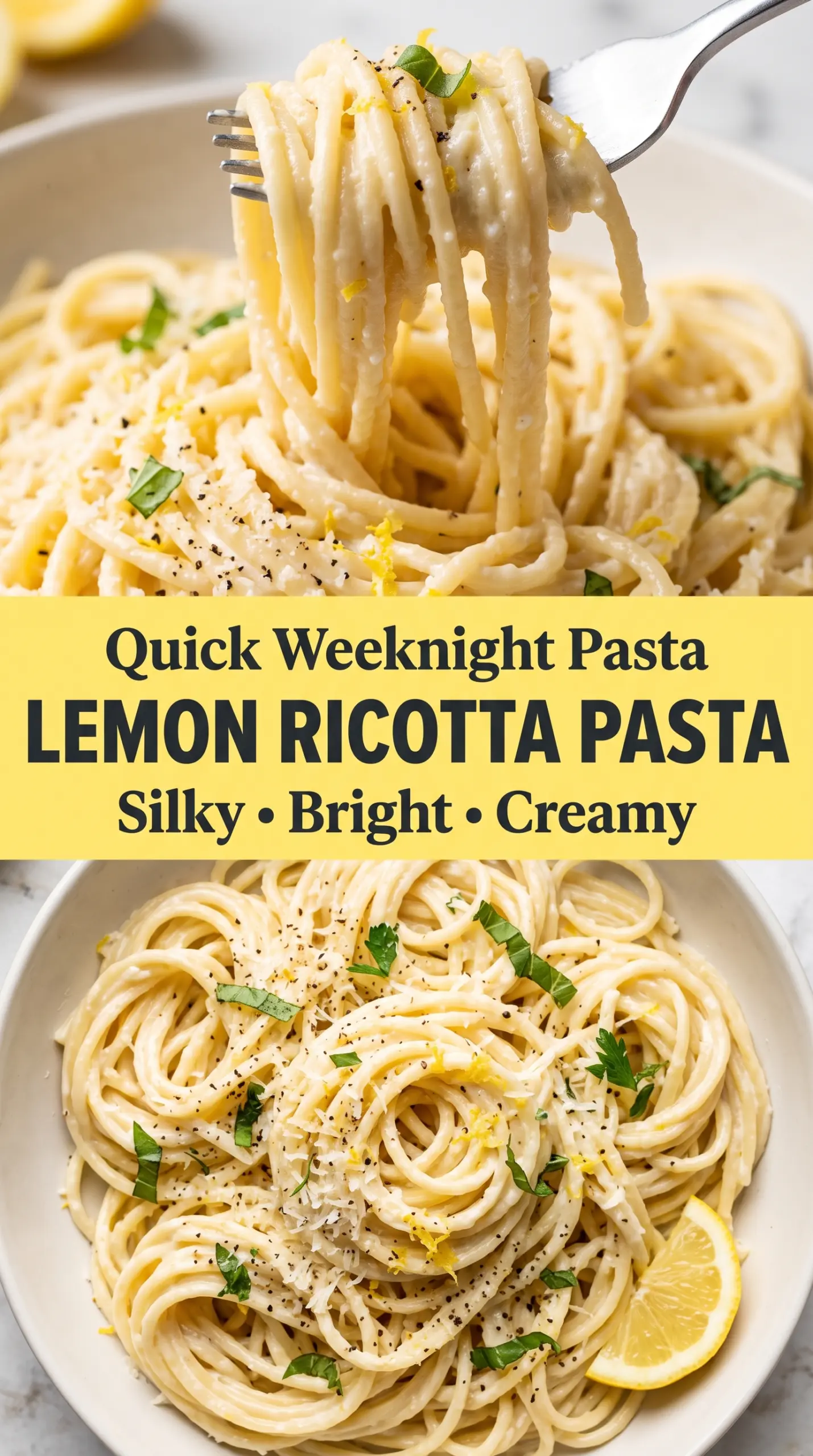
Lemon Ricotta Pasta
Ingredients
Method
- Bring a large pot of well-salted water to a boil. Cook the spaghetti or linguine until al dente according to the package directions.
- Before draining, reserve about 1 cup of pasta water. Set it aside so it’s ready for thinning the sauce.
- In a large bowl, whisk the ricotta, Parmesan, lemon zest, lemon juice, olive oil, garlic, kosher salt, black pepper, and red pepper flakes until evenly combined.
- Whisk in 1/2 cup of hot reserved pasta water. Continue whisking until the ricotta mixture becomes smooth and creamy.
- Add the hot drained pasta directly to the ricotta sauce. Toss vigorously until every strand is coated.
- If the sauce needs loosening, add additional pasta water gradually as needed. Toss again until the sauce looks silky and clings to the pasta.
- Fold in the torn basil and chopped parsley. Taste and adjust the lemon, salt, or black pepper if necessary.
- Serve immediately with extra Parmesan, fresh lemon zest, and lemon wedges. Keep it hot so the sauce stays creamy and not thickened.
