Graham cracker crust, silky cheesecake, and a ribbon of spiced pumpkin give these bars the kind of layered bite that disappears fast from a dessert tray. The crust stays firm enough to lift and cut cleanly, while the filling bakes dense and smooth instead of puffing up and cracking. Every square looks a little different, which is part of the charm.
The trick is keeping the cheesecake batter low and calm once the eggs go in. That keeps the filling from trapping too much air, so the bars set up with that tight, creamy texture instead of turning spongy. A little flour helps the filling hold its shape after chilling, and room-temperature dairy makes the batter blend without stubborn lumps.
Below, you’ll find the exact marbling pattern that gives you those distinct pumpkin ribbons, plus the best way to cut the bars cleanly after they’ve chilled. There’s also a storage note worth knowing if you want to make them a day ahead, which is honestly the best move for a dessert like this.
The pumpkin swirl stayed separate instead of blending into the cheesecake, and the bars cut into neat squares after chilling overnight. I loved that the crust didn’t get soggy at all.
Save these pumpkin swirl cheesecake bars for the dessert table when you want clean slices, a buttery crust, and a real pumpkin-to-cheesecake swirl.
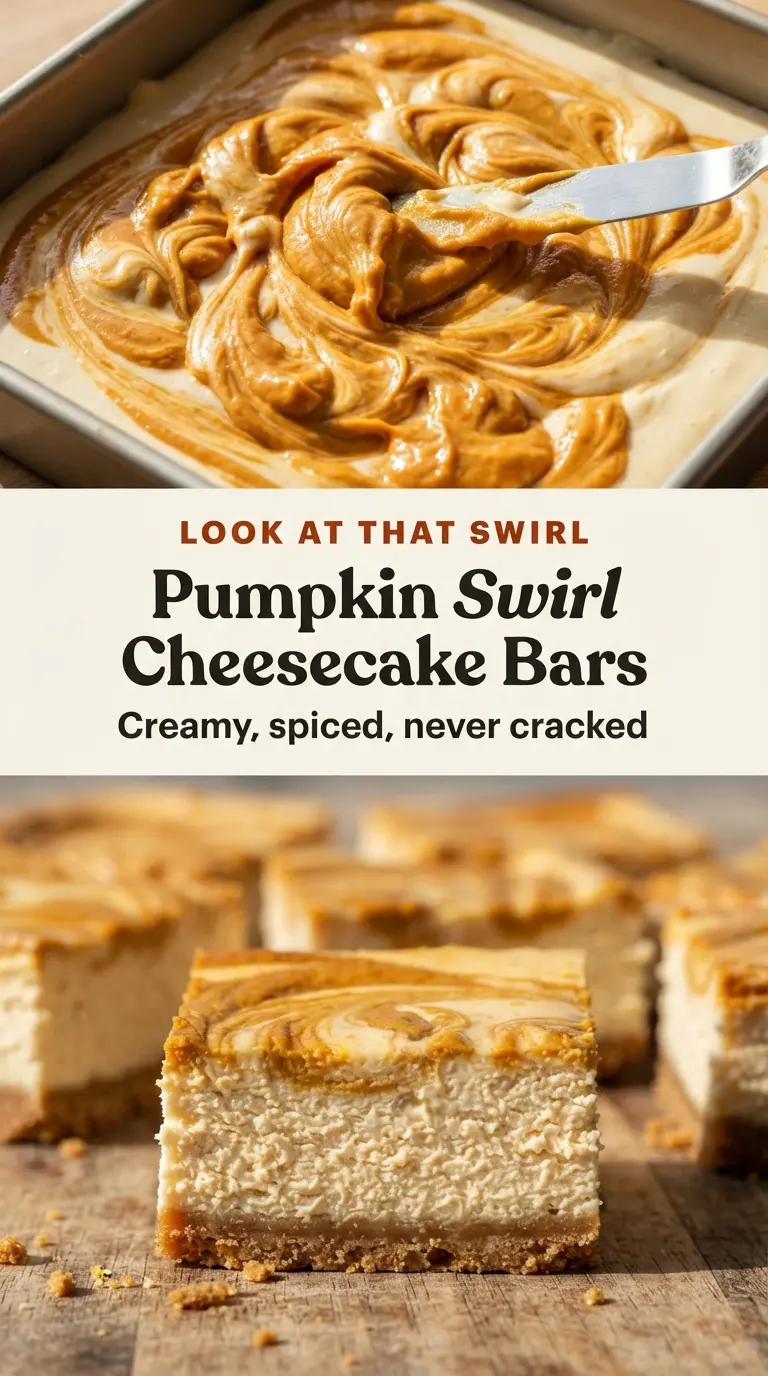
The Quiet Mistake That Makes Cheesecake Bars Crack
The filling doesn’t crack because of one dramatic mistake. It cracks because of small ones: batter that’s too airy, eggs mixed in too aggressively, or bars pulled from the oven before the center has enough structure. The good news is that cheesecake bars are more forgiving than a full cheesecake if you keep the batter smooth and the bake steady.
The other place people lose the texture is the crust. A loose crust turns crumbly when you slice, while a firmly packed and briefly baked crust gives the filling something solid to sit on. That first 10-minute bake does more than brown the crumbs. It sets them so they stay crisp under the creamy layer.
- Cream cheese — Full-fat cream cheese gives the bars that dense, silky bite. Lower-fat versions release more water and can bake up softer. Let it soften all the way to room temperature so it beats smooth without little lumps hiding in the batter.
- Sour cream — This loosens the filling just enough and adds a clean tang that keeps the bars from tasting flat. Plain Greek yogurt works in a pinch, but the texture will be slightly tighter and the flavor a little sharper.
- Pumpkin purée — Use plain canned pumpkin purée, not pumpkin pie filling. Pie filling already contains sugar and spices, which throws off both the sweetness and the swirl texture. If your purée looks wet, stir it well before measuring so the pumpkin layer doesn’t thin out.
- Graham crackers — Fine crumbs pack more evenly than coarse crumbs and give you a neater slice. If you swap in gingersnaps, reduce the sugar a bit because those cookies bring their own sweetness and spice.
Building the Swirl Without Blending It Away
Pressing and Pre-Baking the Crust
Mix the crumbs until they look like damp sand and hold together when you squeeze them. Then press them hard into the pan, especially into the corners, because a loose crust will crumble as soon as you cut the bars. Bake it just long enough to set the butter and deepen the flavor; if you skip that step, the crust can taste pasty under the filling.
Mixing a Smooth Cheesecake Base
Beat the cream cheese and sugar until the mixture is completely smooth before anything else goes in. Scrape the bowl a couple of times; little lumps of cream cheese won’t disappear later. Once the eggs are added, mix only until they vanish, because extra beating whips in air and that’s what gives you cracks and a puffy center that falls as it cools.
Marbling the Pumpkin Layer
Keep the pumpkin mixture thick and spoonable, not runny. Dollop it over the plain batter, then drag a knife through in long S-shapes without overworking the surface. Four or five passes is enough; if you keep swirling, the pumpkin disappears into the cheesecake and you lose the contrast that makes these bars look special.
Baking to the Right Jiggle
Pull the pan when the edges look set and the center still has a slow wobble, about 3 inches across. If the whole pan looks firm in the oven, it’s already overbaked and will turn dry after chilling. The bars finish setting as they cool, so trust the wobble instead of waiting for the top to look fully done.
Three Ways to Adjust These Bars Without Losing the Texture
Gluten-Free Crust
Swap the graham crackers for a gluten-free graham-style crumb or a gluten-free vanilla wafer crumb. Keep the butter the same amount, and press the crust firmly so it doesn’t drift apart when sliced. The filling already works as-is, so the crust is the only part that needs changing.
Dairy-Free Version
Use a dairy-free cream cheese that bakes well and a plant-based butter for the crust. The texture will be a little softer and less rich than the original, but the bars will still slice neatly after a full chill. Choose a brand with a neutral flavor so the pumpkin and spice still lead.
Extra-Spiced Pumpkin Swirl
Add another 1/4 teaspoon cinnamon and a pinch more cloves to the pumpkin portion if you want a bolder spice bite. Don’t increase the pumpkin purée much beyond what’s listed, or the swirl gets loose and starts sinking into the plain batter. The goal is a distinct orange ribbon, not a second custard layer.
Storage and Reheating
- Refrigerator: Store covered for up to 5 days. The bars actually cut cleaner after a night in the fridge.
- Freezer: They freeze well. Wrap individual bars tightly, then freeze in a container for up to 2 months. Thaw overnight in the refrigerator so the crust stays intact.
- Reheating: These bars are meant to be served chilled, not warmed. If they sit out too long, the filling softens and the clean edges start to slump, so return leftovers to the fridge as soon as possible.
Answers to the Questions Worth Asking
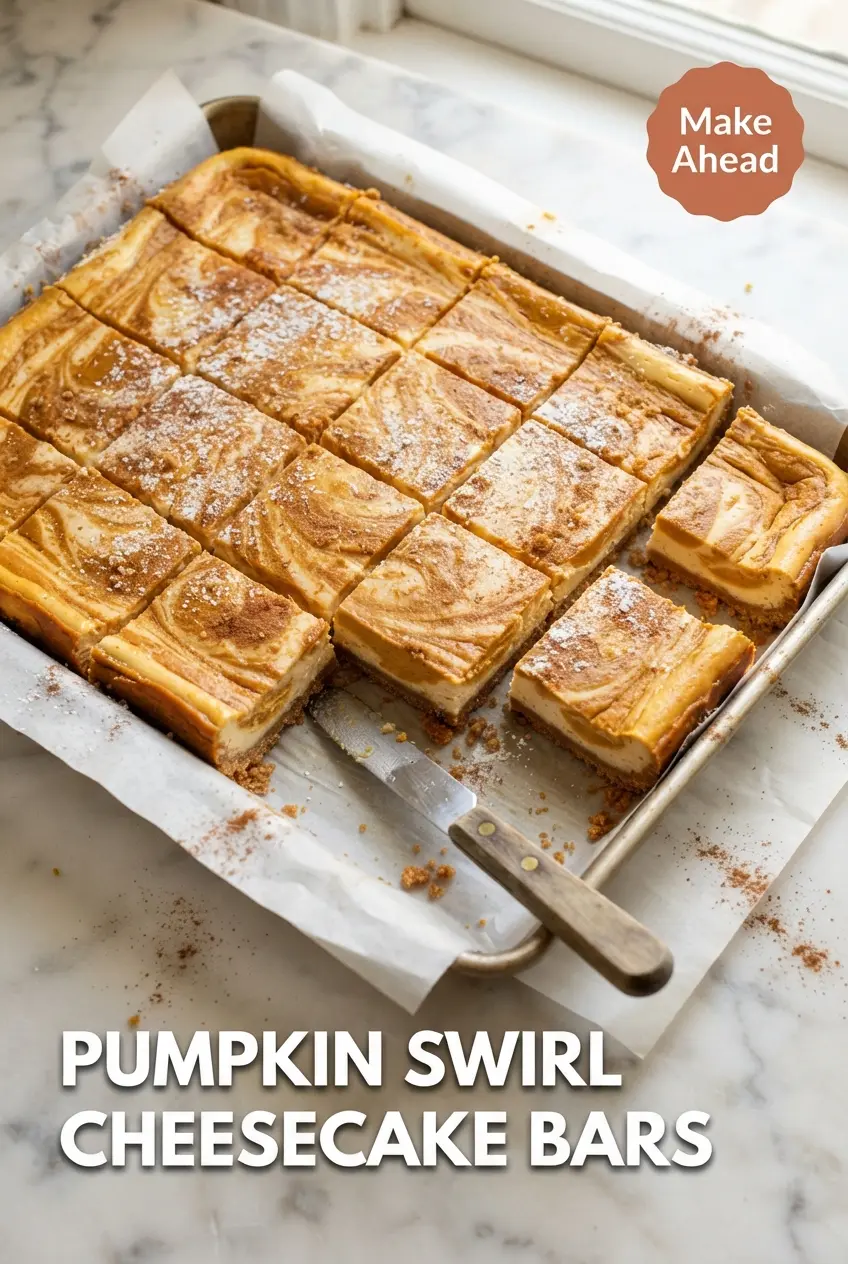
Pumpkin Swirl Cheesecake Bars
Ingredients
Equipment
Method
- Heat the oven to 325°F. Line a 9x13-inch pan with parchment, leaving an overhang on the long sides for lifting the bars out later.
- Stir the graham cracker crumbs, granulated sugar, melted butter, and salt until the mixture looks like damp sand and holds together when pressed.
- Press the crumbs firmly into the bottom of the pan using the flat bottom of a measuring cup, then bake for 10 minutes.
- Cool the crust for 15 minutes while you make the filling.
- Beat the softened cream cheese and sugar on medium for 3 minutes, scraping the bowl twice, until completely smooth with no lumps.
- Beat in the sour cream, then add the eggs one at a time on low speed, mixing just until each disappears.
- Stir in the vanilla, flour, and salt until just combined.
- Scoop 1½ cups of the cheesecake batter into a separate bowl and whisk in the pumpkin purée, brown sugar, cinnamon, ginger, nutmeg, and cloves until smooth and deeply orange.
- Pour the plain cheesecake batter over the cooled crust and smooth the top.
- Dollop spoonfuls of the pumpkin batter across the surface, then drag a butter knife through them in long S-shaped passes to marble, stopping after 4 to 5 passes to keep swirls distinct.
- Bake at 325°F for 38–45 minutes, until the edges are set and puffed and the center 3 inches still wobble slightly when you nudge the pan.
- Cool completely in the pan for about 2 hours, until room temperature.
- Chill at least 4 hours or overnight, until firm for clean cutting.
- Lift the bars out using the parchment overhang and cut into 24 bars with a warm knife, wiping the blade between cuts.
