
Red wine braised beef stew earns its place on the dinner table because the beef turns spoon-tender while the broth takes on that deep, slow-cooked edge you only get from patience and a good pot. The carrots soften into the braise without disappearing, the potatoes hold their shape, and the red wine gives the whole dish a savory backbone that tastes richer than the ingredient list looks on paper.
The difference between a decent stew and a memorable one starts with browning. Those dark crusty bits on the beef and the bottom of the pot are not incidental — they’re the base of the sauce. The wine deglazes all of that into the broth, and a little flour helps the liquid settle into a silky, clingy consistency instead of turning thin and flat.
Below, you’ll find the timing that keeps the beef from tightening up, the order that protects the vegetables, and a few swaps that work when you need to adapt the pot without losing the character of the dish.
The beef was fork-tender and the broth thickened into a rich gravy without getting gluey. I loved that the potatoes held together and the wine flavor mellowed into something deep and cozy by the end.
Save this red wine braised beef stew for the nights when you want fork-tender beef, rich broth, and a pot that tastes even better the next day.
The Browning Stage Is Where the Stew Gets Its Backbone
If the beef goes into the pot pale, the finished stew tastes flat no matter how long it simmers. A deep crust on the meat gives you browned flavor that carries through the broth, and those caramelized bits on the bottom are worth scraping loose when the wine goes in. Browning in batches matters here because crowded meat steams before it sears, and steamed beef never gives the same depth.
The other place people lose flavor is in the quick steps before the liquid goes in. Tomato paste needs a minute in the heat so it darkens slightly and stops tasting raw. Flour should coat the vegetables and cook for a moment before the wine is added, or the stew can taste dusty instead of smooth.
What Each Ingredient Is Actually Doing in This Stew
- Beef chuck roast — This cut has enough connective tissue to turn tender during a long braise. Lean stew meat dries out faster and won’t give you the same silky texture in the finished pot.
- Dry red wine — Use something you’d drink, but not an expensive bottle. It brings acidity and depth, and the alcohol cooks off as the liquid reduces, leaving behind a rounder, more savory base.
- Beef broth — This carries the braise and keeps the wine from tasting sharp. If your broth is salty, hold back a little on seasoning until the stew has simmered and reduced.
- Tomato paste — It adds body and a subtle sweetness that balances the wine. Cooking it briefly in the pot makes a noticeable difference in how integrated the sauce tastes.
- Baby potatoes — Their waxy texture helps them keep their shape after the long simmer. If you use russets, they’ll break down and thicken the broth more, which changes the stew from chunkier to softer.
Building the Braise So the Beef Stays Tender
Getting the Crust on the Beef
Pat the beef dry before it touches the oil. Moisture is the enemy of browning, and wet surfaces start steaming right away. Let each batch sit undisturbed until the bottom releases on its own and the crust looks deep brown, not just tan.
Softening the Vegetables and Toasting the Tomato Paste
Cook the onions and carrots until the onions turn translucent and the edges start to pick up a little color. That gives the stew a sweeter, fuller base. Stir in the garlic and tomato paste next, and cook just until the mixture smells rich and slightly caramelized; if the garlic browns hard, it turns bitter.
Reducing the Wine Before the Long Simmer
Pour the wine in and scrape the bottom of the Dutch oven while it bubbles. Let it simmer for several minutes so the harsh edge cooks off and the liquid shrinks a bit. If you add the broth too soon, the wine stays louder and the stew can taste sharp instead of layered.
Finishing the Braise in Stages
Cover the pot and let the beef go low and slow until it starts to give when you press it with a spoon. Add the potatoes later so they don’t collapse before the beef is ready. The peas go in at the end because they only need enough heat to turn bright and tender; any longer and they lose their color and pop.
How to Adapt This for the Pantry You Have
Dairy-Free and Naturally Gluten-Free as Written
This stew doesn’t rely on cream or butter, so there’s no dairy to work around. The only ingredient to watch is the flour; if you need the dish gluten-free, replace it with an equal amount of cornstarch mixed with a little cold broth at the end, or use a gluten-free all-purpose blend for the browning step. The texture will be slightly different, but the stew still ends up glossy and full-bodied.
No Wine, Still Deep and Savory
If you don’t want to cook with wine, replace it with more beef broth plus 1 tablespoon red wine vinegar or balsamic vinegar. You lose some of the rounded complexity that wine brings, but the vinegar gives back the brightness the stew needs so it doesn’t taste heavy.
Swap the Potatoes for a Lower-Carb Version
Cauliflower florets can stand in for the potatoes if you want a lighter, lower-carb stew. Add them during the final 20 minutes so they stay intact instead of turning mushy. The stew will taste a little leaner, but the braised beef and wine broth still carry the dish.
Storage and Reheating
- Refrigerator: Store in an airtight container for up to 4 days. The broth thickens as it chills, so it will look richer the next day.
- Freezer: It freezes well for up to 3 months. Cool completely first, then freeze in portions; the potatoes may soften a little after thawing, but the flavor holds up.
- Reheating: Warm it gently on the stove over medium-low heat with a splash of broth if needed. A hard boil can tighten the beef and break the potatoes apart, so go slow and stir only enough to keep the bottom from sticking.
Answers to the Questions Worth Asking
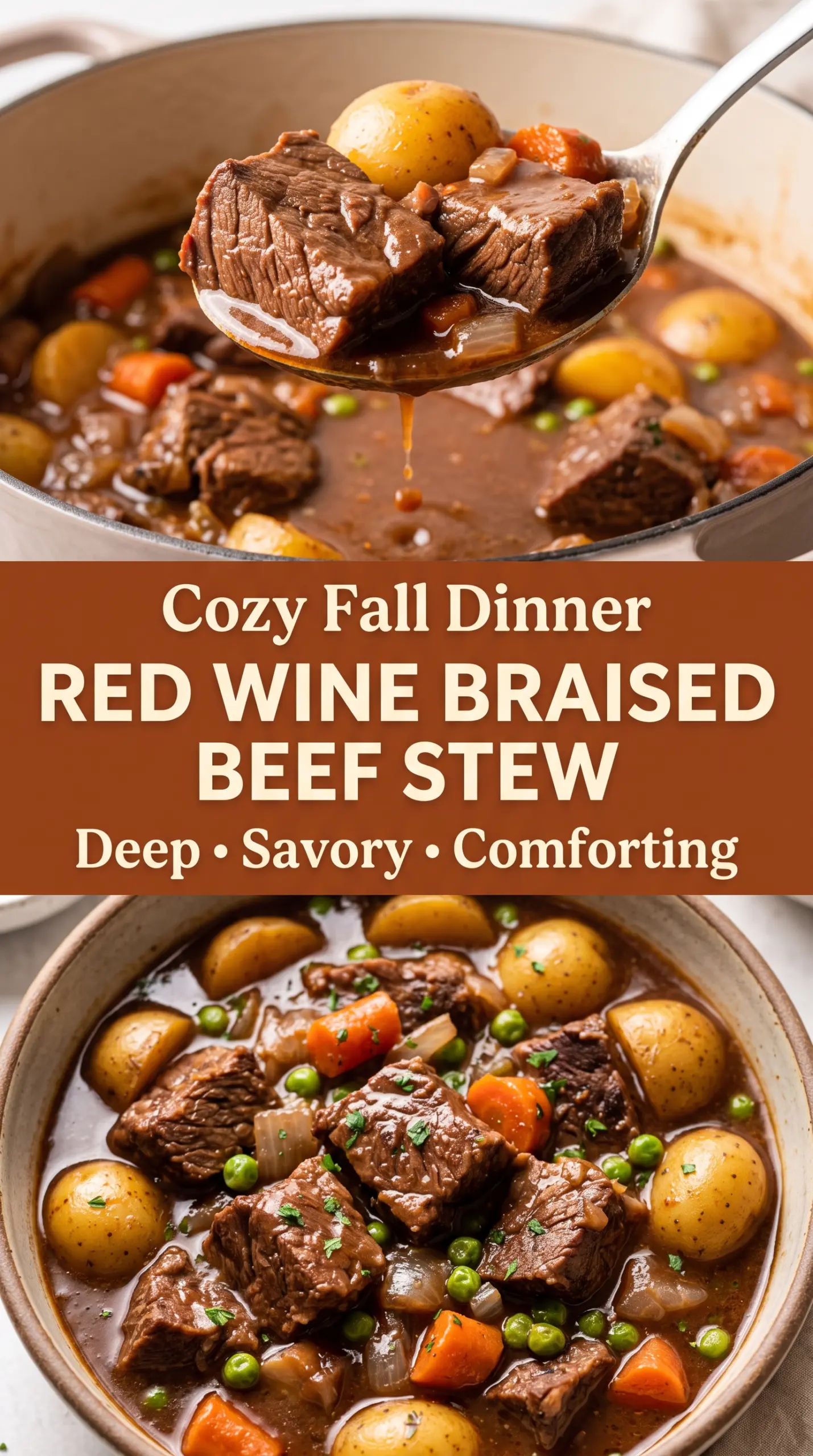
Red Wine Braised Beef Stew
Ingredients
Equipment
Method
- Preheat the oven to 325°F. Pat the beef chuck roast dry, then season it with kosher salt and black pepper.
- Heat 2 tbsp olive oil in a large Dutch oven over medium-high heat. Brown the beef in batches for 3–4 minutes per side until a deep golden crust develops, then transfer to a plate.
- Add the remaining 1 tbsp olive oil to the Dutch oven. Cook the yellow onion and carrots over medium heat for 5–6 minutes until they begin to soften.
- Stir in the garlic and tomato paste. Cook for 1 minute until fragrant, scraping up any browned bits.
- Sprinkle in the all-purpose flour and stir for another minute. This should form a thick paste on the vegetables.
- Pour in the dry red wine while scraping the browned bits from the bottom of the Dutch oven. Simmer for 4–5 minutes until the wine reduces slightly.
- Add the beef broth, Worcestershire sauce, dried thyme, dried rosemary, and bay leaves. Return the browned beef and its juices to the Dutch oven.
- Cover and braise in the oven at 325°F for 1½ hours. The stew should be actively simmering and the beef will start to break down.
- Add the baby potatoes, then cover again and braise at 325°F for 45–60 minutes. Cook until the beef is fork-tender and the potatoes are cooked through.
- Stir in the frozen peas. Cook uncovered for 5 minutes until the peas are heated and the broth is rich and slightly thickened.
- Remove the bay leaves, then sprinkle with fresh parsley and serve warm. Serve immediately while the stew is hot.
