
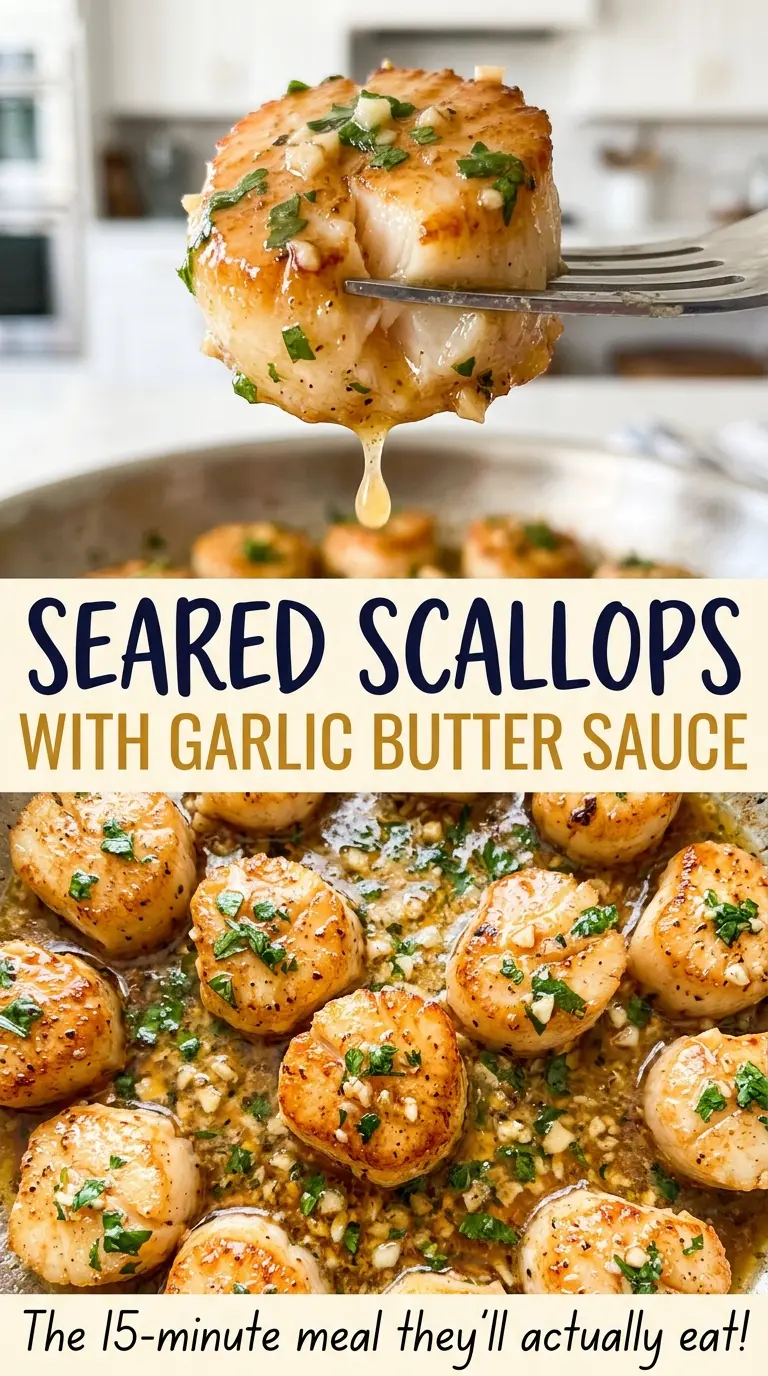
Scallops have a short window between tender and tough, and their mild sweetness leaves little room to hide a missed detail. For this version, I wanted a browned outside, a soft center, and a buttery garlic sauce that brightens the seafood instead of burying it. Seared scallops with garlic butter sauce brings all three together with a short ingredient list.
Dry-packed sea scallops are the starting point I reach for because they sear more reliably than scallops treated with extra moisture. I also cook them in two batches, which gives each one room to brown instead of leaving the pan crowded and steamy. It’s a small bit of patience for a much better crust.
The sauce comes together in the same skillet, after the scallops are cooked. Garlic gets only a brief turn in the butter, then lemon juice and parsley finish it with a fresh, savory edge. Spoon it over while it’s warm, and every scallop gets a glossy coat without losing its own delicate flavor.

Kitchen Note
That little side muscle is easy to overlook; peel it away before you pat the scallops dry. It cooks up noticeably chewier than the scallop itself, so taking a moment now gives you a more tender bite.
Save these seared scallops with garlic butter sauce for a seafood dinner with golden edges and a bright, buttery finish.
Why a Crowded Skillet Steals the Scallops’ Golden Crust
A skillet full of scallops releases moisture faster than it can evaporate. Instead of making firm contact with the hot pan, the pieces crowd together and simmer in that liquid. You’ll still cook them through, but the deep golden surface that makes a good sear distinctive is much harder to get.
Cooking half at a time gives each scallop its own patch of hot skillet. That space matters more than adding extra oil or turning the heat higher. The second batch gets fresh oil, and the first batch waits on a plate while you finish the rest. It’s a simple way to keep the sear consistent from the first scallop to the last.
A 12-inch skillet gives you room to arrange the scallops without packing them in. If the pieces are touching all over, hold some back for the next round rather than forcing them into the pan. The goal is a single, uncrowded layer with open skillet visible between scallops.
Why Dry-Packed Scallops Are Worth Seeking Out
- Dry-packed sea scallops — They haven’t been treated with added moisture, so they’re a better choice for a crisp sear. Look for scallops that smell clean and mild; avoid any with a strong fishy odor. If only wet-packed scallops are available, they’ll be harder to brown and can release more liquid.
- Neutral oil — A neutral-tasting oil keeps the scallops’ sweetness in front and suits the medium-high heat used for searing. Any oil labeled neutral works; a strongly flavored oil would compete with the butter, garlic, and lemon.
- Unsalted butter — It gives the sauce its rounded, rich base while leaving the scallops’ seasoning easy to control. Salted butter works in a pinch, but the finished sauce will taste saltier, so keep that difference in mind when serving.
- Garlic — Fresh cloves, minced just before cooking, give the sauce a brighter aroma than jarred minced garlic. Jarred garlic can stand in when that’s what you have, though its flavor is usually less sharp.
- Lemon juice — Lemon cuts through the butter and keeps the sauce from feeling heavy. Freshly squeezed juice tastes brighter; bottled juice works, but its flavor can be flatter or more pronounced depending on the brand.
- Fresh parsley — Chopped parsley brings a clean, green finish that dried parsley can’t quite match. If you only have dried, crush it between your fingers before stirring it in; it’ll lend an herbal note, though not the same fresh lift.
The Hot Skillet, Two Batches, and a 30-Second Sauce
Dry and Season the Scallops
Pat the scallops very dry before seasoning them evenly with kosher salt and black pepper. Moisture left on the surface can interfere with the browning you’re after, so use paper towels and press gently around the sides as well. Keep the seasoned scallops close by while the skillet heats.
Heat the Skillet Before the Oil
Set a 12-inch skillet over medium-high heat and let it get hot before adding the first tablespoon of neutral oil. Swirl the oil to coat the cooking surface. A properly heated pan gives the scallops a strong start; if the oil is smoking heavily, lower the heat slightly before adding them.
Sear Without Moving Them
Arrange half the scallops in the skillet with space between them, then leave them undisturbed for 2 to 3 minutes. Look for a deeply golden underside before turning; lifting them too early can interrupt that crust. Cook the second side for 1 to 3 minutes, until it’s golden and the thickest scallop reaches 145°F. Transfer the cooked batch to a plate, add the remaining oil, and repeat with the rest.
Finish the Garlic Butter in the Same Skillet
Reduce the heat to medium-low, then add the butter and minced garlic to the skillet. Stir for about 30 seconds, just until the garlic smells fragrant; it shouldn’t darken or turn bitter. Stir in the lemon juice and chopped parsley, then spoon the warm sauce over the scallops. Serve right away while the sauce is glossy and the scallops are tender.
Small Changes That Shift the Garlic Butter
A Dairy-Free Garlic-Lemon Finish
Replace the unsalted butter with an equal amount of unsalted block-style plant butter. The sauce keeps its garlic and lemon character, though it won’t taste quite as rich as the dairy version; avoid a soft spread, which can make the sauce looser.
A Milder Garlic Sauce
Use one minced garlic clove instead of two. The butter and lemon come through more clearly, while the sauce still has a savory garlic note.
A Parsley-Free Finish
Leave out the parsley when you want the sauce to lean on garlic, butter, and lemon alone. It’s a clean, simple variation that doesn’t need another herb in its place.
Storage and Reheating
- Refrigerator: Store cooked scallops and sauce in a covered container for 3 to 4 days. The scallops will lose some tenderness as they sit.
- Freezer: Freeze in an airtight container for up to 2 months. The scallops may soften after thawing, and the butter sauce may separate slightly.
- Reheating: Warm gently in a skillet over low heat until hot throughout. High heat or a long reheat can make scallops rubbery and cause the butter sauce to separate.
Questions That Come Up Before the Scallops Hit the Pan
Seared Scallops with Garlic Butter Sauce
Ingredients
Equipment
Method
- Pat the scallops very dry.
- Season them evenly with the salt and pepper.
- Heat a 12-inch skillet over medium-high heat until hot.
- Add 1 tablespoon of the oil and swirl to coat the skillet.
- Arrange half the scallops in the skillet without crowding and cook undisturbed for 2 to 3 minutes, until deeply golden.
- Turn the scallops and cook for 1 to 3 minutes, until golden and the thickest scallop reaches 145°F.
- Transfer the scallops to a plate.
- Add the remaining 1 tablespoon oil and repeat with the remaining scallops.
- Reduce the heat to medium-low.
- Add the butter and garlic to the skillet, and cook for about 30 seconds, stirring, until fragrant.
- Stir in the lemon juice and parsley.
- Spoon the sauce over the scallops and serve.
