
The broth hits the flour-butter mixture, and for a moment it looks like it might turn into a lumpy mess. Keep whisking as you pour slowly, and the roux smooths out into a gravy that clings to the turkey instead of pooling under it. That’s the small bit of patience that makes this open-faced hot turkey sandwich with gravy feel like a proper, comforting meal rather than toast with a thin sauce.
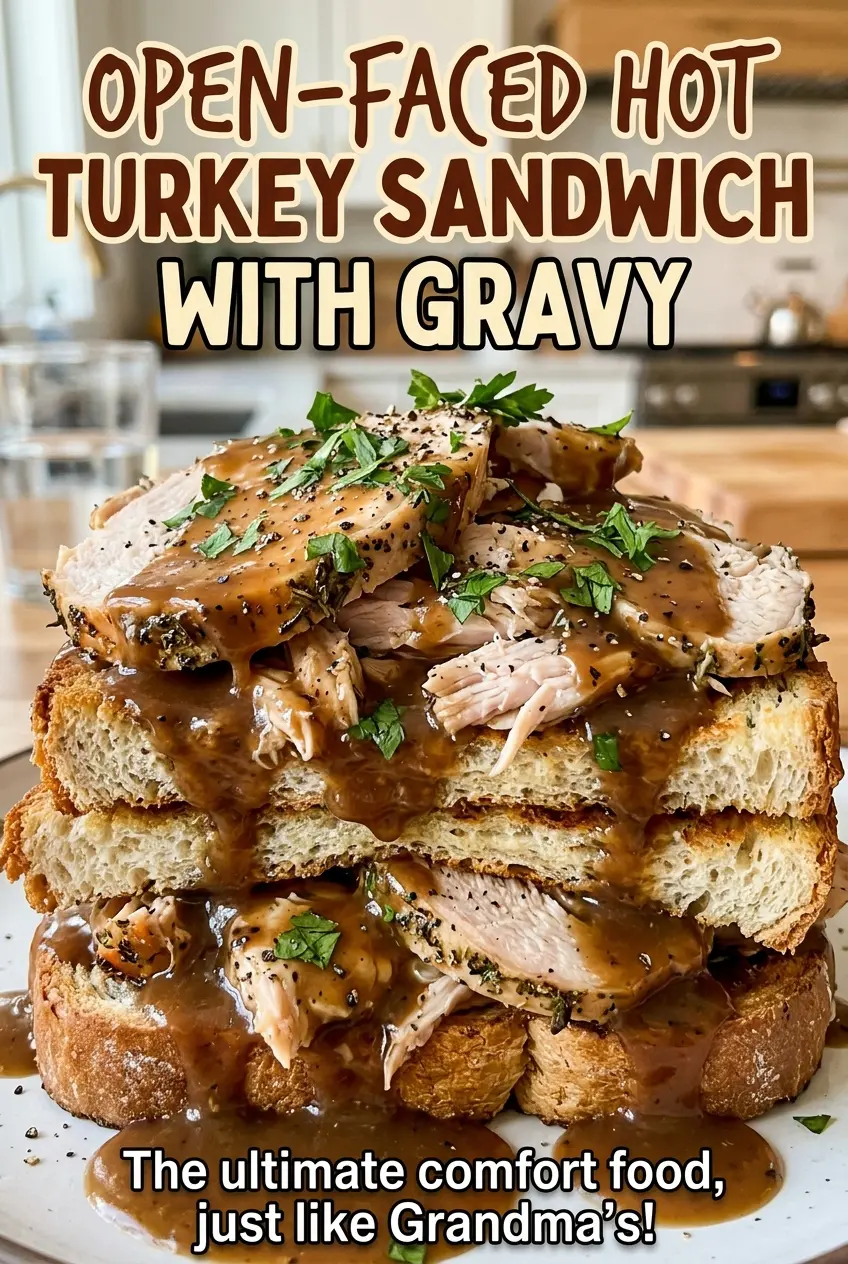
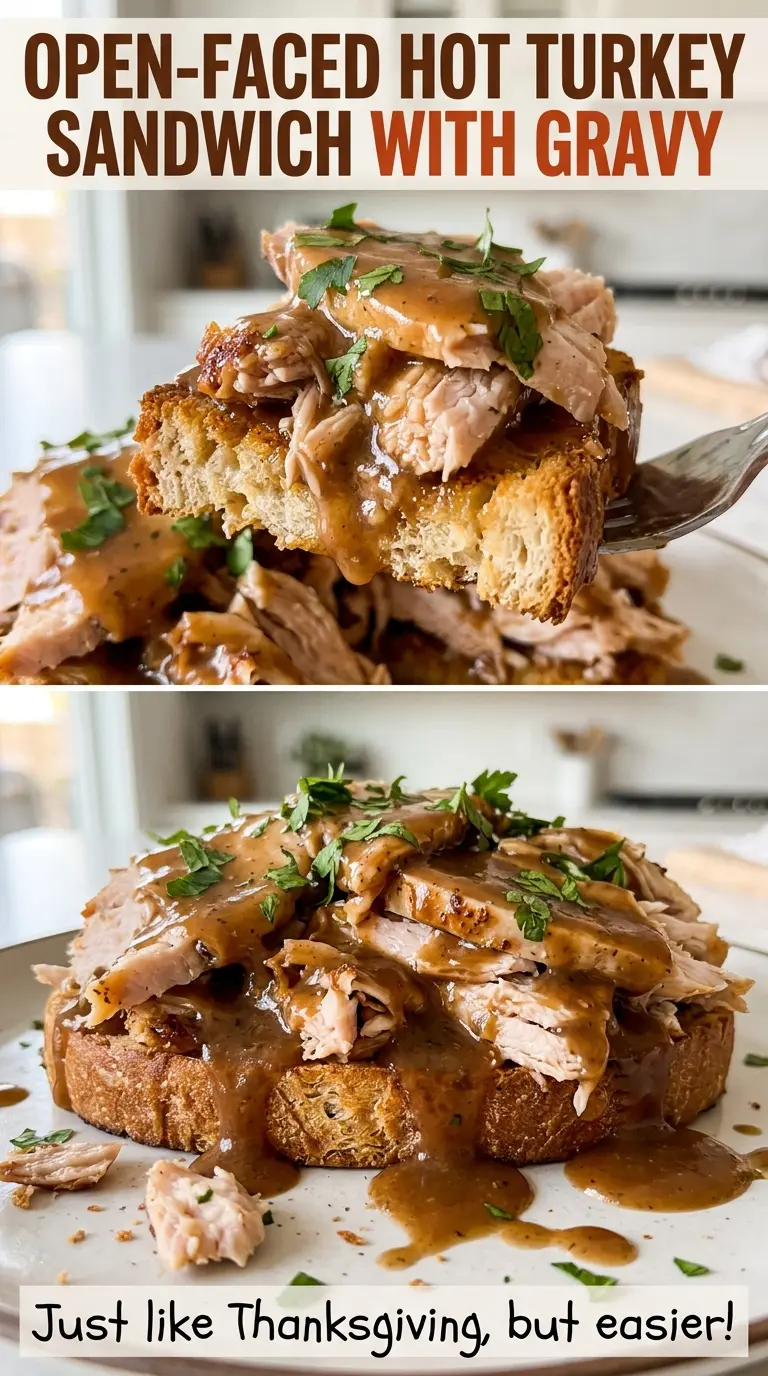
I like this approach because the turkey warms right in the gravy, so it stays coated and picks up that savory flavor without needing another pan. The sauce comes together in one saucepan, and the only other job is getting the bread golden before the gravy goes on. A slice of hearty white toast gives the turkey a sturdy base, while the warm gravy softens the middle just enough. Each plate gets its own open-faced sandwich, with plenty of turkey tucked under the spooned-over gravy.
Kitchen Note
Toast the bread close to serving time, then build each sandwich right before it goes to the table. The gravy starts softening the toast as soon as it lands, and a golden slice holds its shape better than one that’s been sitting under the turkey.
Save this open-faced hot turkey sandwich with gravy for a cozy meal built on golden toast and tender turkey.
Why Gradually Adding Turkey Broth Keeps the Gravy Smooth
A roux is butter and flour cooked together before liquid goes in. That short cooking time gives the flour a chance to lose its raw taste, while the butter helps disperse it through the sauce. When all the broth goes in at once, the flour can clump before it has a chance to blend evenly. Pouring gradually and whisking as you go gives you a smoother start.
The broth doesn’t need to be poured in at a trickle, but don’t tip the whole amount into the saucepan in one go. Add some, whisk until the mixture looks even, then continue adding and whisking. Once the liquid is incorporated, a gentle simmer gives the gravy time to thicken without scorching the bottom. Keep the whisk moving often; a hard boil isn’t needed here.
Low-sodium turkey broth gives you more control over the seasoning, since the Worcestershire sauce and salt both add savoriness. The finished gravy should coat a spoon and pour easily over the turkey. If you rush the broth into the roux, pause and whisk steadily before adding more; giving the flour time to disperse is easier than chasing lumps at the end.
What the Turkey, Broth, and Bread Each Bring to the Plate
- Unsalted butter and all-purpose flour — Together they form the roux that thickens the broth into gravy. Ordinary grocery-store butter and flour work well; there’s no benefit to buying a specialty flour for this sauce. Keep whisking while the flour cooks so it blends into the melted butter rather than sitting in dry pockets.
- Low-sodium turkey broth — This is the main body of the gravy, so a broth with a clear, savory taste matters more than a premium label. Low sodium leaves room for the Worcestershire and kosher salt. Chicken broth is a workable stand-in if turkey broth isn’t available, though the finished gravy will taste a little less distinctly like turkey.
- Worcestershire sauce — A small amount adds a deep, savory note that rounds out the mild broth. A standard bottle is fine; there’s no need for a specialty variety. If you leave it out, the gravy will still thicken, but it will taste less complex.
- Cooked roast turkey breast — Sliced breast gives each serving substantial pieces that stay easy to eat on toast. Leftover roast turkey is a good fit, and it doesn’t need to be freshly cooked for this sandwich. Slice it evenly so the pieces warm at about the same pace in the gravy.
- Hearty white bread — A sturdy slice gives the turkey and gravy a base that won’t collapse as quickly as soft sandwich bread. A familiar store-bought loaf works; the useful detail is choosing slices with enough structure to toast golden and support the topping.
Building the Gravy Before the Turkey Goes In
Cook the Butter-Flour Roux
Melt the butter in a 3-quart saucepan over medium heat, then whisk in the flour. Keep whisking constantly for 1 to 2 minutes, scraping across the bottom and into the corners of the pan. The mixture should look smooth and lightly bubbly, without dry flour visible. Don’t walk away during this brief stage; flour left sitting can catch on the saucepan’s base.
Whisk in the Broth and Thicken
Gradually whisk in the turkey broth, giving each addition a moment to blend into the roux before pouring in more. Add the Worcestershire sauce, kosher salt, and black pepper, then bring the gravy to a gentle simmer. Cook for 3 to 5 minutes, whisking often, until it thickens enough to cling to a spoon. If you see a lump forming, whisk that spot before adding more broth.
Warm the Turkey Gently
Stir the sliced turkey into the thickened gravy and keep the pan at a gentle simmer for 3 to 5 minutes, stirring occasionally. Check a thicker piece with an instant-read thermometer; the turkey needs to reach 165°F. Avoid letting the gravy boil vigorously, which can make the turkey less tender and cause the sauce to reduce faster than you want.
Toast and Assemble Each Slice
Toast the bread until golden, then set one slice on each plate. Divide the turkey among the four slices and spoon gravy over the top. Keep the toast flat and add the gravy over the turkey rather than pouring it across the whole plate. Serve as soon as the sandwiches are assembled, while the bread still has a crisp edge.
Simple Swaps for the Turkey and Toast
Use cooked dark-meat turkey
Swap in sliced cooked roast turkey thigh for the breast. Dark meat brings a richer, slightly more robust taste and stays tender in the gravy; keep the slices similar in size so they warm evenly.
Choose a tangier toast base
Replace the white bread with thick-cut sourdough and toast it until golden. Its mild tang contrasts with the savory gravy, and a substantial slice holds up well beneath the turkey. Thin slices won’t give you the same sturdy base.
Make it gluten-free
Use a cup-for-cup gluten-free flour blend in place of the all-purpose flour, choosing one formulated for baking and thickening, and serve the turkey on gluten-free bread. The gravy may be a touch less silky than the wheat-flour version, but the roux method remains the same.
Storage and Reheating
- Refrigerator: Refrigerate leftover turkey and gravy within 2 hours and use within 3 to 4 days. The gravy will thicken as it chills.
- Freezer: Freeze the turkey and gravy together in an airtight freezer-safe container for up to 2 to 3 months. Thaw overnight in the refrigerator; the sauce may look slightly separated until stirred.
- Reheating: Warm the turkey and gravy gently in a saucepan, stirring often, until hot throughout. If the chilled gravy is too thick, whisk in a little turkey broth; toast fresh bread rather than reheating an assembled sandwich.
Questions That Come Up When Making Hot Turkey Sandwiches
Open-Faced Hot Turkey Sandwich with Gravy
Ingredients
Equipment
Method
- Melt the butter in a 3-quart saucepan over medium heat.
- Whisk in the flour and cook for 1 to 2 minutes, whisking constantly.
- Gradually whisk in the turkey broth, then add the Worcestershire sauce, salt, and pepper.
- Bring to a gentle simmer and cook for 3 to 5 minutes, whisking often, until the gravy thickens.
- Stir in the turkey and simmer gently for 3 to 5 minutes, stirring occasionally, until the turkey reaches 165°F on an instant-read thermometer.
- Toast the bread until golden.
- Set one slice of toast on each plate.
- Divide the turkey among the slices.
- Spoon gravy over the turkey.
