
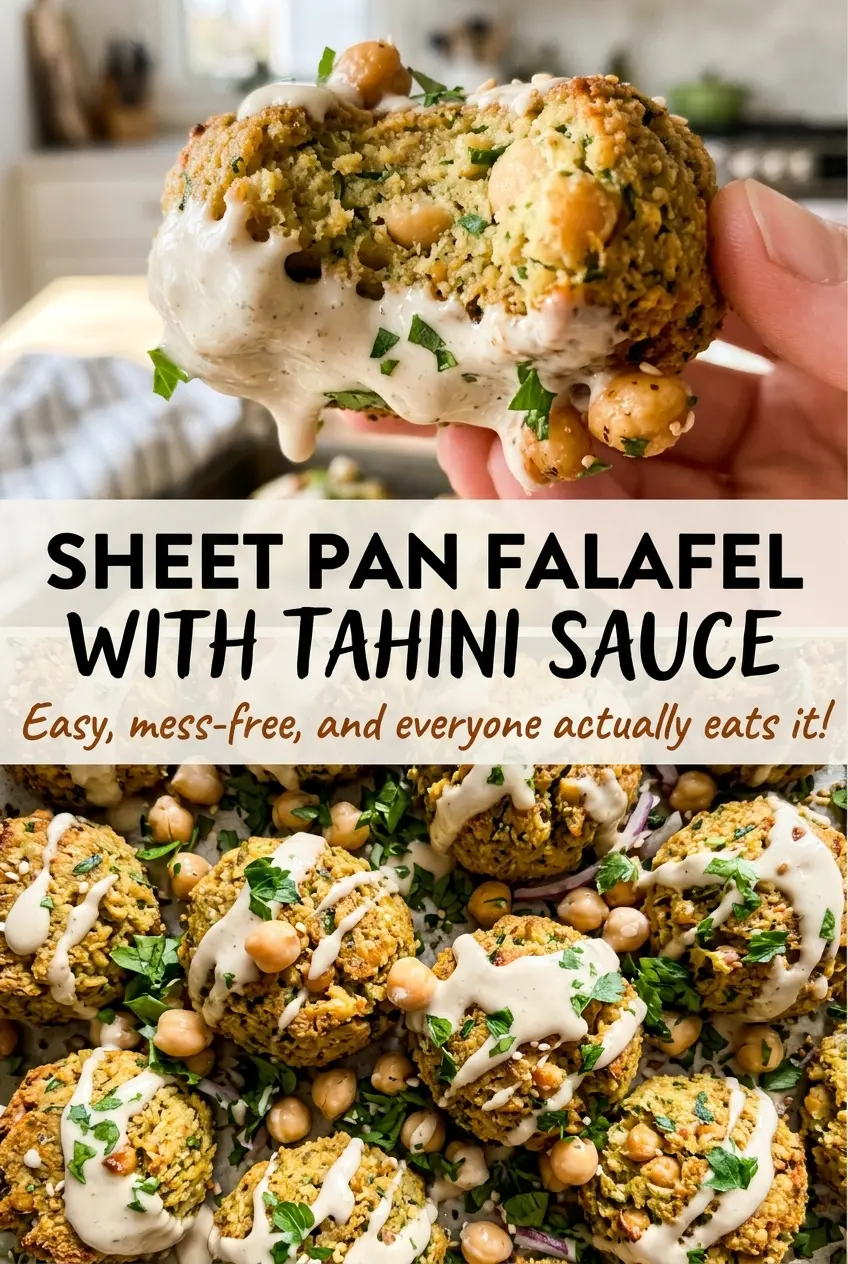
The first turn is where sheet pan falafel can go sideways: patties that aren’t firm enough may break when you lift them. I keep them about 2 inches wide and 1/2 inch thick, then let the oven set the surface before turning. The result is golden, firm falafel without standing over a pan of hot oil.
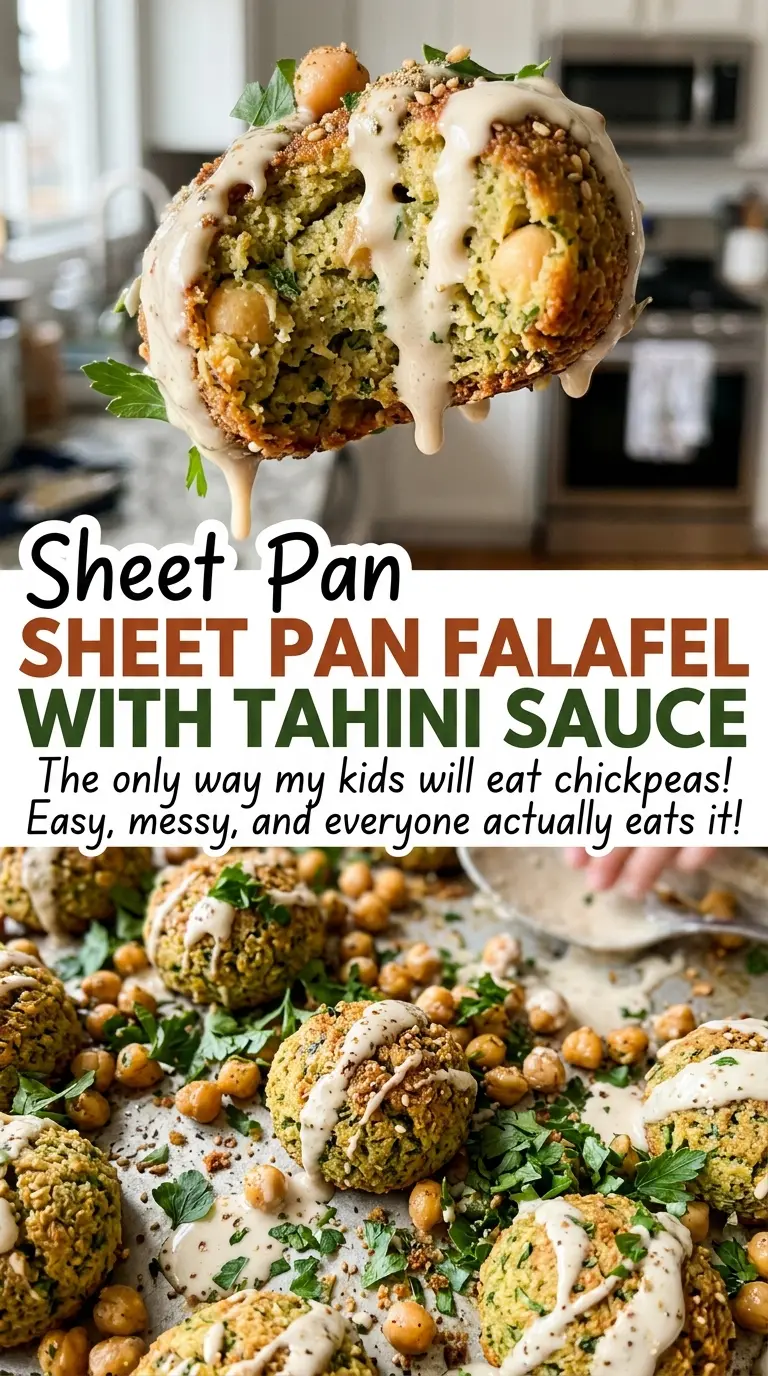
These sheet pan falafel start with dried chickpeas soaked overnight, not the canned kind. Pulsing them with fresh herbs gives the patties their characteristic coarse texture, while a short chill makes the mixture easier to shape. I serve them with a quick tahini sauce whisked smooth with lemon juice and cold water; it’s tangy, creamy, and ready while the falafel bakes.
Kitchen Note
Give the falafel five minutes on the sheet pan after baking. They firm up as they rest, so they’re less likely to crack when you move them to a plate.
Save these sheet pan falafel with tahini sauce for a meatless meal built around golden patties and a bright, creamy dip.
Why These Falafel Start With Soaked Chickpeas, Not Canned
Falafel gets its texture from chickpeas that have soaked but haven’t been cooked. Dried chickpeas absorb water in the refrigerator, but they stay firm enough to pulse into a coarse mixture. That texture gives each patty some structure instead of turning the herbs and chickpeas into a smooth paste.
Canned chickpeas are already cooked and much softer. They bring extra moisture to the food processor, which makes it harder to get a mixture that holds together without over-processing it. For this baked version, the dried chickpeas are doing more than adding flavor; they’re the foundation of the patty.
Once the mixture is pulsed, squeeze a little between your fingers. It should cling together while still looking nubbly, not creamy or puréed. That balance helps the patties bake up firm, and the chilled rest gives you a calmer, less sticky mixture to shape.
What the Herbs, Binder, and Tahini Bring to These Falafel
- Dried chickpeas — They’re essential for the firm, coarse texture here; canned chickpeas don’t make a dependable swap. Give them the full refrigerated soak, then drain and rinse well before they go into the processor.
- Parsley and cilantro — Fresh leaves and tender stems bring the green, herbal flavor that makes falafel taste fresh rather than heavy. Use herbs that look lively, with no slimy leaves or wilted bunches. If cilantro isn’t your favorite, the variation below uses parsley in its place.
- Onion and garlic — They add savory depth throughout the patties, while the finely grated garlic in the sauce gives it a sharper edge. Roughly chop the falafel garlic so it breaks down evenly with the herbs.
- Cumin and coriander — Ground spices are fine here; there’s no need to toast or grind whole seeds. If your jars have been open for years and smell faint, fresh spices will make a noticeable difference in the earthy aroma.
- All-purpose flour and baking soda — Together they help the chilled mixture hold its shape as patties. Stir them in after chilling rather than blending them into the chickpea mixture at the start; there isn’t a reliable one-for-one swap among the other listed ingredients.
- Tahini and fresh lemon juice — Tahini supplies the sauce’s sesame richness, and lemon keeps it from tasting heavy. Choose tahini that smells nutty and tastes clean, not bitter; fresh lemon juice gives the sauce a brighter finish than bottled juice.
- Olive oil — Brushing oil on the parchment and patties encourages browning in the oven. Divide it as described so the patties have oil underneath and on both sides after turning.
From Coarse Chickpeas to Golden, Firm Patties
Soak, Drain, and Pulse the Chickpeas
Cover the dried chickpeas with cold water and refrigerate them for 12 to 18 hours. Drain and rinse them before processing. Pulse the onion, parsley, cilantro, and falafel garlic until finely chopped, then add the chickpeas, salt, cumin, coriander, and black pepper. Stop when the mixture is coarse and holds together when squeezed; if it looks like a smooth paste, it has gone too far.
Chill the Mixture and Whisk the Sauce
Transfer the falafel mixture to a bowl, cover it, and refrigerate for 30 minutes. While it chills, whisk the tahini with lemon juice, grated garlic, and the sauce salt. Add the cold water gradually, whisking as you go, until the sauce looks smooth and creamy. Adding the water in stages makes it easier to see when the tahini has loosened to the consistency you want.
Shape Even Patties on an Oiled Pan
Heat the oven to 425°F and line an 18×13-inch rimmed sheet pan with parchment. Brush the parchment with olive oil, then stir the flour and baking soda evenly into the chilled mixture. Shape 16 patties, each about 2 inches wide and 1/2 inch thick, and arrange them on the pan. Brush the tops with olive oil; even sizing helps them bake at the same pace.
Bake, Turn, and Finish the Browning
Bake for 14 minutes, then carefully turn each patty. The first side should have begun to set before you slide a spatula underneath; if a patty sticks, ease the spatula under it rather than pulling it apart. Brush the newly exposed sides with the remaining olive oil and bake for another 10 to 14 minutes, until golden brown and firm. Serve with the tahini sauce.
Ways to Shift the Herbs and Spice Without Losing Falafel Texture
Make the falafel cilantro-free
Replace the cilantro with the same amount of packed parsley. The patties will taste greener and more parsley-forward, but the texture stays close because the swap keeps the herb volume the same.
Turn up the cumin
Add an extra 1/2 teaspoon ground cumin to the falafel mixture for a deeper, earthier spice note. Keep the coriander as it is so the cumin doesn’t take over the fresh herbs.
Make a milder tahini sauce
Leave out the grated garlic in the sauce and keep the garlic in the patties. You’ll still get a lemony sesame sauce, just without the sharp raw-garlic finish.
Storage and Reheating
- Refrigerator: Store the falafel and tahini sauce separately in airtight containers for 3 to 4 days. The patties soften in the refrigerator, and the sauce may thicken.
- Freezer: Freeze baked falafel in a single layer, then transfer them to a freezer-safe container for up to 3 months. Tahini sauce is best kept refrigerated; freezing can change its texture.
- Reheating: Reheat falafel in the oven until hot through and firm again at the edges. A microwave is quicker but softens the outside. Stir the chilled sauce, loosening it with a little cold water if it has thickened.
Questions I Get Asked About These Sheet Pan Falafel
Sheet Pan Falafel with Tahini Sauce
Ingredients
Equipment
Method
- Put the dried chickpeas in a large bowl and cover with the 6 cups cold water.
- Refrigerate the chickpeas for 12 to 18 hours.
- Drain and rinse the chickpeas.
- In a food processor, pulse the onion, parsley, cilantro, and 4 garlic cloves until finely chopped.
- Add the chickpeas, 1 1/2 teaspoons salt, cumin, coriander, and black pepper, then pulse to a coarse mixture that holds together when squeezed.
- Transfer the mixture to a bowl and cover it.
- Refrigerate the mixture for 30 minutes.
- Whisk the tahini, lemon juice, grated garlic, and remaining 1/4 teaspoon salt in a medium bowl.
- Gradually whisk in the cold water until smooth and creamy.
- Heat the oven to 425°F.
- Line an 18x13-inch rimmed sheet pan with parchment paper and brush the parchment with 1 tablespoon olive oil.
- Stir the flour and baking soda into the chilled falafel mixture until evenly combined.
- Shape the mixture into 16 patties, about 2 inches wide and 1/2 inch thick.
- Arrange the patties on the pan and brush the tops with 1 tablespoon olive oil.
- Bake for 14 minutes.
- Carefully turn the patties and brush the newly exposed sides with the remaining 1 tablespoon olive oil.
- Bake for 10 to 14 minutes more, until golden brown and firm.
- Let the falafel rest on the pan for 5 minutes.
- Serve the falafel with the tahini sauce.
