
Sheet pan sausage and peppers earns its spot in the weeknight rotation because the oven does the heavy lifting and the skillet never comes out. The sausage turns browned and juicy at the edges while the peppers and onions soften, shrink, and pick up those caramelized spots that make the whole pan taste deeper than the ingredient list suggests. It’s the kind of dinner that looks simple on paper and ends up tasting like you put in more work than you did.
The key is cutting everything so it cooks at the same pace. Thick sausage pieces hold onto their juices, and wide pepper strips and onion slices give enough surface area to brown instead of collapse into steam. The other thing that matters is space on the pan. If the vegetables are piled up, they soften without getting those sweet roasted edges. Give them room, and the oven takes care of the rest.
Below, I’ve included the timing cue that keeps the sausage from overcooking, plus a few smart variations for making this work with what you have on hand. Once you get the rhythm of this pan dinner, it becomes one of those meals you can make without thinking twice.
The peppers actually roasted instead of turning watery, and the sausage stayed juicy with those browned edges I was hoping for. I served it over rolls and my family asked me to keep it in the dinner rotation.
Save this sheet pan sausage and peppers for a no-fuss dinner with caramelized vegetables and juicy sausage.
The Trick to Roasting Sausage and Peppers Without Steaming the Pan
The most common mistake with sausage and peppers is crowding the pan and expecting the oven to brown everything anyway. When the ingredients are packed too tightly, the vegetables release moisture faster than it can evaporate, and you end up with soft peppers and pale sausage. A hot oven helps, but heat alone won’t fix a pan that’s overloaded.
This recipe works because the sausage is cut into thick pieces and everything gets tossed in a thin coating of oil before roasting. That oil helps the edges blister and keeps the garlic and seasoning from drying out or burning on contact. Turning everything halfway through gives new surfaces a chance to hit the hot pan, which is what builds those browned spots instead of one-sided cooking.
- Spread the ingredients into a single layer, even if that means using a second pan.
- Roast at 425°F so the vegetables soften and caramelize at the same time.
- Cut the sausage into thick pieces so it stays juicy instead of drying out before the peppers are done.
- Use parchment for easier cleanup, but don’t use so much oil that the vegetables start to fry.
What Each Ingredient Is Actually Doing in This Dish
- Italian sausage links — This is the backbone of the dish. Mild or hot both work, and either style brings enough fat and seasoning to flavor the vegetables as it roasts. If you only have loose sausage, crumble it loosely on the pan, but expect a different texture with more browned bits and less of that sliced-sausage bite.
- Bell peppers — The mix of red, yellow, and green gives you sweetness, brightness, and a little sharpness in one pan. Red and yellow soften into a sweeter roast, while green keeps some edge. If you only have one color, the dish still works, but the flavor will be flatter.
- Yellow onion — Onions turn silky and sweet in the oven, and they help catch the sausage drippings. Slice them thick enough to hold together, or they can disappear before the sausage is done. White onion works too, but yellow gives a fuller roasted flavor.
- Olive oil, garlic, Italian seasoning, and smoked paprika — The oil carries the seasonings over every surface, garlic perfumes the pan, and paprika adds a faint smoky note that makes the vegetables taste deeper. Fresh garlic can burn if it sits exposed on the sheet pan, so tossing it with oil is the right move here. If you need a swap, use garlic powder in a pinch, but the finished dish will lose some of that fresh punch.
Getting the Pan Roast Right From the First Toss
Coating Everything Evenly
Mix the oil, garlic, Italian seasoning, smoked paprika, salt, and pepper before it touches the pan. That keeps the seasoning distributed instead of clumping on one pepper slice or one sausage piece. The goal is a light, even sheen, not a puddle on the bottom of the tray. If the garlic looks dry and patchy, it’ll scorch before the vegetables finish.
Setting the Pan Up for Browning
Arrange the sausage and vegetables in a single layer with some open space between pieces. When the pan is crowded, the vegetables steam and the sausage loses that browned exterior. If your sheet pan looks full, split everything onto two pans before it goes into the oven. That one step changes the result more than any seasoning adjustment can.
Roasting Until the Edges Caramelize
Roast at 425°F for about 20 to 25 minutes, then turn everything once so the underside gets a chance to brown. You’re looking for peppers that have collapsed slightly at the edges and sausage that’s cooked through with a golden exterior. If the vegetables are soft but pale, they need more time. If the garlic is dark before the sausage is done, the pieces are too small or the pan is too crowded.
Finishing With Fresh Parsley
Scatter the parsley over the hot pan right before serving. It adds a fresh, grassy note that cuts through the richness of the sausage and the sweetness of the roasted onions. Don’t add it early or it’ll wilt into the background and lose the lift it brings. Serve immediately while the sausage is still juicy and the vegetables have their best texture.
Three Ways to Make This Sheet Pan Dinner Work for Your Kitchen
Dairy-Free and Naturally Gluten-Free
This recipe already fits both of those needs as written, as long as your sausage is gluten-free. Check the label on the sausage and the seasoning blend, since some brands sneak in fillers or anti-caking agents. You get the same roasted texture and full flavor without changing the method at all.
Making It Hotter or Milder
Hot Italian sausage adds more heat than the seasoning alone, while mild sausage keeps the pan more pepper-forward. If you want more spice without changing the sausage, add a pinch of red pepper flakes to the oil mixture. That gives heat without throwing off the roast.
Using Different Vegetables
Zucchini, mushrooms, or sliced fennel can join the pan, but they bring more moisture than peppers and onions do. Cut them large enough to hold up in the oven and don’t overload the tray. If you add watery vegetables, expect a little less browning and roast a few extra minutes to cook off the moisture.
Storage and Reheating
- Refrigerator: Store leftovers in an airtight container for up to 4 days. The peppers soften a little more as they sit, but the flavor holds up well.
- Freezer: It freezes decently for up to 2 months, though the peppers will be softer after thawing. Cool completely first, then pack into freezer-safe containers with as little air as possible.
- Reheating: Reheat in a 375°F oven or a skillet over medium heat until hot. The common mistake is microwaving it until the sausage turns rubbery and the vegetables go limp, so use gentle heat and stop as soon as it’s warmed through.
Answers to the Questions Worth Asking
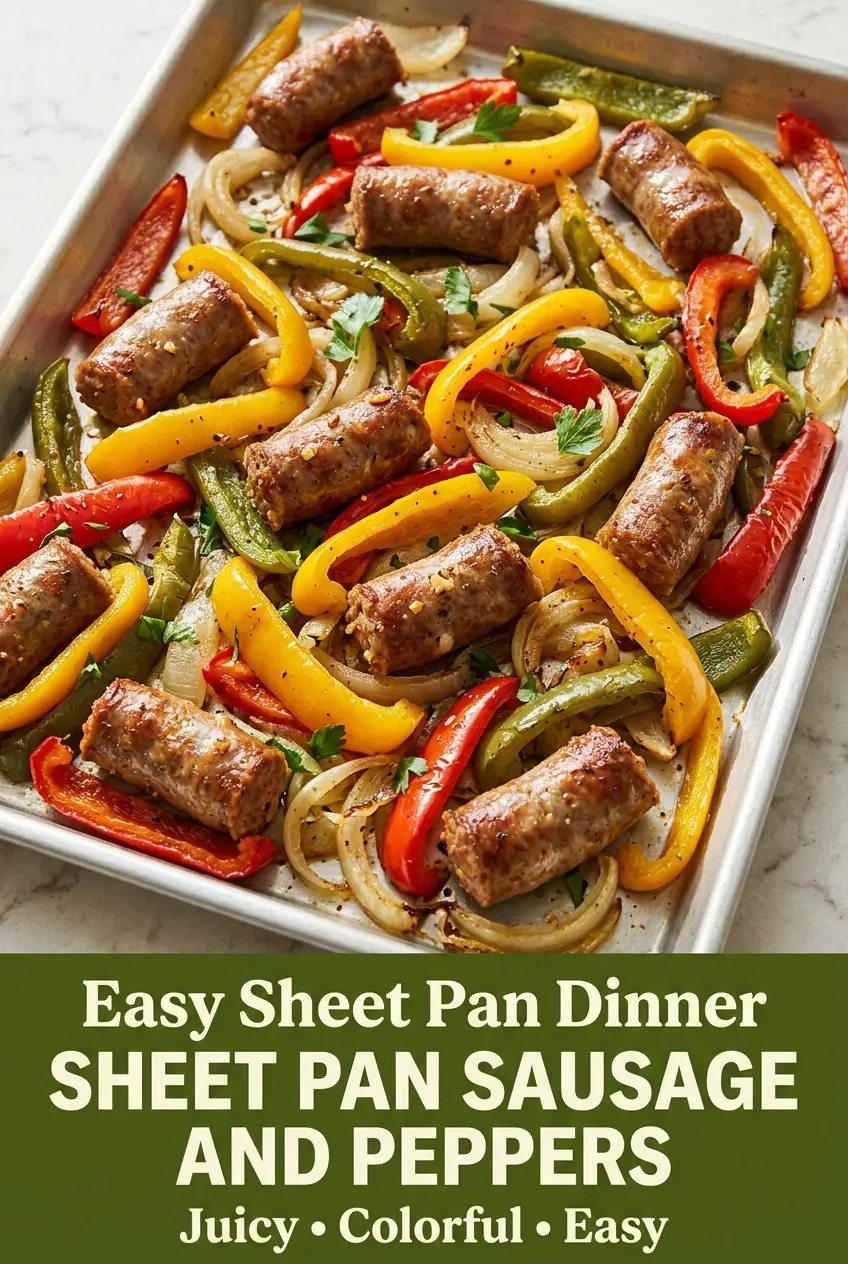
Sheet Pan Sausage and Peppers
Ingredients
Equipment
Method
- Preheat the oven to 425°F and line a large rimmed sheet pan with parchment paper or lightly grease it. This creates a nonstick surface for easier cleanup.
- Slice the Italian sausage links into thick pieces, then arrange them across the sheet pan with the red bell pepper, yellow bell pepper, green bell pepper, and yellow onion. Spread them with some space so they roast rather than steam.
- Combine the olive oil, garlic, Italian seasoning, smoked paprika, kosher salt, and black pepper. Drizzle the mixture evenly over the sausage and vegetables.
- Toss everything until evenly coated, then spread into a single layer so the vegetables can roast instead of steaming. The cut vegetables should have contact with the hot pan surface.
- Roast at 425°F for 20–25 minutes, turning the sausage and vegetables halfway through cooking. Look for vegetables to develop caramelized edges and for the sausage to turn golden.
- Check that the sausage reaches a safe internal temperature appropriate to the sausage used. Sprinkle with chopped fresh parsley and serve immediately.
