
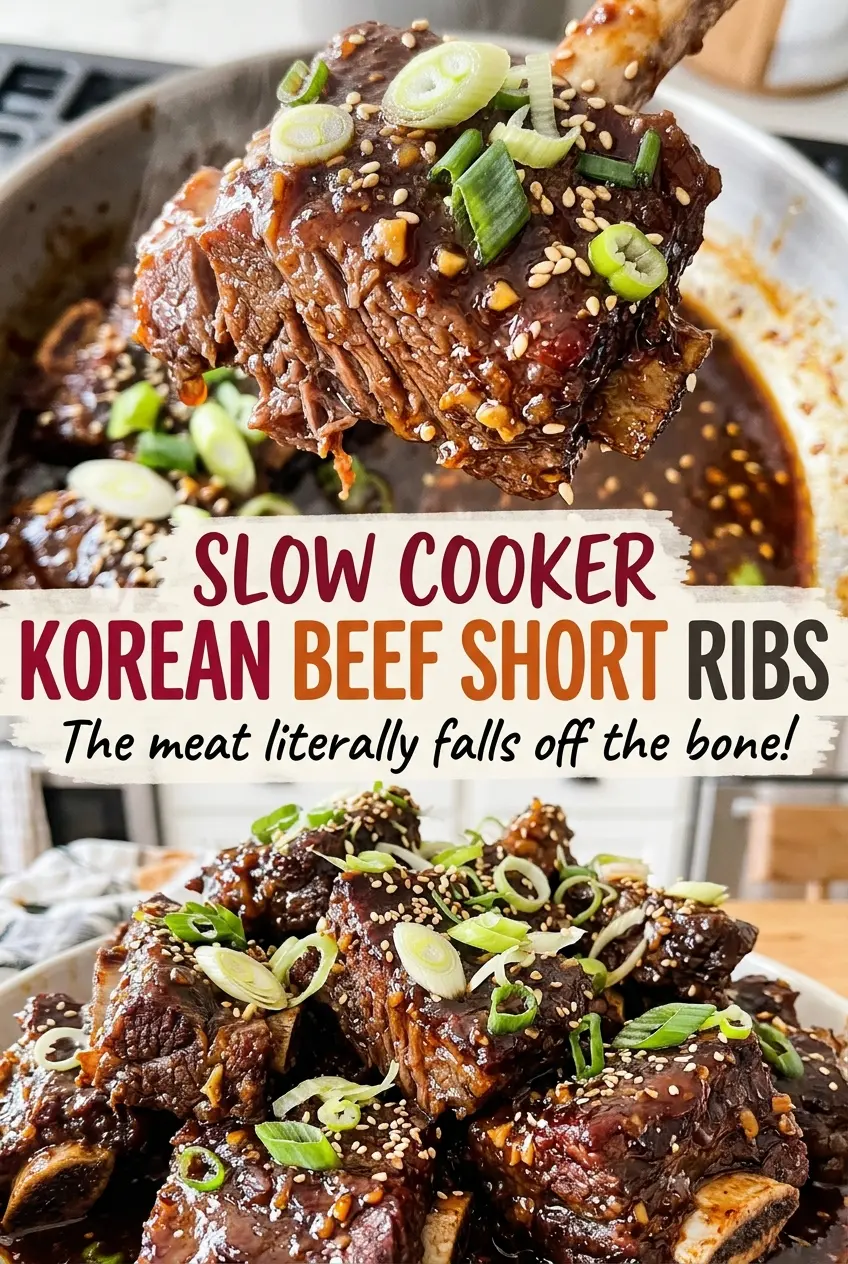
When the slow cooker lid comes off, the ribs should be tender enough for a fork to slip in without a fight, and the sauce will smell of ginger, garlic, and toasted sesame. I brown the short ribs first, then let them cook slowly over onions and carrots in a savory-sweet sauce. That quick skillet step adds the deep, roasted flavor a slow cooker can’t create on its own.
For these slow cooker Korean beef short ribs, I keep the sauce thin while the meat cooks and thicken it afterward in a saucepan. That way it can move around the ribs during the long cook, then turn glossy right before serving. The carrots soften in the same savory liquid, and a little scallion and sesame seed on top give the finished platter a fresh, nutty finish.
Kitchen Note
Pat the ribs dry before seasoning. If the surface is damp, they’ll steam in the skillet instead of developing the browned edges that give the finished sauce a deeper, beefier taste.
Save these Korean beef short ribs for a slow-cooked dinner with fork-tender meat and glossy ginger-sesame sauce.
Why the sauce stays thin while the ribs cook
A slow cooker is a gentle braising environment, not a place to build a finished, clingy glaze. The sauce needs to stay fluid while it surrounds the ribs and vegetables for hours. The pear, beef, and vegetables also contribute moisture as they cook, so the liquid you uncover at the end won’t look like the thick sauce you want on the platter.
That’s why I wait until the ribs and vegetables are out of the cooker before thickening anything. Skimming the cooking liquid in a saucepan lets you remove excess fat, bring the sauce to a proper simmer, and whisk in the cornstarch slurry where you can see it change. Give it a minute or two and it turns glossy enough to coat the ribs without burying their flavor. Adding the cornstarch at the beginning would skip that controlled finish and leave you with less control over the final texture.
What the pear, soy, and sesame bring to these ribs
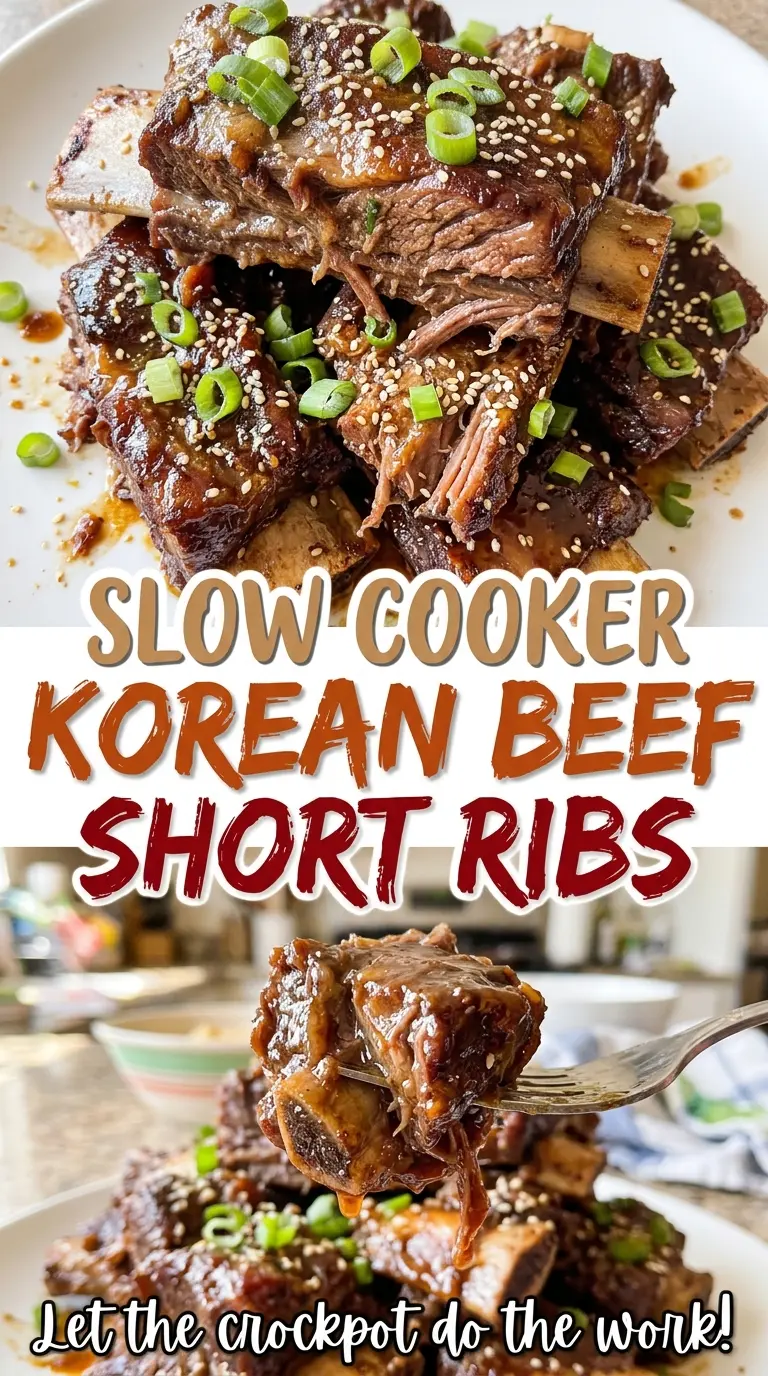
- English-cut bone-in short ribs — The broad pieces of meat have enough connective tissue to become tender during the long cook, while the bones contribute a fuller beef flavor. Choose ribs with a good amount of meat on each piece; very fatty pieces leave more to skim from the cooking liquid.
- Asian pear — Grating it finely helps it blend into the sauce rather than leave big fruit pieces behind. It adds gentle sweetness and a little body. A firm, ripe standard pear is a workable substitute; it tastes a bit less crisp and delicate.
- Low-sodium soy sauce and beef broth — Together they provide the savory base without pushing the finished sauce too salty. Low-sodium versions matter here because the cooking liquid gets concentrated during the final simmer. Low-sodium tamari can replace the soy sauce for a gluten-free version.
- Brown sugar and rice vinegar — Brown sugar rounds out the salty soy, while rice vinegar keeps the sauce from tasting flat or overly sweet. Keep both in the mix; leaving out the vinegar makes the sweetness more pronounced.
- Garlic, fresh ginger, and toasted sesame oil — Freshly minced garlic and grated ginger give the sauce a brighter aroma than dried substitutes. Toasted sesame oil brings a distinct nutty finish, so don’t confuse it with neutral oil; the neutral oil is for browning, while sesame oil belongs in the sauce.
The order that gets the ribs browned, tender, and glazed
Brown the ribs in uncrowded batches
Pat the ribs dry, season all sides with kosher salt and black pepper, then heat the neutral oil in a 12-inch skillet over medium-high heat. Brown the ribs in batches for about 2 to 3 minutes per side. Leave space between pieces so their surfaces sear instead of releasing moisture into a crowded pan. Look for browned patches on the meat, not a pale gray surface.
Whisk the pear sauce before it goes into the cooker
In a bowl, whisk together the finely grated Asian pear, low-sodium soy sauce, beef broth, brown sugar, rice vinegar, minced garlic, grated ginger, and toasted sesame oil. Keep whisking until the sugar is dispersed and the pear is evenly suspended. The mixture will be thin, which is right for the slow-cooking stage. Cutting the onion into wedges and the carrots into 2-inch pieces gives them enough size to hold up during the long cook.
Layer the vegetables beneath the ribs
Put the onion wedges and carrot pieces in a 6-quart slow cooker, arrange the browned ribs on top, and pour the sauce over everything. Cover and cook on LOW for 8 to 9 hours or HIGH for 4 to 5 hours. The ribs are ready when a fork slides into the meat easily and the meat feels tender rather than springy. If they still resist the fork, they need more time on the same setting.
Simmer the cooking liquid until glossy
Move the ribs and vegetables to a serving platter, then pour the cooking liquid into a 2-quart saucepan and skim off excess fat. Bring the liquid to a simmer over medium-high heat. Whisk the cornstarch with cold water, then whisk that slurry into the simmering liquid and cook for 1 to 2 minutes, until the sauce looks glossy and thickened. Spoon it over the ribs and vegetables, then finish with thinly sliced scallions and sesame seeds.
Three practical ways to adapt these Korean beef short ribs
Use low-sodium tamari for a gluten-free version
Replace the low-sodium soy sauce with the same amount of low-sodium tamari, choosing one labeled gluten-free. The sauce keeps its savory backbone, though the exact saltiness varies by brand, so stick with low-sodium rather than regular tamari.
Swap in a firm, ripe pear
If Asian pear isn’t available, peel and finely grate a firm, ripe standard pear. It gives the sauce a similar fruity sweetness, though it may be softer and a little more pronounced in flavor than Asian pear.
Turn the ribs into shredded beef
For a different texture, remove the bones from the cooked, fork-tender ribs and pull the meat apart with two forks. Toss the shreds with some of the thickened sauce so the meat stays coated. You’ll lose the individual rib presentation, but the tender beef takes on sauce in every bite.
Storage and Reheating
- Refrigerator: Keep the ribs, vegetables, and sauce in an airtight container for 3 to 4 days. The sauce firms up when chilled, and some fat may solidify on top.
- Freezer: These ribs freeze well for 2 to 3 months. Store them with the sauce in a freezer-safe container, then thaw in the refrigerator before reheating.
- Reheating: Warm the ribs and sauce covered in a saucepan over low heat until they reach 165°F. If the chilled sauce is too thick, stir in a little water; avoid a hard boil, which can make the meat break apart.
Questions that come up while making these short ribs
Slow Cooker Korean Beef Short Ribs
Ingredients
Equipment
Method
- Pat the short ribs dry.
- Season the ribs on all sides with the salt and pepper.
- Heat the oil in a 12-inch skillet over medium-high heat.
- Brown the ribs in batches, about 2 to 3 minutes per side.
- Whisk the grated pear, soy sauce, beef broth, brown sugar, rice vinegar, garlic, ginger, and sesame oil in a bowl.
- Put the onion and carrots in a 6-quart slow cooker.
- Arrange the ribs on top of the onion and carrots.
- Pour the sauce over the ribs.
- Cover and cook on LOW for 8 to 9 hours or HIGH for 4 to 5 hours, until the ribs are fork-tender.
- Transfer the ribs and vegetables to a serving platter.
- Pour the cooking liquid into a 2-quart saucepan and skim off excess fat.
- Bring the liquid to a simmer over medium-high heat.
- Whisk the cornstarch with the cold water.
- Whisk the slurry into the simmering liquid.
- Cook for 1 to 2 minutes, until glossy and thickened.
- Spoon the sauce over the ribs and vegetables.
- Garnish with the scallions and sesame seeds.
