
The filling should cling to a spoon before it ever reaches the baking dish. If it’s loose in the skillet, it won’t magically firm up under the potatoes; it’ll bubble around the edges and leave you with a soupy first serving. I let the sauce thicken before the peas go in, then spread the mash over a filling that’s already cohesive.
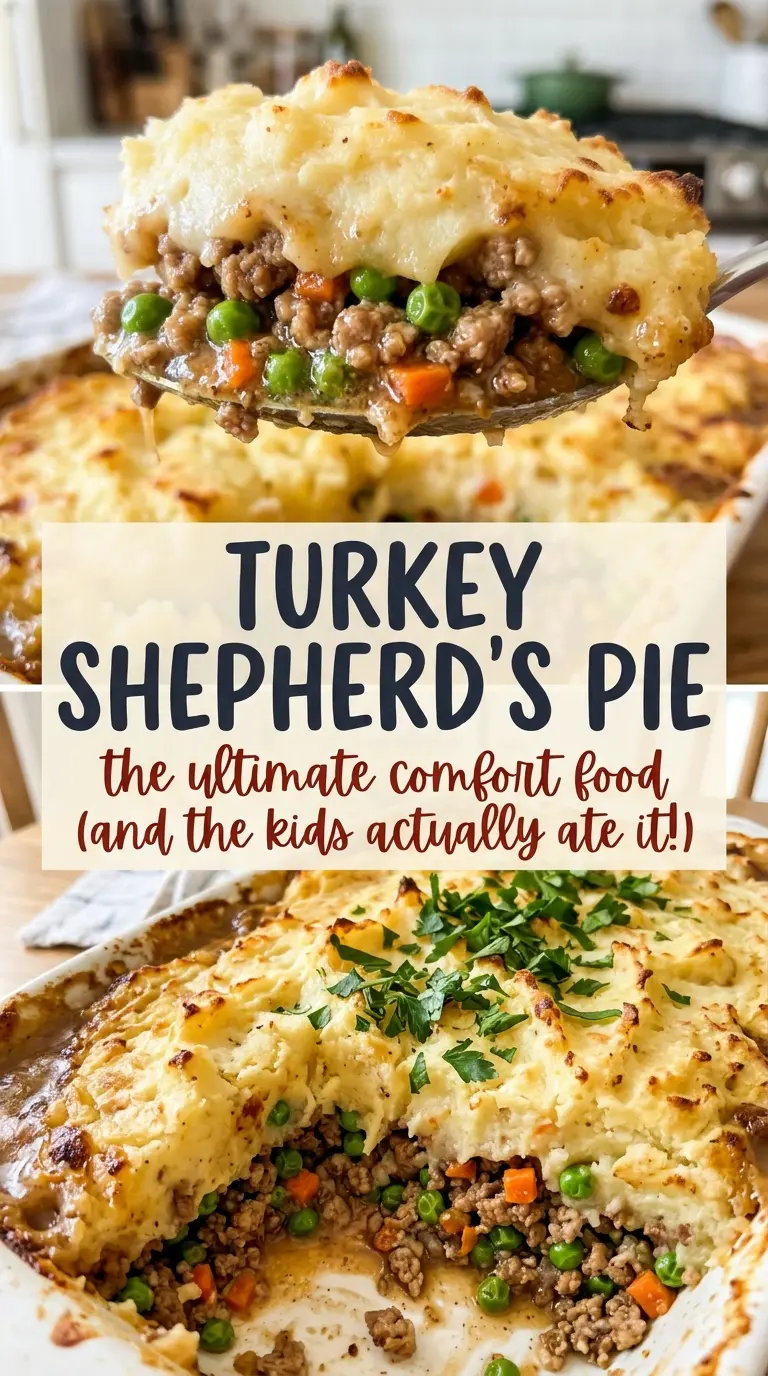
That’s what makes this turkey shepherd’s pie feel hearty without relying on a heavy sauce. Ground turkey gets plenty of savory depth from the browned onion and carrots, tomato paste, thyme, and Worcestershire. Yukon Gold potatoes mash up smooth and buttery, so the topping settles into an even layer rather than crumbling over the filling.
I like that the whole dish comes together in familiar stages: potatoes on the stove, filling in a skillet, then a short bake until the top turns golden. After a 10-minute rest, the filling is easier to serve and stays tucked beneath the potato topping.

Kitchen Note
Give the pie its full 10-minute rest before you cut into it. The bubbling filling settles during that pause, so the first scoop holds together instead of sliding across the plate.
Save this turkey shepherd’s pie for a cozy dinner: a savory turkey filling under a smooth, golden Yukon Gold topping.
Why the Filling Needs to Thicken Before It Goes Under the Potatoes
A shepherd’s pie can look beautifully assembled and still serve up runny if the filling goes into the dish too thin. The topping doesn’t absorb that extra liquid; it just sits above it while the sauce bubbles underneath. A thicker filling gives you distinct layers and makes each portion easier to lift out.
Here, tomato paste and flour join the browned turkey and vegetables before the broth is added. That order gives the flour a chance to coat the filling, while the tomato paste is worked through it instead of floating in the liquid. Once the broth goes in, a short simmer brings everything together into a sauce that clings to the turkey and carrots.
There’s a useful visual check before you assemble: tilt the skillet slightly and watch the sauce. It should move slowly around the filling rather than rush to the low side like broth. The peas go in after that thickening stage, so they keep their shape and don’t get lost in an overly loose sauce.
What the Potatoes, Turkey, and Thickener Each Bring to the Pie
- Yukon Gold potatoes — Their naturally creamy texture makes a smooth topping without much fuss. Russets can stand in if that’s what you have, but they make a fluffier, less buttery-tasting mash; handle them gently once mashed so they don’t turn pasty.
- Ground turkey — Choose ground turkey with some fat rather than the leanest option if you want a more tender, savory filling. Extra-lean turkey works, but it can taste drier, so keep an eye on it as it browns and don’t let it cook longer than needed.
- Tomato paste and all-purpose flour — Together, these build body and savory depth without adding a separate sauce. Fresh tomato paste from a tube is convenient when you don’t use it often; flour should be fresh and lump-free so it blends into the filling evenly.
- Chicken broth and Worcestershire sauce — Broth loosens the filling into a spoonable sauce, while Worcestershire adds a deep, tangy note. A good boxed broth is fine here; if you’re out of Worcestershire, soy sauce can add savory depth, though it will make the filling taste saltier and less tangy.
- Milk and butter — These give the potato layer its soft, creamy texture and help it spread smoothly. Whole milk makes a richer mash, but the milk you keep on hand works; warm it slightly if cold milk makes the potatoes harder to mash.
Building the Turkey Filling and Potato Layers Without a Watery Middle
Boil the Potatoes Until a Fork Slides In Easily
Heat the oven to 400°F while you start the potatoes. Put the peeled, cubed potatoes in a large saucepan, cover them with cold water by 1 inch, and bring the water to a boil before lowering it to a simmer. Cook for 15–20 minutes, until a fork passes through a cube without resistance. Drain them well, return them to the pan, then mash with 3 tablespoons of butter, the milk, and 1 teaspoon of salt until smooth.
Brown the Turkey with the Onion and Carrots
Heat the olive oil in a 12-inch skillet over medium heat, then add the diced onion and carrots. Stir occasionally as they cook for 5 minutes; the onion should start to soften while the carrots remain distinct. Add the turkey and break it into small pieces as it cooks for 8–10 minutes. It’s ready when browned and cooked to 165°F, with no large raw-looking pieces left in the skillet.
Turn the Pan Juices into a Clinging Sauce
Stir in the garlic and cook for 30 seconds, just until fragrant. Mix in the tomato paste, flour, and dried thyme so they’re distributed through the turkey, then add the Worcestershire sauce, chicken broth, remaining salt, and black pepper. Simmer for 3–5 minutes, stirring, until the sauce thickens around the filling rather than pooling at the bottom. Stir in the frozen peas and cook for 2 minutes.
Top, Bake, and Let the Layers Set
Grease a 9×13-inch baking dish with the remaining tablespoon of butter and spoon in the filling. Spread the mashed potatoes evenly over the top, reaching the edges so the filling is covered. Bake for 20–25 minutes, until the filling bubbles and the potato topping turns golden; check that the center reaches 165°F. Let it rest for 10 minutes before serving so the sauce settles beneath the mash.
Three Easy Ways to Adapt Turkey Shepherd’s Pie
Make the Filling Gluten-Free
Replace the all-purpose flour with the same volume of a gluten-free 1:1 flour blend, and use gluten-free chicken broth and Worcestershire sauce. The sauce may set up with a slightly different texture, but it still gives the turkey filling enough body to sit beneath the potatoes.
Trade the Peas for Corn
Use the same amount of frozen corn in place of the peas, stirring it into the thickened filling for the same brief final cook. Corn makes the filling sweeter and gives it a softer bite, while keeping the simple, familiar feel of the dish.
Use Fresh Thyme for a Brighter Herbal Note
Swap the dried thyme for three times as much chopped fresh thyme. Stir it in with the garlic so its aroma has a moment to bloom in the warm skillet; fresh thyme tastes a little greener and less concentrated than dried.
Storage and Reheating
- Refrigerator: Store covered leftovers for 3–4 days. The mashed potato topping firms up when chilled, while the filling stays saucy.
- Freezer: Freeze cooled portions in airtight containers for up to 2 months for the best texture. Thaw overnight in the refrigerator before reheating.
- Reheating: Warm individual portions in the microwave, or cover the baking dish and reheat in a 350°F oven until hot throughout. Uncover near the end if you’d like the potato topping to dry out and regain a little color; avoid reheating the casserole uncovered the whole time, which can dry the mash.
Questions I Get Asked About Turkey Shepherd’s Pie
Turkey Shepherd’s Pie
Ingredients
Equipment
Method
- Heat the oven to 400°F.
- Put the potatoes in a large saucepan and cover with cold water by 1 inch.
- Bring the water to a boil, then simmer for 15–20 minutes until the potatoes are fork-tender.
- Drain the potatoes and return them to the saucepan.
- Mash with 3 tablespoons butter, the milk, and 1 teaspoon salt until smooth.
- Heat the olive oil in a 12-inch skillet over medium heat.
- Add the onion and carrots and cook for 5 minutes, stirring occasionally.
- Add the turkey and cook for 8–10 minutes, breaking it up, until browned and it reaches 165°F.
- Stir in the garlic and cook for 30 seconds.
- Mix in the tomato paste, flour, and thyme.
- Stir in the Worcestershire sauce, chicken broth, remaining 1/2 teaspoon salt, and pepper.
- Simmer for 3–5 minutes, stirring, until the sauce thickens.
- Stir in the peas and cook for 2 minutes.
- Grease a 9x13-inch baking dish with the remaining 1 tablespoon butter.
- Spoon in the filling.
- Spread the mashed potatoes evenly over the top.
- Bake for 20–25 minutes, until the filling is bubbling and the topping is golden; check that the center reaches 165°F.
- Let the shepherd’s pie rest for 10 minutes before serving.
