
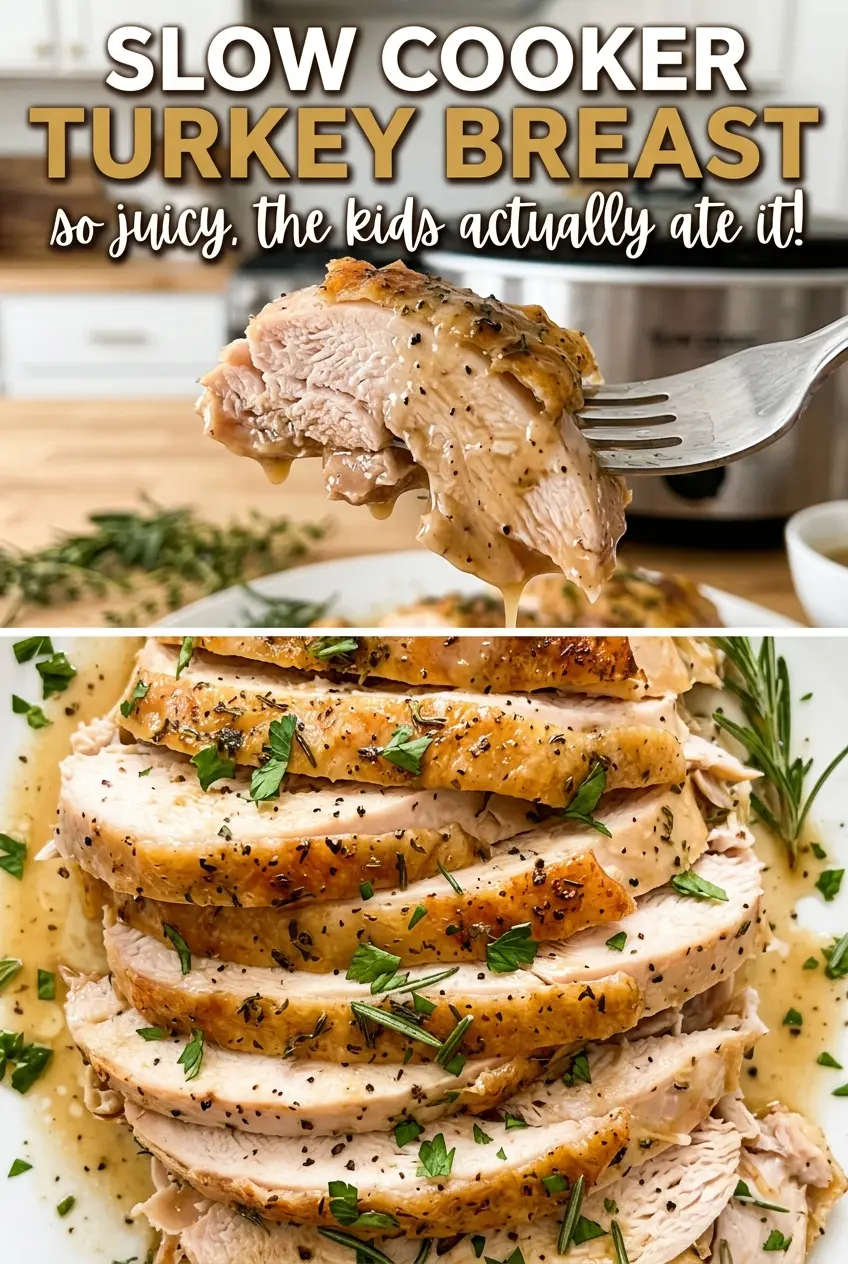
The slow cooker keeps turkey breast off the oven schedule, and the onion and celery underneath give it a steady bed while it cooks. When I make this, I start with a thawed breast and pat it dry before the seasoning goes on; that small bit of prep keeps the butter rub from sliding around on a wet surface. This Slow Cooker Turkey Breast is a practical way to cook a bone-in breast without tending a roasting pan.
The rub uses softened butter, so it spreads easily over the outside and under the skin where you can reach. The vegetables and broth add moisture beneath the turkey, while thyme, garlic powder, pepper, and paprika season the meat. The cooker does the slow work; your thermometer tells you when the breast is ready. After a short rest, the slices are tender and full of savory, herby flavor.
Kitchen Note
Softened butter matters here: cold butter clumps with the seasonings and is harder to spread evenly. Let it soften enough to stir smoothly, then work the rub under the skin gently wherever it lifts without tearing.
Save this Slow Cooker Turkey Breast for a low-effort main with tender slices and a thyme-paprika rub.
Why Slow Cooker Turkey Skin Stays Soft
A covered slow cooker is a moist cooking environment, not a dry roasting oven. The turkey cooks above broth and vegetables with the lid holding in steam, so the skin won’t turn crisp and browned in the way it does in an oven. Expect it to stay soft. That isn’t a sign the meat has failed; judge the breast by its internal temperature, not by the color or texture of its skin.
This is a useful trade-off to understand before you start. The slow cooker gives you an unattended cooking window and keeps the meat surrounded by moisture, but it doesn’t provide the dry heat needed for crisp skin. I leave the breast skin-side up as it cooks, which keeps the seasoned surface facing upward, and focus on getting the meat properly cooked and rested. If crisp skin is essential to your meal, this slow-cooker method isn’t designed to deliver it.
The broth and vegetables at the bottom are there to support the slow cooking and build savory cooking juices. They don’t make the skin crisp, and adding extra liquid won’t change that. Knowing what texture to expect makes it easier to enjoy the tender, gently seasoned turkey for what this method does well.
Why the Onion-Celery Bed and Seasoning Ingredients Matter

- Yellow onion and celery — These form the vegetable bed beneath the breast and give the broth a gentle savory base. A fresh, firm onion and crisp celery are nice, but there isn’t a need to seek out specialty produce; ordinary grocery-store vegetables work well.
- Low-sodium chicken broth — The lower sodium level leaves room for the kosher salt in the rub instead of making the finished meat taste overly salty. Use a broth you like the taste of, since its flavor carries into the juices. The recipe already has broth as its liquid, so water isn’t an equivalent flavor swap.
- Unsalted butter — Butter carries the dried seasonings across the turkey and adds a mild richness. Unsalted butter keeps the salt level in your control alongside the measured kosher salt. Softening it before mixing is more useful than choosing an expensive brand.
- Dried thyme, garlic powder, black pepper, and paprika — These are the savory, aromatic backbone of the rub, and pantry versions work well here. Dried thyme holds up during the long cook; fresh herbs would behave differently in the butter mixture, so I stick with dried thyme for this version.
- Bone-in turkey breast — The specified bone-in cut gives the recipe its shape and is what the cooking window is built around. Buy a thawed breast, with the giblets removed, and choose one within the stated size range. Patting the surface dry helps the seasoning stay in place.
Build the Turkey Above the Broth, Then Let the Thermometer Decide
Set up the vegetable bed
Put the quartered onion and celery pieces in the bottom of a 6-quart slow cooker, then pour in the chicken broth. Spread the vegetables into a fairly even layer so the turkey has a bed beneath it rather than sitting directly on the cooker bottom. The vegetables don’t need to be finely chopped; the larger pieces are easy to work around when the turkey comes out. Keep the broth in the cooker, not in the seasoning mixture.
Mix and spread the savory rub
Stir together the butter, kosher salt, black pepper, garlic powder, dried thyme, and paprika until the seasonings are evenly distributed. Rub the mixture over the turkey breast and under the skin where possible. Work over the entire surface rather than leaving a thick clump of seasoning in one area. The turkey should be patted dry before you begin, so the rub has a better chance of staying where you put it.
Cook with the skin facing up
Set the turkey breast on top of the onion and celery, skin-side up, and cover the slow cooker. Cook on LOW for 5 to 6 hours or HIGH for 3 to 4 hours. Insert a thermometer into the thickest part of the breast without touching bone; the turkey is ready when it reads 165°F. Bone can give a misleading reading, so take care to position the thermometer tip in the meat itself.
Rest the breast before carving
Transfer the cooked turkey to a cutting board and tent it loosely with foil. Let it rest for 15 minutes before carving so the meat has time to settle after cooking. Keep the foil tent loose rather than pressing it against the turkey. Carve once the rest is complete and serve the slices with the savory juices from the cooker if you like.
Three Useful Ways to Adapt Slow Cooker Turkey Breast
Make a dairy-free seasoning rub with broth
For a dairy-free version, leave out the butter and stir the seasonings with a little of the recipe’s measured chicken broth to make a thinner rub. Apply it over the turkey, using the same listed broth total in the cooker and rub together. It won’t have the buttery richness or cling as thickly, but it keeps the seasoning in the dish without adding another ingredient.
Use a skinless bone-in breast
A skinless bone-in breast still works with the onion, celery, broth, and seasoning mixture. Rub the butter mixture over the exposed surface, then set the breast on the vegetable bed with its broad side facing up. You lose the seasoned skin, but the meat can still be cooked to the same doneness cue; rely on the thermometer rather than assuming the skin-on timing will be exact.
Pull the meat for a shredded serving
For a softer, casual serving style, remove the bones after the rest and pull the turkey into bite-size pieces instead of slicing it. The meat will pick up more of the seasoning on its surface, though you won’t get the neat slices of a carved breast. This changes the presentation without changing the cook.
Storage and Reheating
- Refrigerator: Refrigerate leftovers within 2 hours and keep carved turkey in an airtight container for 3 to 4 days. The slices will firm up as they chill.
- Freezer: Freeze carved turkey in an airtight freezer container or well-wrapped portions for up to 2 to 6 months for best quality. Thaw it in the refrigerator before reheating.
- Reheating: Warm slices covered in the microwave in short intervals, or in a covered oven-safe dish with a little cooking liquid, until steaming hot throughout. Uncovered, prolonged reheating dries the lean breast meat.
Questions That Come Up With Slow Cooker Turkey Breast
Slow Cooker Turkey Breast
Ingredients
Equipment
Method
- Put the onion and celery in the bottom of a 6-quart slow cooker.
- Pour in the chicken broth.
- Stir together the butter, salt, pepper, garlic powder, thyme, and paprika.
- Rub the butter mixture over the turkey breast and under the skin where possible.
- Set the turkey breast skin-side up on the vegetables and cover.
- Cook on LOW for 5 to 6 hours or HIGH for 3 to 4 hours, until a thermometer inserted into the thickest part of the breast without touching bone reads 165°F.
- Transfer the turkey to a cutting board and tent loosely with foil.
- Rest for 15 minutes before carving.
