
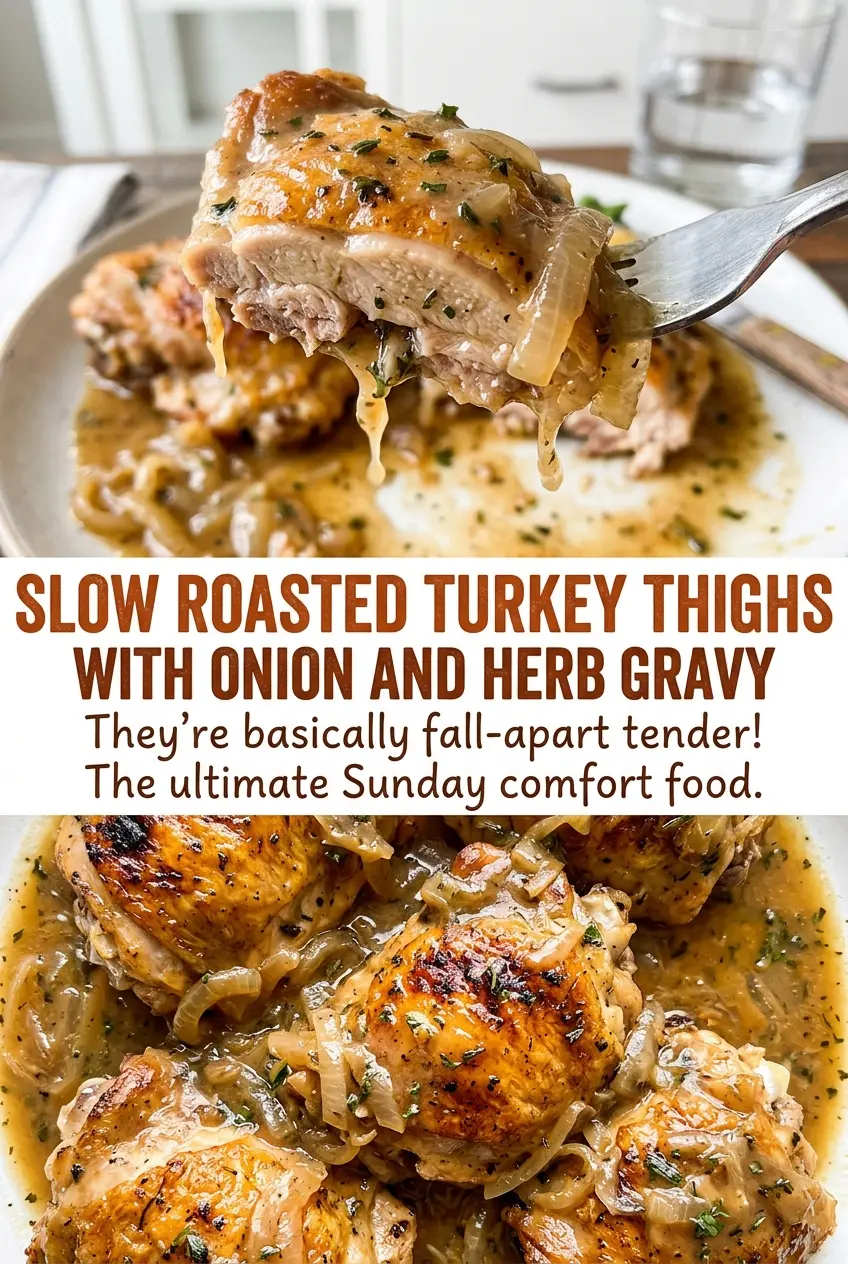
The onions are soft and sweet by the time the turkey comes out, and the pan juices smell like thyme and rosemary. That’s the start of the gravy, not something to pour down the drain. I roast these turkey thighs uncovered at a steady 325°F, which gives the skin time to brown while the dark meat becomes tender.
Bone-in, skin-on thighs are forgiving, but their best texture comes from letting them cook beyond the minimum temperature for poultry. I check each thigh separately because they don’t always finish together; the thermometer goes into the thickest part, away from the bone. You can serve them once they reach 165°F, though dark meat gets especially tender in the 175–185°F range.
The gravy uses the onions from the roasting dish, plus the strained pan juices, butter, flour, broth, and parsley. It’s savory without being heavy, with enough onion in every spoonful to make the turkey feel like a complete Sunday supper.
Kitchen Note
Skim the excess fat from the strained pan juices before they go into the gravy. Keep the flavorful liquid, but taking off that slick layer makes the finished gravy taste balanced instead of greasy.
Save these slow roasted turkey thighs with onion and herb gravy for a cozy dinner built around tender dark meat and rich pan juices.
Why Turkey Thighs Get More Tender When You Roast Past 165°F
Turkey thighs are dark meat, and dark meat has more connective tissue than breast meat. At 165°F, the turkey has reached the minimum safe temperature, but the texture can still be firm. Give the thighs more time in the oven and that connective tissue softens, making the meat easier to pull from the bone and noticeably more tender.
That’s why this roast isn’t built around rushing the pan at a higher temperature. The 325°F oven gives the thighs time to cook through while their skin browns, and the thermometer lets you choose the texture you prefer. I take the reading in the thickest part of each thigh, away from the bone, since bone can throw off a temperature check. If one thigh reaches your target before the others, take that one out and let the rest continue roasting.
Expect browned skin rather than the brittle, crackling finish you’d get from a high-heat roast. The payoff is juicy meat and a pan full of onion-scented juices for gravy.
Why Bone-In Thighs and Yellow Onions Matter to This Gravy

- Bone-in, skin-on turkey thighs — The bone helps protect the meat during a long roast, while the skin browns on top. Choose thighs of similar size so they finish at a similar pace; boneless, skinless thighs won’t behave the same way in this roasting time.
- Yellow onions — These soften beneath the turkey and bring sweetness and body to the gravy. Slice them evenly so they cook at about the same rate; yellow onions are the best everyday choice here, and there’s no need to seek out a specialty variety.
- Garlic, thyme, and rosemary — Smashing the garlic releases its aroma while keeping the cloves easy to remove after roasting. Fresh herb sprigs perfume the pan juices without leaving chopped leaves throughout the gravy; discard the stems and garlic before you make the sauce.
- Low-sodium chicken broth — It provides liquid for the roasting dish and gives you control over the gravy’s saltiness. A low-sodium broth is especially useful because the drippings and seasoned turkey add their own savory depth.
- Butter and all-purpose flour — Together they form the base that thickens the strained juices and broth. Fresh parsley goes in at the end, where its clean, green flavor brightens the onion-rich sauce.
From Aromatic Roasting Pan to Onion Gravy
Season the Thighs and Build the Onion Bed
Heat the oven to 325°F, then pat the thighs dry before seasoning them with part of the salt and the black pepper. Rub olive oil over the skin so it’s coated, not dripping. Spread the sliced onions, smashed garlic, thyme, and rosemary in a 9×13-inch baking dish, then pour in 1 cup of chicken broth around the aromatics. Set the turkey on top skin side up; keeping the skin above the broth gives it room to brown.
Roast Slowly Until Each Thigh Is Tender
Roast uncovered for 2 to 2 1/2 hours. Start checking the thickest part of each thigh near the end of that window, with the thermometer positioned away from the bone. The minimum reading is 165°F, while 175–185°F gives dark meat a more tender texture. Don’t rely on the skin color alone; browned skin doesn’t tell you whether the center has reached the temperature you want.
Rest the Meat and Separate the Pan Components
Transfer the thighs to a platter and tent them loosely with foil for 15 minutes. While they rest, spoon the onions into a 3-quart saucepan, then discard the garlic and herb stems. Strain the pan juices into a measuring cup and skim off excess fat before adding the juices to the gravy. A loose foil tent lets some steam escape instead of trapping it tightly against the browned skin.
Cook the Roux and Finish the Gravy
Melt the butter in the saucepan with the onions over medium heat, then stir in the flour and cook for 1 minute. Whisk in the strained pan juices and the remaining chicken broth gradually, so the flour mixture blends smoothly into the liquid. Bring it to a simmer and cook, stirring, for 4 to 6 minutes, until the gravy thickens. Stir in the parsley and remaining salt, then serve the gravy with the rested turkey.
Three Ways to Adapt the Thighs and Gravy
Make the Gravy Gluten-Free
Replace the all-purpose flour with the same volume of a gluten-free 1:1 flour blend intended for thickening. Cook it with the butter and onions for the same minute before whisking in the liquids. The gravy may have a slightly different texture depending on the blend, but this keeps the roux method and onion flavor intact.
Keep the Gravy More Herb-Forward
For a softer, less piney herb note, leave out the rosemary and roast with the thyme alone. The gravy will still pick up flavor from the onions and pan juices, while the thyme comes through more clearly.
Serve the Onions Alongside for Smoother Gravy
If you prefer a smooth sauce, lift the roasted onions out before making the roux and serve them beside the turkey instead. The butter, flour, strained pan juices, and broth still make a full gravy; you’ll just lose the soft onion pieces in each spoonful.
Storage and Reheating
- Refrigerator: Refrigerate the turkey and gravy in separate airtight containers within 2 hours. They keep for 3–4 days; the skin will soften in storage.
- Freezer: Freeze the turkey and gravy separately for up to 2–3 months for best quality. Removing the meat from the bone and freezing it in portions makes reheating easier.
- Reheating: Warm the turkey covered in a skillet or microwave, and heat the gravy gently in a saucepan, stirring often. Reheat leftovers to 165°F; avoid boiling the gravy, which can make it overly thick.
Questions That Come Up With Slow-Roasted Turkey Thighs
Slow Roasted Turkey Thighs with Onion and Herb Gravy
Ingredients
Equipment
Method
- Heat the oven to 325°F.
- Pat the turkey thighs dry and season them with 1 teaspoon of the salt and the pepper.
- Rub the skin of the turkey thighs with the olive oil.
- Spread the onions, garlic, thyme, and rosemary in a 9x13-inch baking dish.
- Pour 1 cup of the broth around the onions and herbs.
- Set the turkey thighs skin side up on top.
- Roast uncovered for 2 to 2 1/2 hours, until the skin is browned and a thermometer in the thickest part of each thigh, away from the bone, reads at least 165°F; for more tender dark meat, aim for 175–185°F.
- Transfer the thighs to a platter, tent loosely with foil, and rest for 15 minutes.
- Spoon the onions into a 3-quart saucepan.
- Discard the garlic and herb stems.
- Strain the pan juices into a measuring cup and skim off excess fat.
- Melt the butter in the saucepan with the onions over medium heat.
- Stir in the flour and cook for 1 minute.
- Gradually whisk in the strained pan juices and the remaining 1 1/2 cups broth.
- Bring the gravy to a simmer.
- Cook, stirring, for 4 to 6 minutes, until thickened.
- Stir in the parsley and remaining 1/2 teaspoon salt.
- Serve the gravy with the turkey.
