
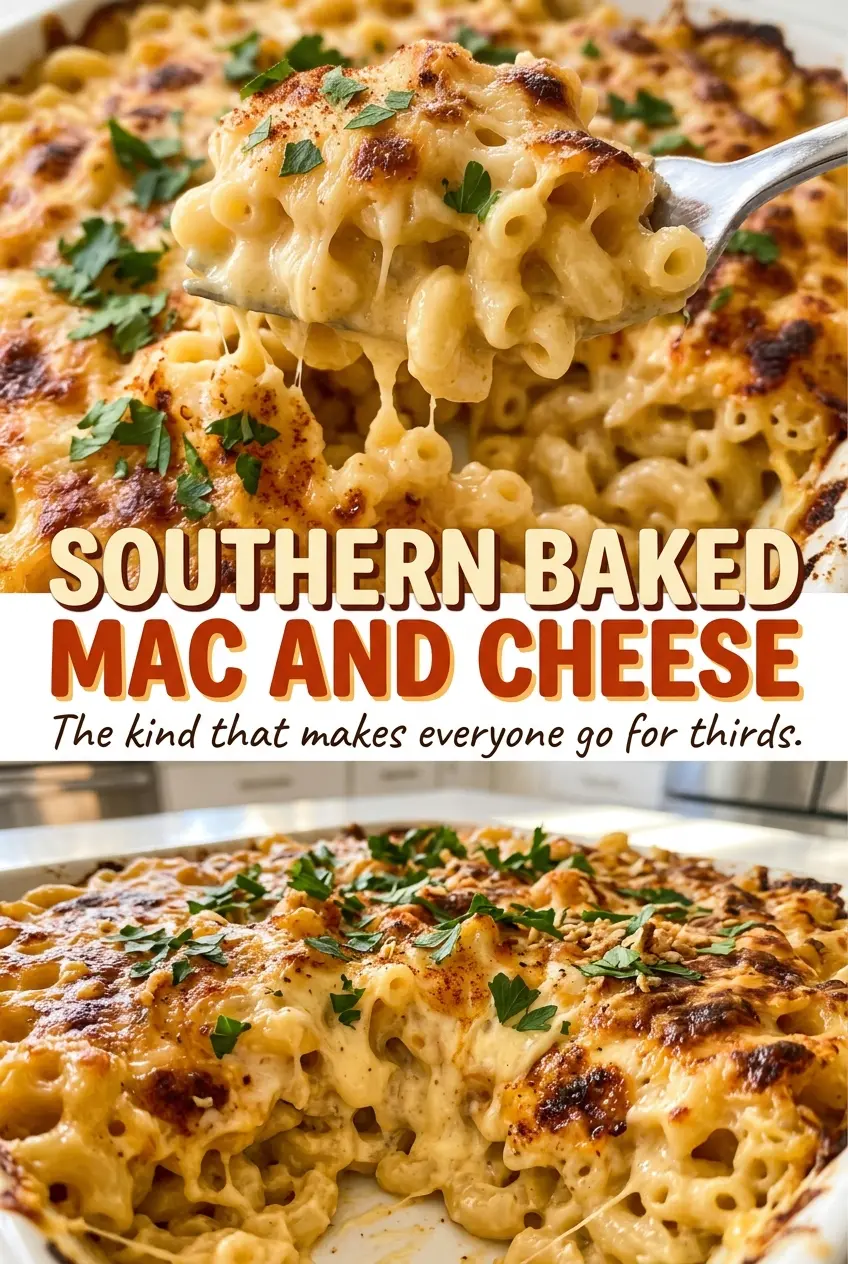
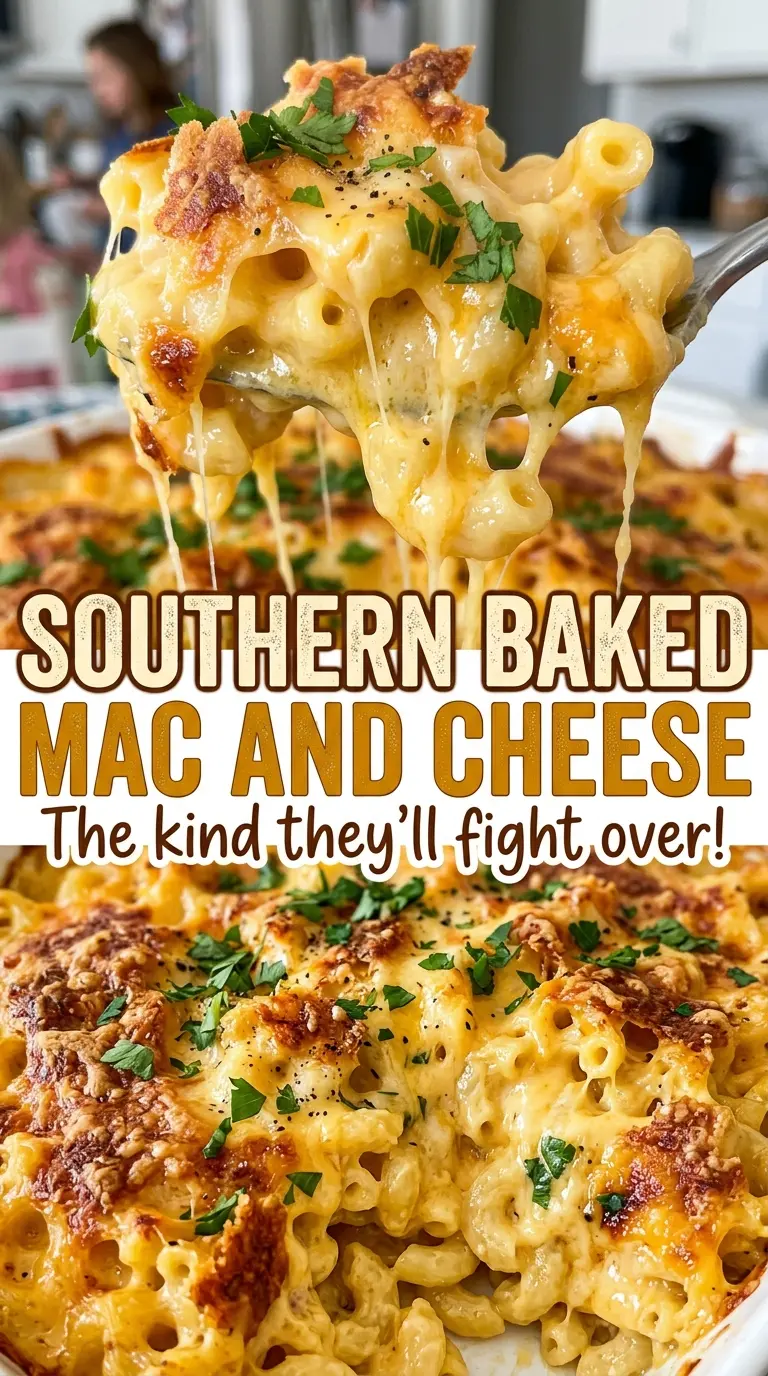
The edges start bubbling first, and the top of this Southern baked mac and cheese turns deep gold while the center stays creamy. That contrast is what I want: a browned cheese cap, tender macaroni, and no dry corners. I bake it in a 9×13-inch dish so every scoop gets some of the crisp top and the soft middle.
The macaroni goes into the oven before it’s fully tender, which gives it time to finish cooking while it takes in the egg-and-milk mixture. Evaporated milk brings richness without making the casserole watery, and sharp cheddar gives the cheese layer a full, savory taste. Let the dish rest before serving, and the slices hold together instead of sliding apart.
Kitchen Note
I work the butter into the corners of the baking dish, not just across the flat bottom. Those cheesy edges can cling, and a careful coating makes it easier to lift out neat portions.
Save this Southern baked mac and cheese for its golden top, creamy center, and sharp cheddar flavor.
Why the Macaroni Needs to Stop Two Minutes Early
Macaroni that’s fully tender before it goes into the dish has nowhere good to go during a long bake. It keeps cooking in the oven, and the egg-and-milk mixture gives the pasta more moisture to absorb. Starting with noodles that still have a little firmness in the center helps them finish tender without turning soft and swollen.
Cook the elbows for two minutes less than the package’s suggested time, then drain them well. That short lead time matters more here than it would in a quick stovetop cheese sauce. The oven needs 35 to 45 minutes to set the custard, warm the middle, and brown the top, so the pasta has plenty of time to finish cooking.
Don’t judge the noodles by how they feel in the colander alone. They should be flexible but still have a noticeable bite when you taste one. If you cook them all the way through first, there’s no way to put that firmness back once the casserole is baked.
Why Evaporated Milk and Two Cheeses Belong in This Casserole
- Evaporated milk — It adds concentrated dairy richness without bringing as much water as an equal volume of regular milk. Use unsweetened evaporated milk; sweetened condensed milk won’t give you the same savory, creamy custard.
- Whole milk and eggs — Together, they make the mixture that settles around the macaroni as it bakes. Two-percent milk can stand in for whole milk in the same measure, though the finished casserole will be a little less rich. The eggs help the center set, so I don’t recommend leaving them out.
- Sharp cheddar — This is the main source of that pronounced cheddar taste. A block you grate yourself melts more smoothly than pre-shredded cheese, which is coated to keep the shreds separate.
- Monterey Jack — Its mild flavor and easy melt soften the cheddar’s sharper edge. Pepper Jack makes a good direct swap if you want a little heat; the flavor will be spicier without changing the casserole’s basic method.
- Elbow macaroni — The short curves catch the cheese mixture and are easy to serve by the spoonful. Gluten-free elbow macaroni works as a swap, though different brands can soften at different rates during baking.
- Butter and seasonings — Unsalted butter gives you control over the salt already divided between the pasta water and the milk mixture. Black pepper, garlic powder, and paprika season the custard evenly; the paprika also gives the top a warm color beneath the melted cheese.
Building the Custard and Getting the Golden Top
Grease the Dish and Parboil the Elbows
Heat the oven to 350°F and grease a 9×13-inch baking dish with one tablespoon of butter, including the corners. Bring a large pot of water to a boil, add two teaspoons of the kosher salt, and cook the macaroni until it’s two minutes shy of the package directions. Drain it well; water clinging to the noodles can thin the mixture in the baking dish.
Whisk a Smooth, Evenly Seasoned Mixture
In a large bowl, whisk the eggs with the evaporated milk and whole milk. Add the remaining kosher salt, black pepper, garlic powder, and paprika, then whisk until the seasonings are dispersed and there are no streaks of egg white. The spices should look evenly suspended rather than sitting in a small patch at the bottom of the bowl.
Coat the Hot Pasta Before Adding the Cheese
Toss the hot, drained macaroni with the remaining butter, then let it cool for five minutes. Stir in four cups of the combined cheeses and the egg mixture, folding until the cheese is spread through the pasta. If the cheese collects in one clump, keep stirring gently until the elbows are coated instead of leaving a pocket of cheese in the bowl.
Bake Until the Center Sets, Then Let It Rest
Spread the macaroni mixture in the prepared dish and scatter the remaining cheese evenly over the surface. Bake for 35 to 45 minutes, until the edges bubble, the top is golden, and the center reaches 160°F. The top should look melted and toasted in spots, not pale and wet. Let the casserole rest for 10 minutes before serving so the center has time to settle.
Three Useful Ways to Change the Cheese or Pasta
Turn Up the Heat with Pepper Jack
Replace the Monterey Jack with an equal amount of Pepper Jack. It keeps the soft, melty cheese layer while adding a noticeable peppery kick, so the casserole tastes livelier without needing a new sauce or extra steps.
Make It Gluten-Free with Elbow Pasta
Use gluten-free elbow macaroni in place of regular elbows, and cook it two minutes shy of the package directions before baking. Since gluten-free brands vary in how quickly they soften, check a noodle for a little firmness before draining; the finished texture may be less springy than the wheat version.
Add a Smoky Edge with Smoked Cheddar
Replace one-quarter of the sharp cheddar with smoked cheddar and keep the rest of the cheese blend the same. The casserole gets a gentle smoky note, while the sharp cheddar still carries the familiar flavor instead of letting the smoke take over.
Storage and Reheating
- Refrigerator: Keep leftovers covered for 3 to 4 days. The pasta will firm up as it chills, and the cheese topping won’t stay crisp.
- Freezer: Freeze airtight portions for up to 2 months for best quality. Thaw them in the refrigerator before reheating; the texture may be a little softer after freezing.
- Reheating: Cover a portion with foil and warm it in a 350°F oven until the center reaches 165°F. A small splash of whole milk helps keep it from drying out; reheating uncovered can toughen the edges before the middle warms through.
Questions That Come Up When Baking Southern Mac and Cheese
Southern Baked Mac and Cheese
Ingredients
Equipment
Method
- Heat the oven to 350°F.
- Grease a 9x13-inch baking dish with 1 tablespoon of the butter.
- Bring a large pot of water to a boil.
- Add 2 teaspoons of the salt.
- Cook the macaroni until 2 minutes shy of the package directions, then drain well.
- Whisk the eggs, evaporated milk, whole milk, remaining 1 teaspoon salt, pepper, garlic powder, and paprika in a large bowl.
- Toss the hot macaroni with the remaining 4 tablespoons butter.
- Let the macaroni cool for 5 minutes.
- Stir in 4 cups of the combined cheeses and the egg mixture.
- Spread the macaroni mixture in the prepared dish.
- Scatter the remaining 2 cups of cheese evenly over the top.
- Bake for 35 to 45 minutes, until the edges are bubbling, the top is golden, and the center reaches 160°F.
- Let the mac and cheese rest for 10 minutes before serving.
