
The bread cubes should feel dry before they meet the broth, not toasted on the outside with soft centers underneath. That small difference matters: bread that still holds moisture can turn a pan of sausage stuffing heavy instead of tender. I dry the cubes slowly, give them one stir, and let them cool while I work on the sausage and vegetables.
For this version, the sausage brings savory richness, while onion, celery, sage, and thyme give each bite that familiar stuffing flavor. I cook the vegetables in the same skillet after browning the sausage, so they pick up the browned bits left behind. Then eggs and chicken broth coat the cubes and help the casserole hold together without losing its soft middle.
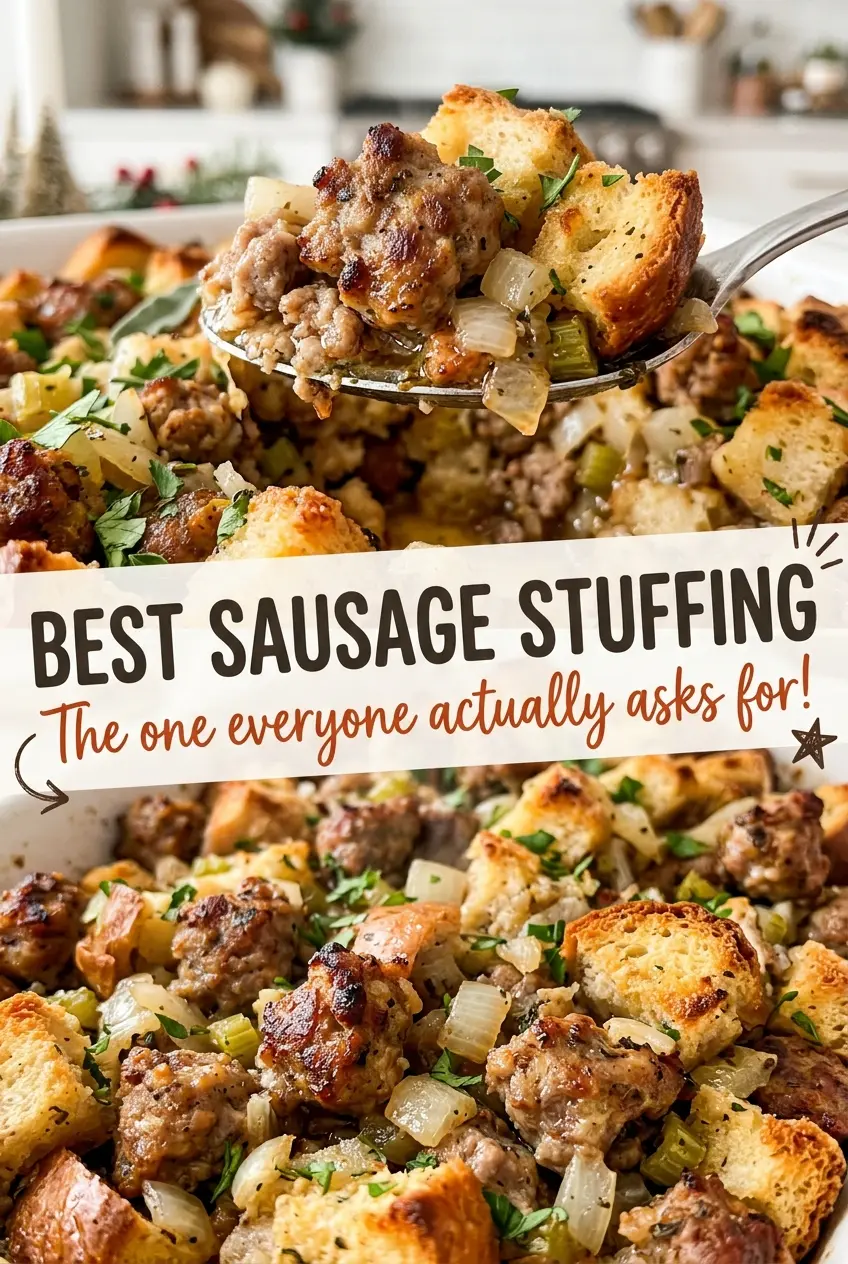
The covered bake keeps the center moist; the uncovered finish gives the top time to turn golden. After a short rest, each scoop has a browned top and a tender, savory center.
Kitchen Note
Let the dried bread cubes cool before mixing them with the sausage and broth. Warm cubes can soften unevenly, while fully cooled, dry cubes take up the liquid more evenly.
Save this Best Sausage Stuffing for a crisp golden top, a tender center, and a savory mix of pork sausage, sage, and thyme.
Why the Covered Bake Comes Before the Golden Top
Stuffing has two textures to get right at once: a soft, cohesive center and a top that isn’t wet or pale. Baking it uncovered from the start exposes the surface to heat for the whole bake, which can dry and brown the top before the middle has had time to settle. Covering the dish first gives the broth and eggs time to bind the bread throughout.
Uncovering for the final stretch changes the job. The top can dry out and brown while the center finishes cooking, so you get contrast instead of a uniformly soft casserole. The goal isn’t a crunchy layer all the way through; it’s a browned surface with a moist middle that holds together when you scoop it. Letting the dish rest after baking helps that egg-bound center settle before serving.
The Bread and Binder That Set the Texture

- Bread cubes — Bread gives the casserole its structure, and uniform 3/4-inch cubes help it bake evenly. A sturdy loaf is a good choice; the oven-drying step matters more than buying an expensive bread. Sourdough or whole-wheat bread works in place of a mild white loaf, with a more pronounced, slightly tangier or nuttier taste.
- Bulk pork sausage — This brings the main savory flavor and browned bits that season the vegetables. Choose sausage you enjoy eating on its own; a standard bulk pork sausage works well, so there’s no need for a specialty product. Bulk sausage also breaks into the small pieces that distribute through the bread.
- Onion, celery, and butter — These soften into the aromatic base and add richness without competing with the herbs. Fresh, firm celery gives the best bite, but ordinary yellow onion and unsalted butter are exactly right here.
- Sage and thyme — Dried herbs season the whole pan, and the brief cook in the skillet helps bring out their aroma. Rubbed sage has a soft, earthy character that suits pork; dried thyme adds a quieter herbal note.
- Low-sodium chicken broth and eggs — Broth moistens the cubes, while eggs help the baked mixture hold together. Low-sodium broth leaves room for the kosher salt and sausage to season the dish without making the result too salty. Whisk the eggs into the broth before pouring so they’re spread through the mixture rather than landing in one spot.
- Fresh parsley — Chopped parsley adds a fresh note to the rich sausage and dried herbs. Fresh parsley is worth using here; dried parsley won’t bring the same bright finish.
Build the Stuffing in Five Stages
Dry the Bread Without Toasting It Dark
Heat the oven to 300°F and spread the bread cubes on a rimmed baking sheet. Bake for 25 to 35 minutes, stirring once, until the cubes feel dry; they shouldn’t need to turn deeply brown. Keep an eye on the smaller pieces, which can dry sooner than larger ones. Let the cubes cool before you combine them with the other ingredients.
Brown the Sausage in Small Pieces
Set a 12-inch skillet over medium heat and cook the bulk pork sausage, breaking it into small pieces as it browns. Stir and break up larger clumps so you don’t end up with a few dense pockets of meat in the finished pan. Cook until browned and cooked through to 160°F. Transfer the sausage to a large bowl.
Soften the Vegetables and Wake Up the Herbs
Melt the butter in the same skillet, then add the diced onion and celery. Cook for 7 to 9 minutes, stirring now and then, until both vegetables have softened; they shouldn’t still feel crisp. Stir in the sage, thyme, salt, and pepper, and cook for 30 seconds. That short time is enough to make the herbs fragrant without letting them scorch.
Coat the Bread Evenly
Add the cooled bread cubes, cooked vegetables, and chopped parsley to the sausage. Toss them together first so the sausage and vegetables are distributed through the bowl. Whisk the broth and eggs, pour the mixture over the bread, and toss until the cubes are evenly moistened. Check the bottom of the bowl for dry pockets before moving everything to the greased 9×13-inch baking dish.
Bake Until the Center Sets and the Top Browns
Increase the oven to 350°F, transfer the mixture to the prepared dish, and cover it tightly with foil. Bake covered for 30 minutes, then uncover and bake for 20 to 25 minutes, until the top is golden and the center reaches 165°F. If the top is already browned but the center hasn’t reached temperature, keep baking until it does. Rest the dish for 10 minutes before serving.
Two Bread Swaps That Change the Character
Use Sourdough for a Tangier Base
Replace the usual bread with the same volume of 3/4-inch sourdough cubes. The finished stuffing will have a gentle tang that stands up well to the pork and sage; keep the broth and egg mixture the same so the texture stays balanced.
Make It Gluten-Free with a Sturdy Loaf
Use gluten-free bread cut into the same-size cubes, then dry and cool it as you would regular bread. Choose a loaf sturdy enough to hold its shape when tossed; gluten-free bread can be more fragile, so fold the mixture gently. The flavor will depend on the loaf, but the sausage, herbs, and browned top still give the dish its familiar character.
Storage and Reheating
- Refrigerator: Store covered for 3 to 4 days. The top will soften in storage, while the center stays moist.
- Freezer: Freeze cooled portions in an airtight container for up to 1 month for best quality. Thaw in the refrigerator before reheating.
- Reheating: Reheat covered in a 350°F oven until hot throughout, then uncover briefly to bring back some color on top. Individual portions can be reheated in the microwave, though the top will stay soft.
Questions That Come Up When Making Sausage Stuffing
Best Sausage Stuffing
Ingredients
Equipment
Method
- Heat the oven to 300°F.
- Spread the bread cubes on a rimmed baking sheet and bake for 25 to 35 minutes, stirring once, until dry; let cool.
- Increase the oven temperature to 350°F.
- Grease a 9x13-inch baking dish.
- In a 12-inch skillet over medium heat, cook the sausage, breaking it into small pieces, until browned and cooked through to 160°F.
- Transfer the cooked sausage to a large bowl.
- Melt the butter in the skillet, add the onion and celery, and cook for 7 to 9 minutes until softened.
- Stir in the sage, thyme, salt, and pepper and cook for 30 seconds.
- Add the dried bread cubes, cooked vegetables, and parsley to the sausage and toss to combine.
- Whisk the broth and eggs together, pour over the bread mixture, and toss until evenly moistened.
- Transfer the mixture to the prepared baking dish, cover tightly with foil, and bake for 30 minutes.
- Uncover and bake for 20 to 25 minutes, until the top is golden and the center reaches 165°F.
- Rest for 10 minutes before serving.
