
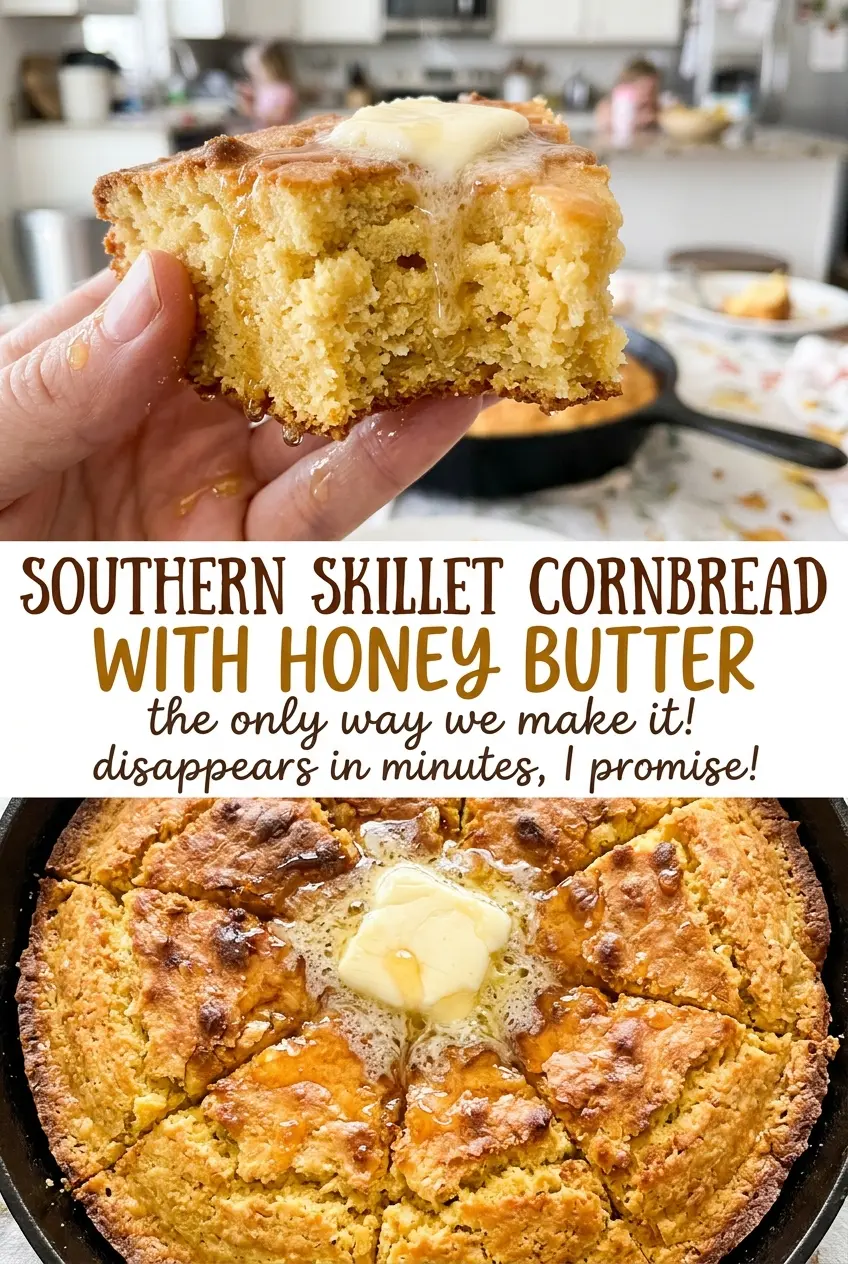
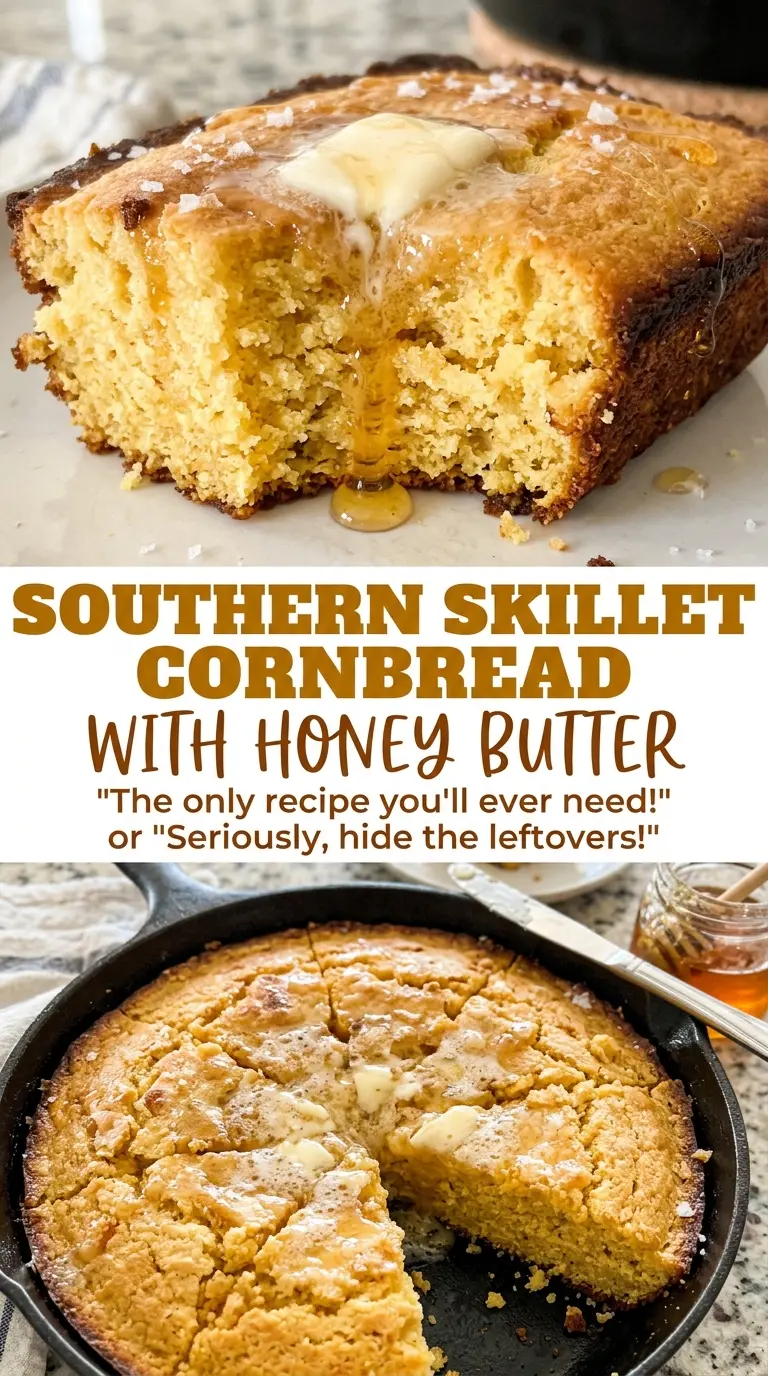
The best bite has a tender, corn-forward center and an edge that gives way with a little crunch. This skillet cornbread keeps the sweetness restrained, so the warm honey butter brings the soft, sweet contrast without turning every bite into dessert. It’s the kind of side that belongs beside a bowl of soup or a plate of beans, but it’s good enough to eat straight from the pan, too.
I like the balance here: yellow cornmeal brings the flavor, a little all-purpose flour helps the wedges hold together, and buttermilk gives the crumb a gentle tang. The honey butter is stirred separately, so everyone can swipe on as much as they like. Serve the cornbread while it’s still warm, with the golden edges and creamy honey butter ready to meet.
Kitchen Note
I get the oven and skillet ready before I combine the batter. Once the buttermilk meets the baking soda and baking powder, the leavening is underway, so I don’t leave the mixed batter sitting on the counter.
Save this Southern skillet cornbread for its crisp-edged cornmeal crumb and warm honey butter, ready to serve right alongside.
Why the Skillet Goes Into the Oven Before the Batter
A cast-iron skillet takes time to heat all the way through. Warming it with the bacon drippings while the oven comes to temperature gives the batter a hot landing, rather than asking a cold pan to heat up after the cornbread is already in it. That early contact helps form the browned edge people look for in skillet cornbread.
The drippings matter, too. They coat the cooking surface and add a savory note that balances the mild sweetness in the batter and honey butter. If the pan and fat are still cool, the cornbread can bake through without developing that same crisp, browned base. Let the skillet heat for about 10 minutes, then pour carefully: the drippings are hot, and the cast iron holds that heat.
This is also why I use a 10-inch skillet rather than a smaller pan. The batter spreads into a layer that can bake evenly in the stated time, while the hot sides help brown the edge. Keep the skillet in the oven as it heats instead of warming it separately on the stovetop, where the drippings can heat unevenly.
What the Cornmeal, Buttermilk, and Drippings Each Bring
- Yellow cornmeal — This is the main flavor and gives the crumb its sunny color. Use a fresh bag; cornmeal that smells stale or bitter will show up in a recipe with so few competing flavors. White cornmeal works in the same amount if you prefer a milder taste and paler crumb.
- All-purpose flour — A little flour gives the wedges more structure than cornmeal alone, so they’re easier to lift from the skillet. The standard store-brand bag is fine here; there’s no need for specialty flour. For a gluten-free adaptation, use a one-to-one gluten-free flour blend, as described below.
- Buttermilk — Its tang complements the corn, and its acidity works with the baking soda. If you’re out, stir 1 tablespoon of lemon juice or white vinegar into each cup of milk and let it stand for 5 minutes before using; the result is a little less tangy than cultured buttermilk.
- Bacon drippings — These flavor the crust as well as keeping the skillet coated. For a no-pork version, use the same amount of neutral vegetable oil; it still works for heating the pan, but you’ll lose the savory bacon note.
- Honey and butter — A mild honey lets the cornmeal stay in the foreground. The butter for the spread should be soft enough to stir smoothly with the honey and salt; a strongly flavored honey will make the topping taste more assertive.
From Hot Drippings to a Clean Toothpick
Heat the skillet with the drippings
Set the oven to 425°F and put the bacon drippings in a 10-inch cast-iron skillet. Slide the skillet into the oven while it heats, for about 10 minutes. The drippings should be hot when the batter goes in, not merely melted. Handle the pan carefully when you take it out; the cast iron will be hot all the way through.
Whisk the dry and wet mixtures separately
In a medium bowl, whisk together the cornmeal, flour, sugar, baking powder, baking soda, and salt so the leaveners are spread throughout. In another bowl, whisk the buttermilk with the egg, then whisk in the melted butter. Let the melted butter cool before adding it so it blends into the wet mixture instead of scrambling the egg.
Bring the batter together gently
Pour the wet mixture into the dry ingredients and stir only until no dry streaks remain. A few small lumps are fine; chasing a perfectly smooth batter can make the cornbread tougher. Carefully pour the batter into the hot skillet. It should spread across the pan without needing vigorous stirring or pressing.
Bake until golden, then finish the honey butter
Bake for 18 to 22 minutes, until the top is golden and a toothpick inserted in the center comes out clean. If the toothpick carries wet batter, give the center more time rather than judging by the edges alone. Let the cornbread rest in the skillet for 5 minutes before cutting. While it rests, stir the softened butter, honey, and salt together in a small bowl until smooth, then serve the spread with the warm cornbread.
Ways to Change the Cornmeal Crumb or Honey Butter
Make the cornbread gluten-free
Replace the all-purpose flour with a one-to-one gluten-free flour blend, and use gluten-free cornmeal and baking powder. The crumb may be a little more delicate, so let it rest in the skillet before cutting into wedges.
Make the honey butter sweeter and softer
Stir a little extra honey into the finished butter, adding it gradually until it tastes right to you. The spread will be sweeter and looser, which makes it easy to swipe over a warm wedge but less suited to holding a firm shape.
Use white cornmeal for a gentler flavor
Swap yellow cornmeal for white cornmeal in the same amount. The cornbread will have a paler color and a milder corn flavor, while keeping the same skillet method.
Storage and Reheating
- Refrigerator: Store the cooled cornbread airtight for 3 to 4 days; it will become a little firmer. Keep the honey butter covered in the refrigerator for up to 1 week.
- Freezer: Wrap individual cornbread pieces well and freeze for up to 2 months. The honey butter also freezes in an airtight container; thaw it in the refrigerator before serving.
- Reheating: Warm cornbread in a 300°F oven, loosely wrapped in foil, until heated through. Avoid leaving it uncovered for a long stretch, which dries the crumb; serve with the honey butter once warm.
Questions About the Cornbread and Honey Butter
Southern Skillet Cornbread with Honey Butter
Ingredients
Equipment
Method
- Heat the oven to 425°F.
- Add the bacon drippings to a 10-inch cast-iron skillet and place the skillet in the oven as it heats, about 10 minutes, until the drippings are hot.
- Whisk the cornmeal, flour, sugar, baking powder, baking soda, and salt in a medium bowl.
- Whisk the buttermilk and egg in a separate bowl, then whisk in the melted butter.
- Pour the wet ingredients into the dry ingredients and stir just until no dry streaks remain.
- Carefully pour the batter into the hot skillet.
- Bake for 18 to 22 minutes, until golden and a toothpick inserted in the center comes out clean.
- Let the cornbread rest in the skillet for 5 minutes.
- Stir the softened butter, honey, and salt together in a small bowl until smooth.
- Serve the honey butter with the warm cornbread.
