
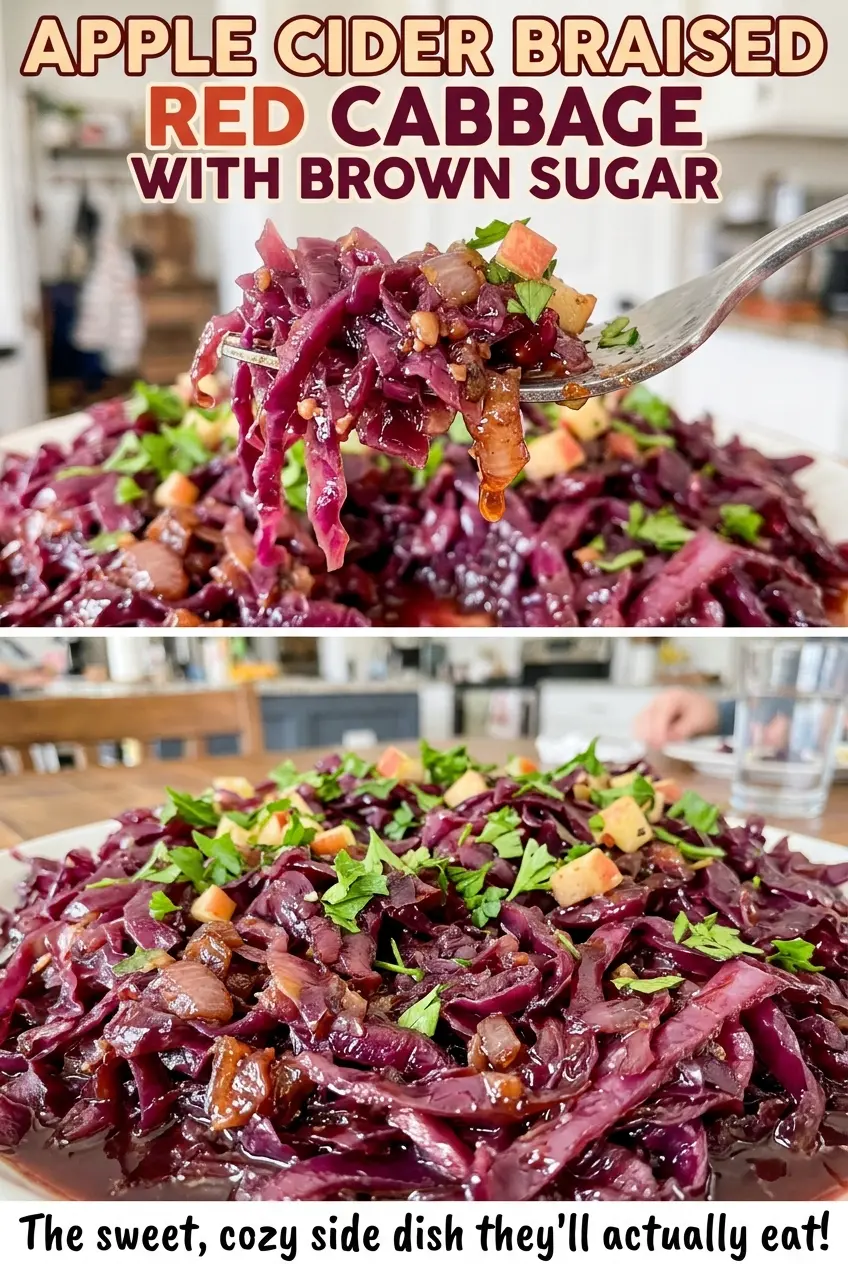
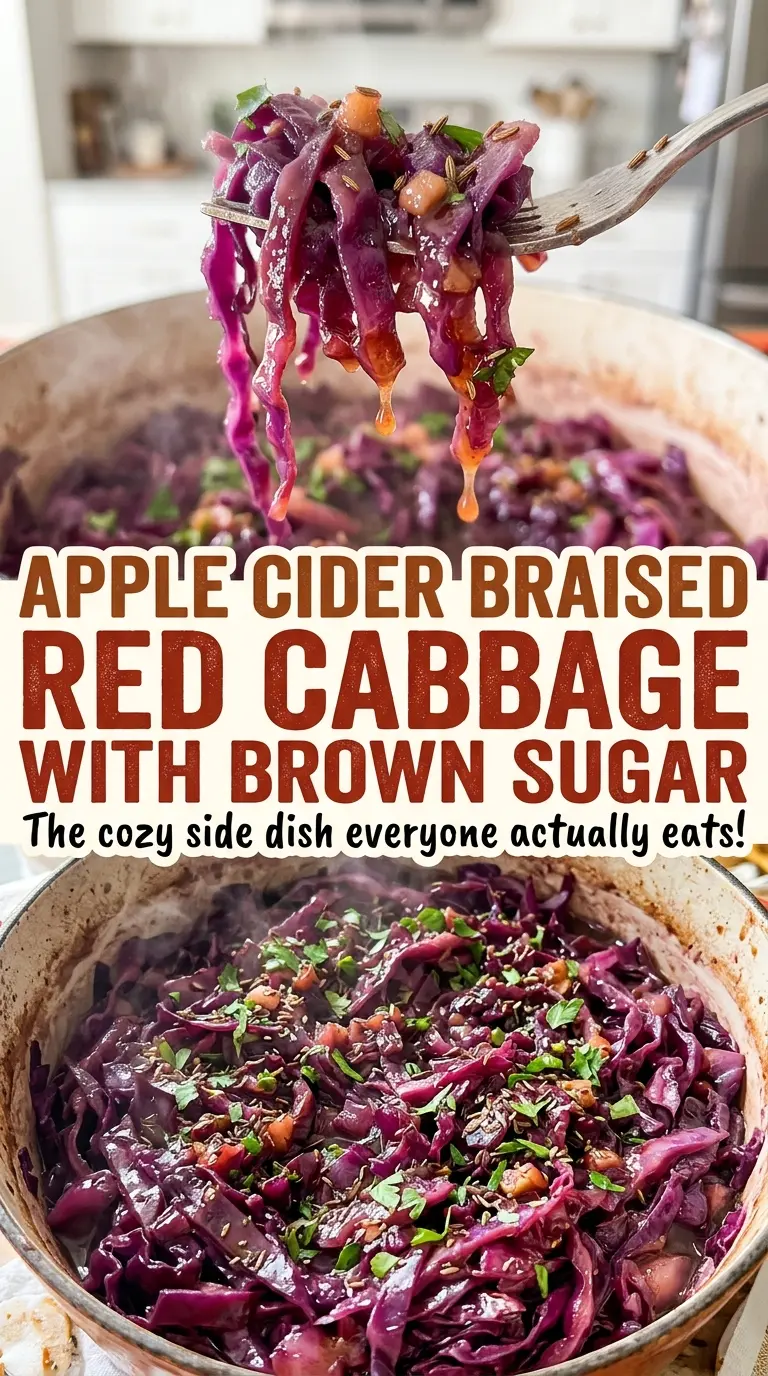
When the sliced cabbage first lands in the Dutch oven, it looks like too much for one pot. Give it a few minutes, though, and the ribbons soften and settle enough for the cider to reach every layer. I make this apple cider braised red cabbage with brown sugar when I want a side that tastes gently sweet and tart without turning into a sugary relish. The vinegar keeps the apple flavor lively, and the long, covered simmer makes the cabbage tender rather than crisp.
I start the onion in butter, then fold in the cabbage a handful at a time; pouring in all the liquid before the cabbage has wilted would leave the top dry and the bottom swimming. Once everything fits, apple cider, cider vinegar, and brown sugar make a balanced braising liquid that clings as it cooks. The finished cabbage is soft, glossy, and still pleasantly tangy, with enough structure to sit beside a roast or a simple weeknight main.
Kitchen Note
I slice the cabbage into thin, fairly even ribbons before it goes in. Thick pieces take longer to soften than thin ones, so uneven cutting can leave you with a mix of tender and firm bites after the braise.
Save this apple cider braised red cabbage for its tender texture and sweet-tart finish—a cozy side that starts with one head of cabbage.
Why the Cabbage Goes In Before the Cider
A medium head of red cabbage takes up a surprising amount of room once it’s sliced. Adding it by handfuls gives each batch time to wilt before the next one goes in, so the cabbage settles into the Dutch oven instead of spilling over the sides. It also means you can stir the ribbons through the softened onion rather than leaving a dense pile of raw cabbage on top.
That order matters once the braising liquid is added. Cabbage that hasn’t softened yet can sit above the cider while the bottom layer cooks in the liquid. Letting the ribbons begin to wilt first creates a more even bed, so the cider and vinegar can coat the cabbage as it braises. Keep stirring while you add the handfuls; the cabbage will gradually shrink, and the pot will have room for all of it before the liquid goes in.
What the Cider, Vinegar, and Brown Sugar Each Bring
- Red cabbage — Choose a head that feels firm and heavy, with crisp leaves rather than dry, limp edges. The cabbage is the foundation of the dish, and thin slices soften evenly while still holding their shape.
- Apple cider and cider vinegar — Cider gives the braising liquid its rounded apple note, while vinegar keeps the finished cabbage from tasting flat or overly sweet. Ordinary fresh apple cider and a standard bottle of apple cider vinegar both work; the vinegar’s acidity is doing useful work here, so don’t leave it out.
- Light brown sugar — Its mellow sweetness softens the vinegar’s edge without masking the cabbage. Pack it into the measuring spoon so the amount is consistent; dark brown sugar can stand in, though its stronger molasses note will come through more.
- Yellow onion — Thin slices soften in the butter and give the cabbage a savory base. A regular grocery-store onion is fine; there’s no need to seek out a specialty variety.
- Unsalted butter — It adds richness at the start and lets you control the salt separately. A standard butter works well, so save the fancy cultured butter for a dish where its flavor won’t be covered by a long braise.
How to Braise the Cabbage Until Tender, Not Limp
Soften the Onion in Butter
Melt the butter in a 6-quart Dutch oven over medium heat, then add the thinly sliced onion. Cook for 5 minutes, stirring often, until the slices have softened and look glossy. Keep the heat at medium rather than letting the butter brown; you want tender onion, not toasted edges. If the onion starts coloring quickly, lower the heat.
Wilt the Cabbage in Handfuls
Add the cabbage a handful at a time, stirring as each addition wilts. Cook for 8 to 10 minutes, until all the cabbage is in the pot and beginning to soften. The first handfuls will collapse enough to make room for the rest. If the ribbons still feel stiff, keep stirring and give them time to settle before adding the liquid.
Let the Covered Braise Do the Work
Stir in the apple cider, apple cider vinegar, brown sugar, salt, and pepper, then cover the pot. Cook over low heat for 45 to 60 minutes, stirring every 15 minutes, until the cabbage is tender. Keep the heat low; a vigorous simmer can make the bottom catch before the cabbage has softened through. Look for supple ribbons that bend easily when lifted with a fork.
Rest the Cabbage Before Serving
Take the pot off the heat and leave it uncovered for 5 minutes before serving. The cabbage will settle a little as the steam escapes, and the braising liquid will cling more closely to the ribbons. Give it one gentle stir before spooning it out, especially if some liquid has collected at the bottom.
Simple Changes for a Different Table
Make It Dairy-Free with Olive Oil
Replace the butter with the same amount of olive oil before cooking the onion. The cabbage will still soften and braise well, though the finished dish will taste a little less buttery and more directly savory.
Make the Cabbage Less Sweet
Use 1 tablespoon of packed light brown sugar instead of 2 tablespoons. The cider and vinegar will taste sharper, which suits a meal where you want the side to lean tangy rather than sweet.
Storage and Reheating
- Refrigerator: Keep leftovers in an airtight container for 3 to 4 days. The cabbage softens a little more as it sits.
- Freezer: Freeze cooled portions in an airtight container for up to 2 to 3 months. Thaw in the refrigerator; expect a softer texture after freezing.
- Reheating: Warm it gently in a covered saucepan over low heat, stirring occasionally. Avoid a hard boil, which can break down the tender ribbons and scorch the sweet braising liquid.
Questions That Come Up When Braising Red Cabbage
Apple Cider Braised Red Cabbage with Brown Sugar
Ingredients
Equipment
Method
- Melt the butter in a 6-quart Dutch oven over medium heat.
- Add the onion and cook, stirring often, for 5 minutes, until softened.
- Add the cabbage in handfuls, stirring as it wilts, and cook for 8 to 10 minutes, until all the cabbage is in the pot and beginning to soften.
- Stir in the apple cider, apple cider vinegar, brown sugar, salt, and pepper.
- Cover and cook over low heat for 45 to 60 minutes, stirring every 15 minutes, until the cabbage is tender.
- Remove the pot from the heat.
- Let the cabbage stand uncovered for 5 minutes before serving.
