
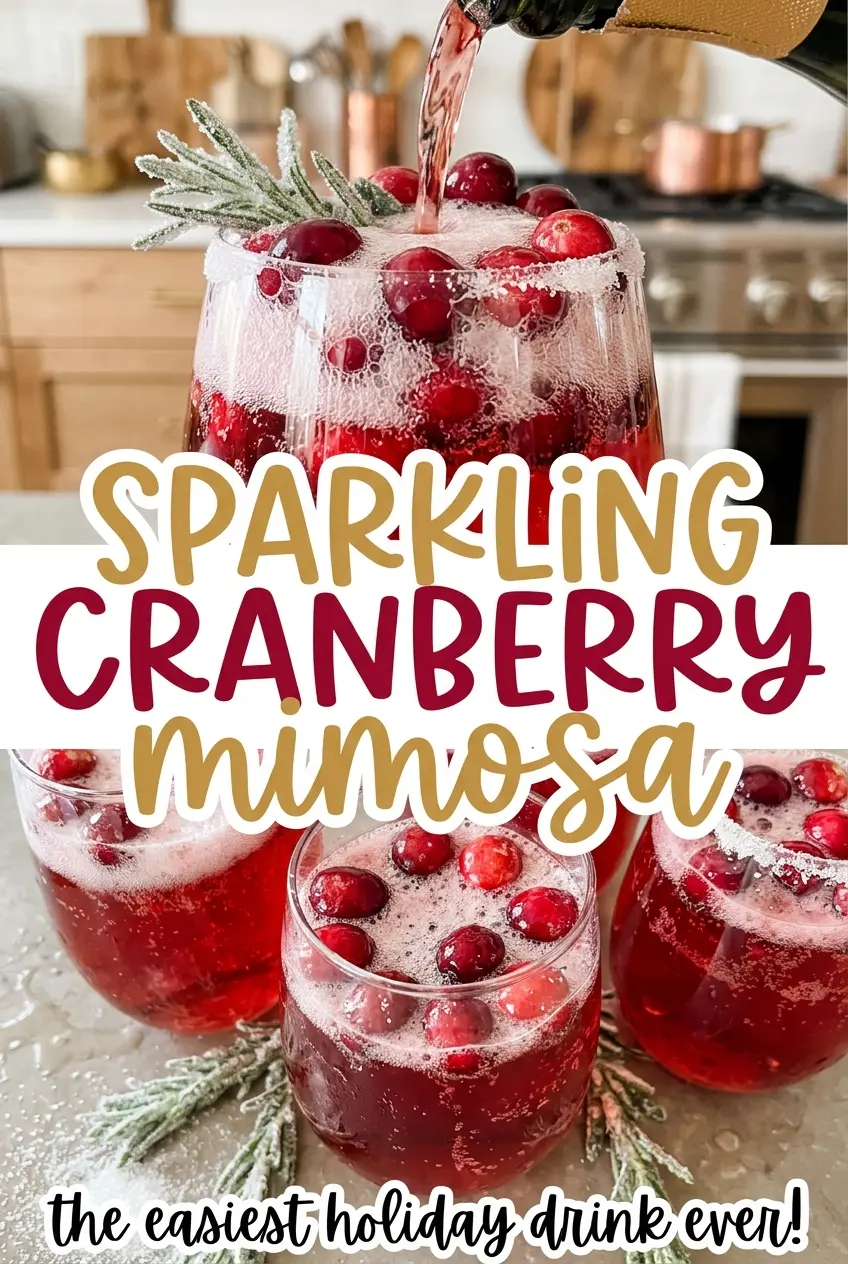
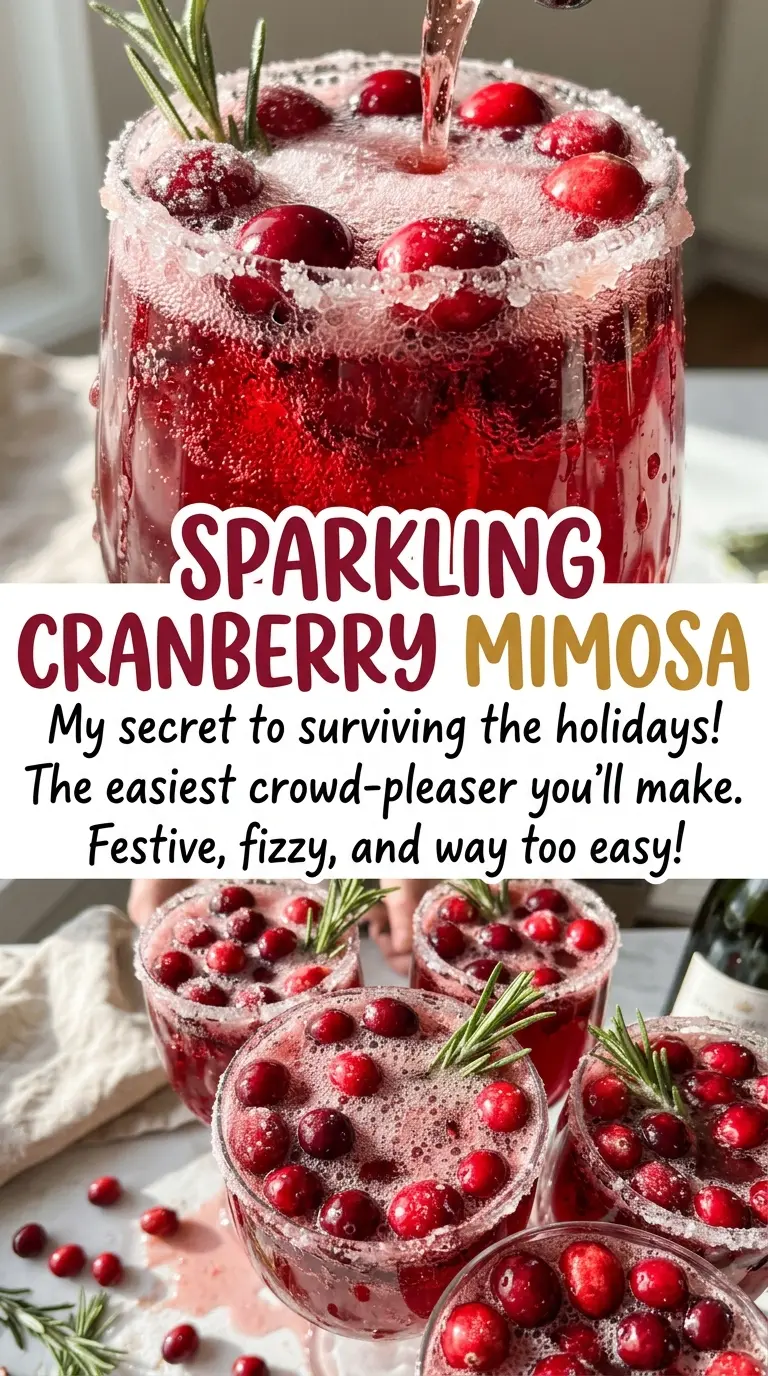
The first slow pour of sparkling wine can turn a quiet glass of cranberry juice into a lively, foamy one in seconds. I like having the juice measured out before I open the bottle, so I can keep the bubbles under control and get all eight glasses to the table while they’re still brisk and fizzy. These Sparkling Cranberry Mimosas use just two ingredients, but the order and pace of the pour make a noticeable difference.
The cranberry juice cocktail goes into the flutes first, where it gives each drink the same starting point. Then I add the chilled dry sparkling wine gradually, rather than rushing the whole bottle into one glass at a time. The proportions leave a little room in each 6-ounce flute, and the cranberry’s color makes it easy to see when the wine is evenly divided. Serve them right away, while the wine is lively and the glasses are cold.
Kitchen Note
Chill the flutes along with the juice and sparkling wine. That small detail keeps the drink feeling cold from the first sip, and the 6-ounce glasses have room for the pour without needing to be filled to the rim.
Save these Sparkling Cranberry Mimosas for a bright, bubbly pour made with just two ingredients.
Why the Juice Goes in Before the Bubbles
With a sparkling drink, the order of the pour gives you control over how each glass fills. The measured cranberry juice is already sitting at the bottom of each flute, so you can add wine gradually and watch the level rise. If you started with the wine, then tried to add juice, you’d have less control over the final proportions and the cranberry color would be harder to distribute consistently.
The proportions are straightforward once you see them in glass-size terms. Each flute starts with 2 ounces of cranberry juice cocktail. A 750-milliliter bottle divided among eight servings adds about 3.2 fluid ounces of sparkling wine per glass, for a pour of roughly 5.2 ounces total. That fits within a 6-ounce flute and leaves a little breathing room for the bubbles.
That margin matters when you’re serving a group. Sparkling wine can foam as it meets the juice, especially if it’s poured quickly, and the foam settles as you go. A slow, steady pour helps you keep the glass level in hand instead of reacting to an overflow. You’ll get a more even batch, too, because the juice is measured separately before the bottle is divided.
How the Cranberry Cocktail and Dry Wine Shape the Balance
- Cranberry juice cocktail — Use the cocktail rather than assuming all cranberry juice tastes alike. Products sold as cranberry juice cocktail are made for a ready-to-drink flavor, while pure cranberry juice tends to taste much sharper. Choose a bottle you enjoy drinking on its own; the cranberry is a clear part of every sip, not just a splash of color. Keep it chilled so it doesn’t warm the wine as you pour.
- Dry sparkling wine — The dry style keeps the drink from leaning too sweet beside the cranberry cocktail. You don’t need a special bottle for this simple mix, but pick one you’d be happy to drink by itself; the wine supplies most of the volume and its bubbles are the defining texture. Another dry sparkling wine works within the same proportions. A noticeably sweeter style will make the finished drink taste sweeter, even though the measurements stay the same.
Pouring Eight Mimosas Without Losing the Fizz
Get the Glasses and Ingredients Cold
Start with chilled cranberry juice cocktail, chilled dry sparkling wine, and eight chilled 6-ounce champagne flutes. Set the glasses where you can reach them easily before opening the wine. That setup matters because the finished drinks are best served immediately, not left waiting while you search for another glass. Keep the bottle closed until you’re ready to pour.
Measure the Cranberry First
Pour 1/4 cup cranberry juice cocktail into each flute. Take a quick look across the row before moving on; the juice should sit at a similar level in every glass. If one serving is noticeably short, correct it now while the wine bottle is still closed. Starting each drink with the same measured base makes the final round much easier to divide evenly.
Add the Sparkling Wine Slowly
Open the bottle when the glasses are ready, then slowly divide the sparkling wine evenly among them. Pour with a steady hand and pause if foam begins climbing toward the rim; rushing the stream makes it harder to keep the glasses equal. As the bubbles settle, continue distributing the wine until the bottle is shared across all eight flutes. Bring the glasses out while they’re still cold and freshly bubbly.
Small Choices That Change the Cranberry Mimosa
Choose a Brighter Cranberry Cocktail
Cranberry juice cocktails vary in how tart or sweet they taste. Choosing a sharper-tasting bottle gives the drink a more pronounced cranberry edge, while a sweeter one makes the wine seem softer. Keep the listed amount the same so each flute retains the intended proportion.
Let a Different Dry Sparkling Wine Set the Tone
Stay within dry sparkling wine, but choose a bottle with a crisper or rounder taste to nudge the drink in that direction. The cranberry will still be present, while the character of the wine comes through in the finish. Keep the bottle size and the eight-glass division unchanged for the same balance.
Making Ahead and Serving
- Before serving: Keep the juice, sparkling wine, and flutes chilled separately. You can portion the juice into the glasses ahead, but wait to add the wine until you’re ready to serve.
- Freezer: I don’t freeze the assembled drinks; freezing takes away the lively texture that makes a mimosa enjoyable. Keep the components chilled instead.
- Once mixed: Serve immediately. A poured glass isn’t a good make-ahead drink because the bubbles fade while it waits.
Questions That Come Up When Pouring These Mimosas
Sparkling Cranberry Mimosa
Ingredients
Equipment
Method
- Pour 1/4 cup cranberry juice cocktail into each of 8 chilled 6-ounce champagne flutes.
- Slowly divide the sparkling wine evenly among the glasses and serve immediately.
