
When the sweet potatoes come back to the pot after draining, they’re soft enough to mash but still steaming hard. Giving them a few minutes before the other ingredients go in keeps the filling from feeling loose, and it gives the butter and brown sugar a chance to blend in smoothly. That small pause is easy to overlook when you’re eager to get the casserole into the oven.
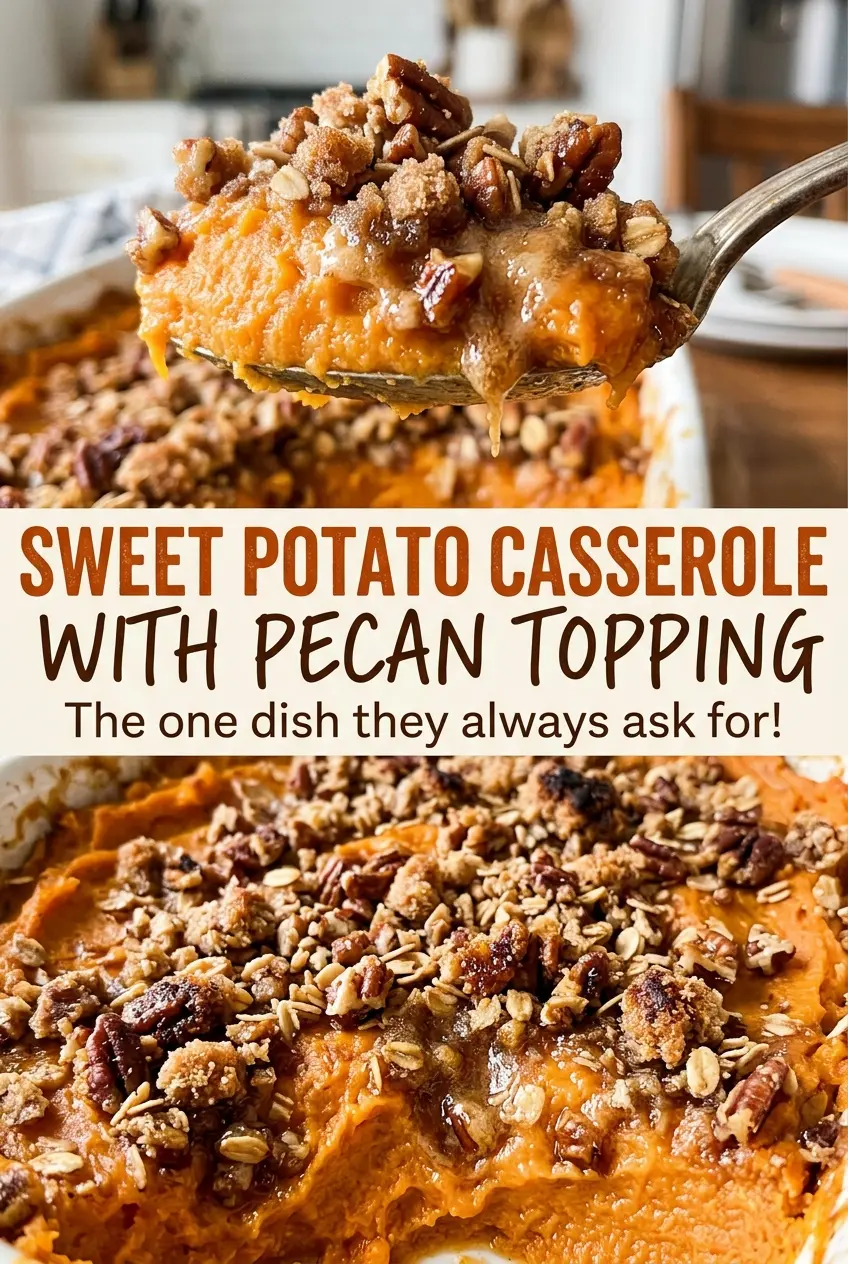
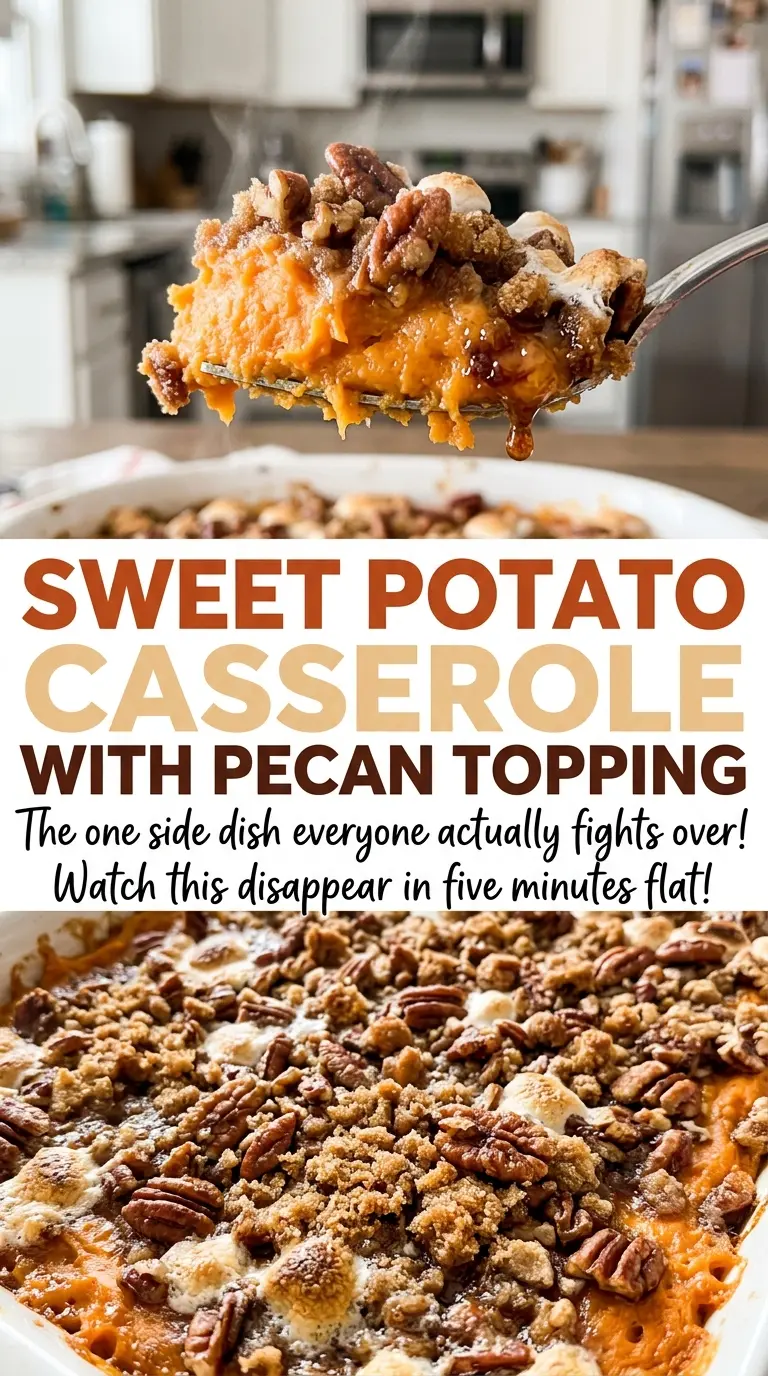
I like this sweet potato casserole with pecan topping because it lands between a scoopable mash and a sliceable bake. The eggs give the filling some structure, while the pecan topping stays crumbly instead of turning into a solid layer. You get a soft, gently sweet center beneath a buttery top with toasted pecans in every bite.
Kitchen Note
Keep the butter for the topping cold, and work it into the flour, pecans, and brown sugar until you have coarse crumbs. If the butter gets warm and smears, the topping loses those little crisp clusters in the oven.
Save this sweet potato casserole with pecan topping for its soft, buttery center and crisp pecan crumb.
Why Eggs Give This Sweet Potato Filling Its Casserole Texture
Mashed sweet potatoes on their own make a soft, spoonable side. The eggs change how the filling behaves in the oven: they help it hold together, so a serving has more shape than plain mash without becoming firm or dry. That’s the balance I want here—the filling should stay tender under the topping, not slump into a puddle when you serve it.
There’s a reason I stir the eggs into the sweet potatoes rather than treating them as an afterthought. Once they’re evenly mixed through the mash, each portion gets the same gentle structure. A few streaks of egg left in the bowl can bake up unevenly, so stir just until the filling looks uniform. There’s no need to beat air into it; a smooth, settled mixture is what you’re after.
The topping and filling also have different jobs. The potato mixture stays soft, while the flour, pecans, brown sugar, and butter form a crumb layer that browns above it. Keeping those textures separate is what makes each bite feel like casserole rather than a bowl of sweetened mash with nuts stirred through.
What the Sweet Potatoes, Eggs, and Pecans Each Bring
- Sweet potatoes — Choose firm potatoes without shriveled spots; fresh ones give you control over the tenderness and moisture of the mash. Cut them into even chunks so they soften at the same pace. Canned sweet potatoes are already cooked and often packed with syrup, so they don’t give this filling the same texture or sweetness.
- Eggs — They bind the filling and help it hold a soft shape after baking. Use large eggs and lightly beat them before mixing so they disperse without leaving streaks. There isn’t a straightforward swap that gives this casserole the same texture.
- Unsalted butter — Butter contributes richness in both the filling and the crumb topping, but those portions need different textures: melted for the filling and cold for the topping. Unsalted butter also lets the fine salt stay balanced. A fresh standard grocery-store butter works well; there’s no need for a specialty brand.
- Pecans and flour — Pecans bring the topping’s toasted crunch, while flour helps the butter and sugar cling to them in crumbs. Fresh pecans matter more than an expensive label; stale nuts can taste flat. Chop them into pieces that are small enough to spread across the casserole but not so fine that they disappear into the crumb.
- Light brown sugar — Its soft, molasses-tinged sweetness works in both layers, giving the filling a rounded taste and helping the topping brown. Pack it when measuring so the amount is consistent. Whole milk gives the filling a richer feel than a thinner milk, while vanilla rounds out the sweet potato without taking over.
From Fork-Tender Potatoes to a Golden Pecan Crumb
Soften the potatoes evenly
Heat the oven to 350°F and grease a 9×13-inch baking dish with softened butter. Put the peeled, 1-inch sweet potato chunks in a 6-quart pot with the water, bring it to a boil over high heat, then lower the heat to a simmer. Cook for 12 to 15 minutes, until a fork slips into the largest pieces easily. If the centers still feel firm, give them a little more time rather than trying to mash them while undercooked.
Let steam escape before mixing
Drain the potatoes well, return them to the pot, and mash until mostly smooth. Let them stand for 5 minutes before adding the melted butter, milk, brown sugar, lightly beaten eggs, vanilla, and salt. This pause gives some of the steam a chance to escape, which helps keep the filling from feeling watery. Stir until the ingredients are combined and the color looks even throughout.
Make coarse crumbs for the top
Mix the flour, pecans, and remaining brown sugar in a medium bowl. Work the cold butter into the dry mixture until it forms coarse crumbs; some larger buttery pieces are welcome, but avoid leaving big slabs of butter. If the mixture looks powdery, keep rubbing the pieces together until it starts to clump when pressed. The crumbs should still look loose enough to scatter.
Bake until the center and topping are ready
Spread the filling evenly in the prepared dish, then scatter the pecan mixture over the surface so the topping reaches the edges. Bake for 30 to 35 minutes, until the topping is golden and the center reaches 160°F. If the top colors before the center is ready, loosely tent the dish with foil while it finishes baking. Let the casserole rest for 10 minutes before serving so the filling settles into neat, tender portions.
Three Useful Ways to Adapt the Pecan Topping
The filling is simple to tailor, but changes to the topping affect its crunch and flavor most. These small adjustments keep the casserole’s basic texture intact while giving you options for different tables.
A nut-free crumb topping
Leave out the pecans and use the flour, brown sugar, and cold butter for a plain crumb topping. It will be less crunchy and won’t have the toasted nut flavor, but it still gives the casserole a browned, buttery top. Keep the remaining topping ingredients and method the same.
A gluten-free crumb
Replace the all-purpose flour with the same amount of a cup-for-cup gluten-free baking flour blend. Choose a blend intended to replace wheat flour in baking, rather than almond or coconut flour, which won’t form the same crumb. The topping may feel a little more delicate, but the pecans still give it plenty of texture.
A deeper brown-sugar taste
Use dark brown sugar in place of light brown sugar in both the filling and topping, keeping the same quantities for each. The extra molasses flavor makes the casserole taste deeper and less delicate, without changing the method.
Storage and Reheating
- Refrigerator: Cool and refrigerate leftovers within 2 hours. Keep them covered for 3 to 4 days; the topping will soften as it sits.
- Freezer: Freeze tightly covered portions for up to 2 months. Thaw overnight in the refrigerator; the filling may be a little softer after thawing.
- Reheating: Warm covered in a 325°F oven until the center reaches 165°F. Uncover near the end if you want to bring back a little crispness, and avoid leaving the casserole uncovered for the whole reheat or the edges may dry out.
Questions That Come Up While Making This Casserole
Sweet Potato Casserole with Pecan Topping
Ingredients
Equipment
Method
- Heat the oven to 350°F and grease a 9x13-inch baking dish with 1 tablespoon softened butter.
- Put the sweet potatoes and water in a 6-quart pot.
- Bring the sweet potatoes and water to a boil over high heat.
- Reduce the heat and simmer for 12 to 15 minutes, until the potatoes are fork-tender.
- Drain the potatoes and return them to the pot.
- Mash the potatoes until mostly smooth.
- Let the mashed potatoes stand for 5 minutes.
- Stir the 4 tablespoons melted butter, milk, 1/2 cup brown sugar, eggs, vanilla, and salt into the mashed potatoes until combined.
- Mix the flour, pecans, and remaining 1/4 cup brown sugar in a medium bowl.
- Work in the 4 tablespoons cold butter until the mixture forms coarse crumbs.
- Spread the sweet potato mixture evenly in the prepared dish.
- Sprinkle the pecan mixture over the top.
- Bake for 30 to 35 minutes, until the topping is golden and the center reaches 160°F.
- Let the casserole rest for 10 minutes before serving.
