
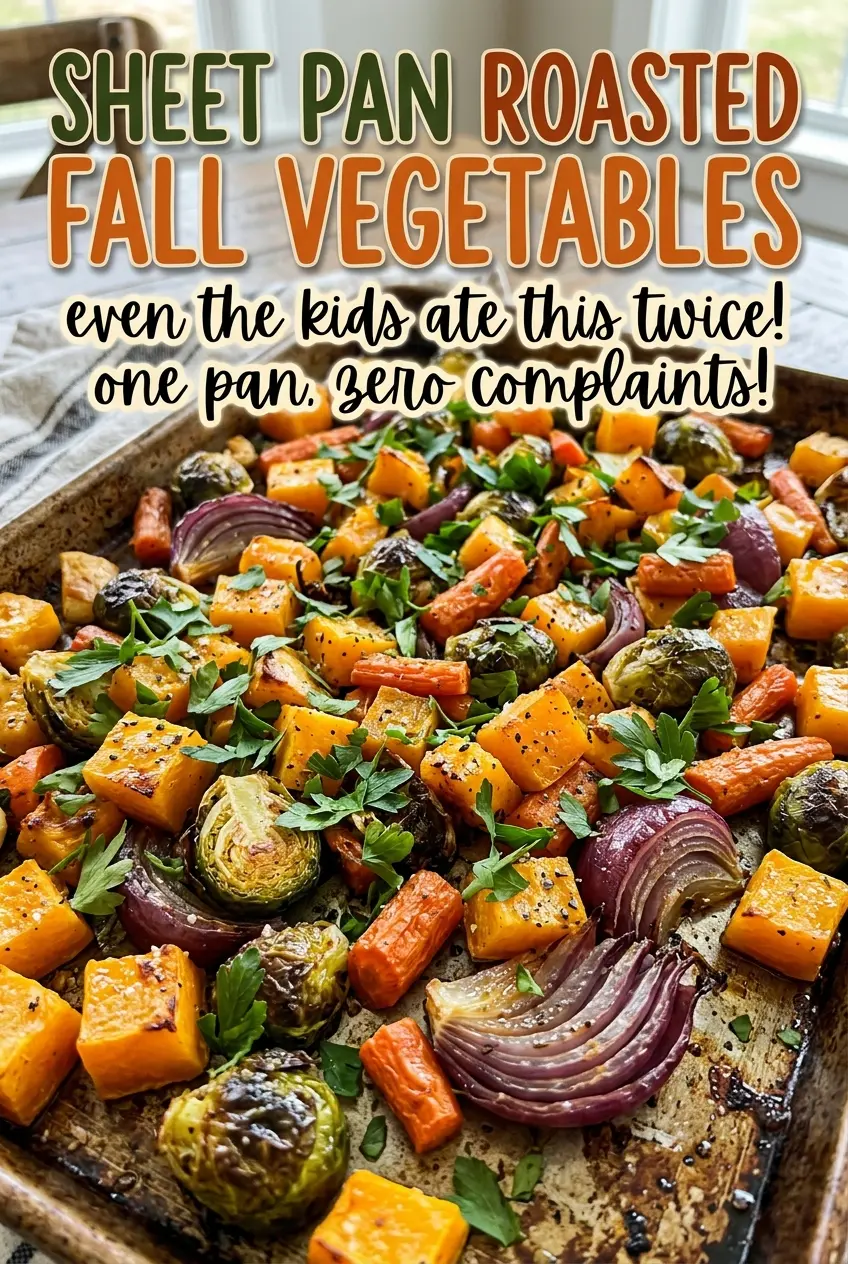
The tray can look a little crowded before it goes into the oven, but the vegetables settle into their own spaces as they roast. What I watch for is the contrast: sweet potatoes turning tender inside, Brussels sprouts browning at the edges, and carrots softening without disappearing into the pan. That balance is what makes Sheet Pan Roasted Fall Vegetables a useful side dish when you want a mix of textures from one baking sheet.
I keep the prep straightforward and let the oven do the work. The vegetables get tossed together in a large bowl with olive oil and dried thyme, then spread in one layer on a rimmed sheet pan. A turn halfway through gives more sides a chance to meet the hot pan. By the time they’re browned in spots and easy to pierce with a fork, the tray has a mix of sweet, savory, and earthy bites.
Kitchen Note
Turn the vegetables once at the halfway point rather than stirring them repeatedly. That gives the pieces time against the hot pan so they can brown instead of just softening.
Save these Sheet Pan Roasted Fall Vegetables for a hands-off side with browned Brussels sprouts, tender sweet potatoes, and dried thyme.
Why the Vegetable Cuts Aren’t Supposed to Match
Uniform pieces are useful when you’re cooking one vegetable, but this tray has four different shapes and densities. The sweet potatoes are cut into 3/4-inch cubes, the carrots into 1/2-inch-thick pieces, the Brussels sprouts are halved, and the onion is cut into 1-inch wedges. Those sizes give each vegetable a fair chance to become tender during the same roast, rather than asking a thick carrot chunk to keep pace with a thinner piece of onion.
Size matters, but space matters too. An 18×13-inch rimmed baking sheet gives the vegetables room to sit in a single layer. If pieces are piled on top of each other, trapped moisture makes them soften before they can brown in spots. Use the full surface of the pan and spread out the larger pieces instead of tucking them underneath the sprouts. The center rack keeps the sheet positioned for an even roast, and the fork test tells you when the denser pieces are ready. You’re looking for browned spots and tenderness, not identical color on every vegetable.
What Sweet Potatoes, Brussels Sprouts, and Thyme Bring to the Pan
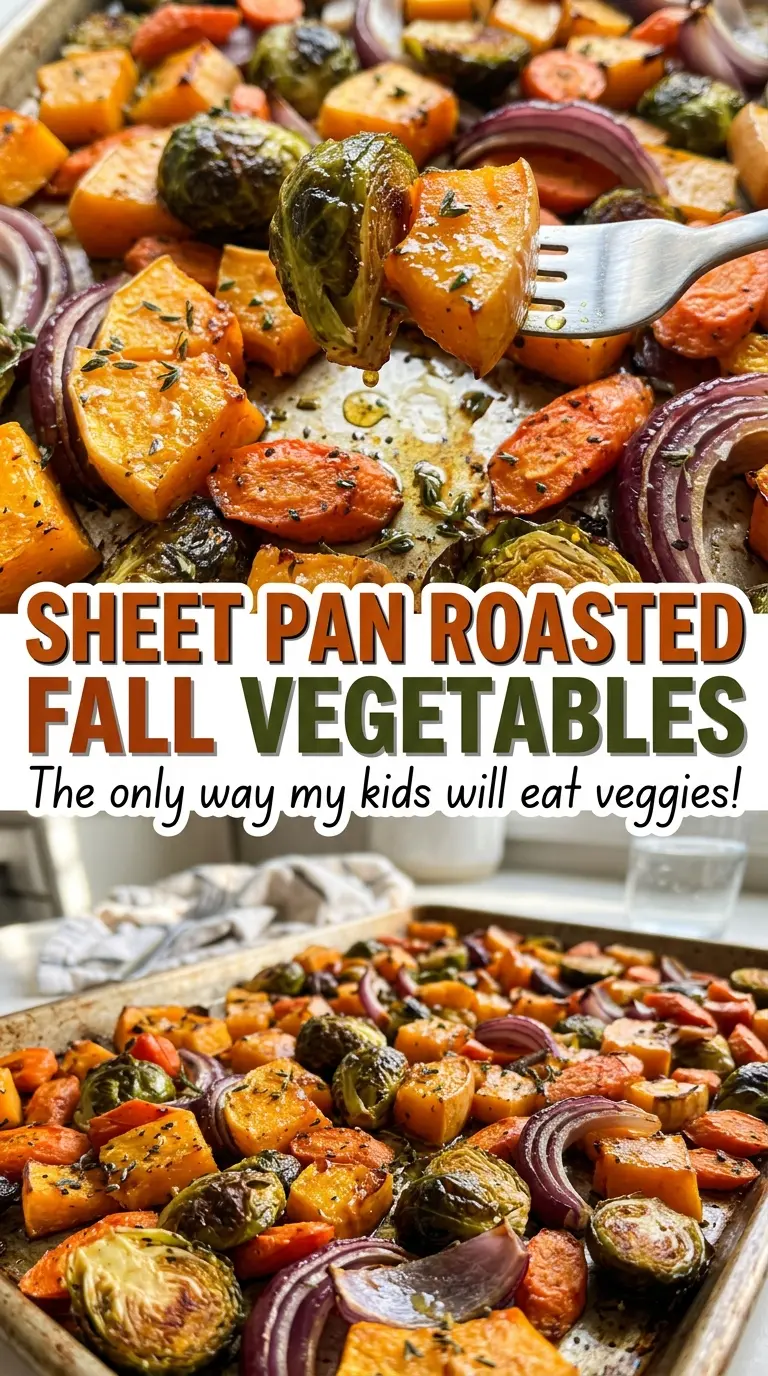
- Sweet potatoes — They bring the soft, sweet center that makes this vegetable mix feel substantial. Choose firm potatoes without soft spots; there’s no need to seek out a specialty variety. Peeling them keeps the finished cubes tender rather than chewy at the edges.
- Brussels sprouts — Their leafy layers give the pan its most noticeable browned edges, while the centers stay tender. Choose compact sprouts that feel firm, and trim away any loose or damaged outer leaves before halving them.
- Carrots — Carrots add a firmer bite and a mellow sweetness that balances the sprouts. Standard fresh carrots work well here; peel them and cut the pieces evenly so none are unusually thick compared with the rest.
- Red onion — The wedges soften and mellow as they roast, bringing a savory-sweet note without needing a separate sauce. Keep the wedges broad enough to handle when you turn the vegetables.
- Olive oil and dried thyme — The oil helps the seasonings cling and coats the vegetables so their surfaces roast rather than dry out. A basic olive oil is fine; dried thyme from the pantry gives a steady herbal note, so there’s no need for an expensive bottle or a special blend.
From an Even Coating to Fork-Tender Vegetables
Cut the vegetables and season them together
Heat the oven to 425°F and set a rack in the center before you start roasting. Peel and cut the sweet potatoes and carrots, trim and halve the Brussels sprouts, and cut the red onion into wedges. Put all four vegetables in a large bowl with the olive oil, kosher salt, black pepper, and dried thyme. Toss until the pieces have a light, even coating; seasoning in the bowl is easier than trying to distribute it across the baking sheet.
Spread everything out on the rimmed pan
Transfer the seasoned vegetables to an 18×13-inch rimmed baking sheet. Arrange them in one layer, with the cut pieces spread across the surface rather than stacked in a mound. Some pieces will touch, but avoid covering one vegetable with another. If the pan looks uneven, move the pieces around before roasting so the denser sweet potato and carrot pieces aren’t all crowded together.
Roast, turn once, and check with a fork
Roast for 30 to 40 minutes, turning the vegetables halfway through. Look for browned spots as the edges soften, then pierce a sweet potato and a carrot with a fork; both should be tender rather than firm at the center. If they need more time, keep roasting within the stated range and check again. The vegetables are ready when the browned surfaces and fork-tender centers come together.
Two Useful Changes for a Different Fall Vegetable Tray
A Lower-Starch Version with More Brussels Sprouts
Replace the pound of sweet potatoes with an equal weight of Brussels sprouts, trimmed and halved. The tray will be less sweet and more savory, with more leafy browned edges; the carrots still contribute some natural sweetness, so this is lower in starch rather than a strict low-carb dish. Keep the pieces in a single layer and use the fork test to judge tenderness.
A Milder Tray Without Red Onion
Leave out the red onion if you prefer a less pronounced savory-sweet flavor. The remaining vegetables still roast together with the same oil, salt, pepper, and thyme; you’ll simply have fewer soft, mellow onion pieces in each serving. This is an easy adjustment when onion isn’t welcome at the table, without changing the seasoning on the other vegetables.
Storage and Reheating
- Refrigerator: Refrigerate leftovers within 2 hours and use them within 3 to 4 days. The vegetables soften as they sit, but their flavor holds up well.
- Freezer: Freeze cooled portions in an airtight container for up to 2 months. Thaw them in the refrigerator; expect softer vegetables after freezing.
- Reheating: Microwave a portion in short bursts until hot throughout. A long, continuous blast can make the softer vegetables mushy before the denser pieces warm evenly.
Questions I Get Asked About This Roasted Vegetable Tray
Sheet Pan Roasted Fall Vegetables
Ingredients
Equipment
Method
- Heat the oven to 425°F and set a rack in the center.
- Toss the sweet potatoes, Brussels sprouts, carrots, and red onion with the olive oil, salt, pepper, and thyme in a large bowl, then spread them in a single layer on an 18x13-inch rimmed baking sheet.
- Roast for 30 to 40 minutes, turning the vegetables halfway through, until browned in spots and tender when pierced with a fork.
