
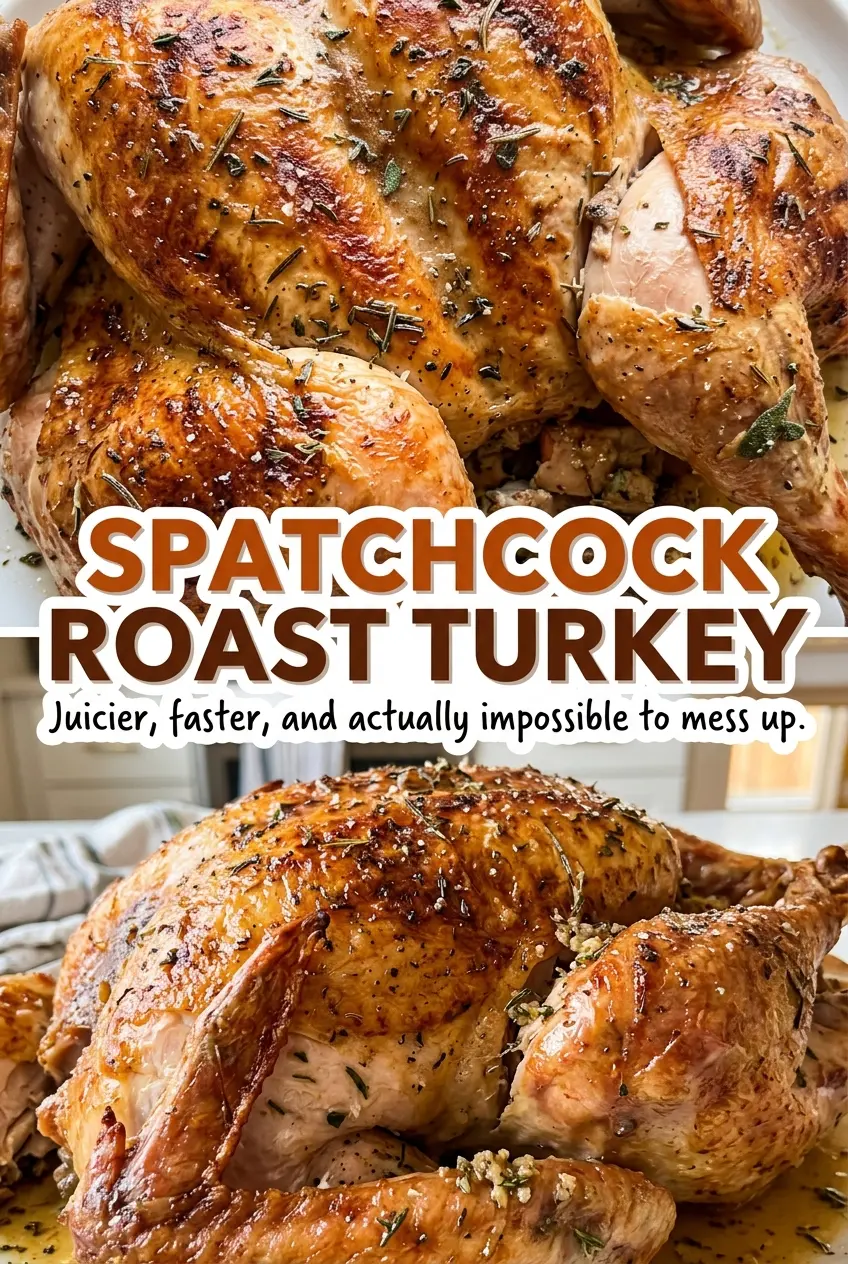
The first thing that changes when you cut out a turkey’s backbone is how easily the bird settles onto the pan. No more awkward balancing, and the legs spread out instead of hiding beneath the breast. Spatchcock roast turkey takes a little careful cutting up front, but the flatter shape makes it easier to season and roast evenly.
I rub softened herb butter beneath the skin, where it seasons the meat directly, then spread the rest over the outside. The fresh sage, rosemary, and thyme give the butter a savory, woodsy fragrance without covering up the turkey itself. Starting with an unbrined bird also means the salt in the butter mixture has room to do its job without the meat turning overly salty.
Once the turkey is flat, the rest is straightforward: a hot oven, a thermometer, and enough time to let the meat rest before carving. You get bronzed skin and juicy slices from a bird that’s much easier to handle.
Kitchen Note
Press firmly on the breastbone until the bird lies flat against the board. If it still rocks or springs back, press again before you move on; an even, stable shape is much easier to season and position on the rack.
Save this spatchcock roast turkey for its herb butter, golden skin, and easier-to-manage roasting shape.
Why a Flat Turkey Helps the Breast and Thighs Finish Together
A whole bird is thickest through the breast, while the legs sit lower and closer to the body. That difference is one reason a traditional roast can leave you waiting for the thighs while the breast keeps cooking. Spatchcocking changes the shape: the legs are arranged outward, and the turkey lies in a more even layer across the pan.
That geometry helps narrow the gap between the breast and thigh cooking times, though a thermometer still matters more than the clock. A 12- to 14-pound turkey gives you a practical size for the 18×13-inch baking sheet, and the rack keeps the bird lifted above the pan instead of sitting directly in its juices. The open arrangement also gives hot oven air access around more of the skin.
Don’t judge doneness by skin color alone. A deeply browned surface tells you how the outside is doing, not whether the thickest breast and innermost thigh have reached the same safe endpoint. Check both places, keeping the thermometer away from bone, and let those readings—not a guess based on appearance—decide when the turkey comes out.
What the Herb Butter and Unbrined Turkey Each Bring
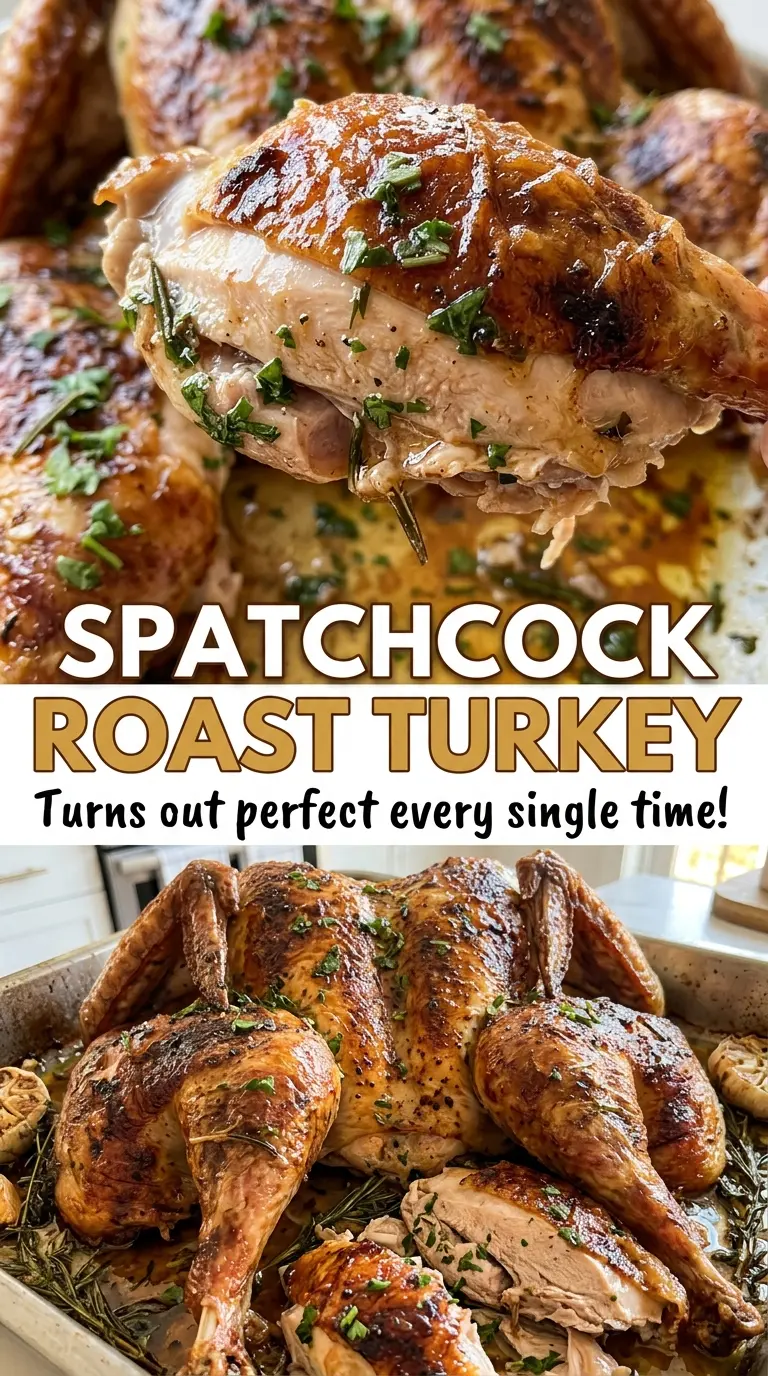
- Unbrined turkey — Starting with an unbrined bird gives you control over the seasoning in the butter. A pre-brined or injected turkey already carries added salt, so it won’t behave the same way with this salt level; choose an unbrined one for the intended seasoning.
- Unsalted butter — Softened butter is easy to mix with the herbs and spread beneath the skin, where it stays close to the meat as the turkey roasts. Unsalted butter also lets the kosher salt provide the seasoning without adding an unknown amount from the butter itself.
- Fresh sage, rosemary, and thyme — Fresh herbs bring distinct, fragrant notes to the butter; chopped sage is earthy, while rosemary and thyme add their own piney, savory edges. Use herbs that smell lively rather than dull or dry, since their aroma is a big part of what you notice as the turkey roasts.
- Diamond Crystal kosher salt — This is the specific salt used in the seasoning mixture. Crystal size varies between salt brands, so don’t swap in a fine-grained salt by the same volume and assume the result will be identical.
- Freshly ground black pepper — Grinding it just before mixing gives the butter a sharper, more fragrant pepper note than pre-ground pepper. It’s a small detail, but it stands out against the richness of the butter and turkey.
From Backbone to Cutting Board: The Stages That Matter
Cut Along Both Sides of the Backbone
Pat the thawed turkey dry, then set it breast-side down on a sturdy cutting board. Use poultry shears to cut along both sides of the backbone and remove it; work through the joints steadily rather than twisting the bird around in your hands. Turn the turkey over and press firmly on the breastbone until the bird lies flat. Take a moment to check that it sits evenly before seasoning.
Mix the Butter and Season Beneath the Skin
Heat the oven to 425°F with a rack in the lower-middle position, then set a wire rack in an 18×13-inch rimmed baking sheet. Mix the softened butter with the sage, rosemary, thyme, kosher salt, and black pepper until the herbs are distributed through it. Gently loosen the skin over the breast and thighs, taking care not to tear it, and rub about two-thirds of the butter mixture underneath. Spread the remaining butter over the skin so the outside is coated too.
Arrange the Bird and Roast by Temperature
Place the turkey skin-side up on the rack, tuck the wing tips under, and arrange the legs outward. Roast for 1 hour 20 minutes to 1 hour 50 minutes, rotating the pan halfway through so the bird browns more evenly. Begin checking the thickest part of the breast and the innermost thigh with a thermometer, without touching bone. The turkey is ready when both spots read 165°F; don’t rely on browned skin or the roasting time alone.
Rest Before You Carve
Transfer the turkey to a cutting board and leave it uncovered for 20 to 30 minutes before carving. The rest gives the hot juices time to settle, so slicing immediately doesn’t send them running across the board. Keep the bird undisturbed during this pause, then carve when the rest is complete.
How to Change the Herb Butter Without Changing the Roast
A Sage-Forward Turkey
Leave out the rosemary and thyme and use the sage as the sole herb in the butter. The roast keeps its same buttery seasoning and method, but the finished turkey has a more earthy, familiar sage aroma.
A Rosemary-Thyme Butter
Skip the sage and keep the rosemary and thyme in the butter. Their sharper, woodsy character comes through more clearly without the softer herbal note of sage, while the spatchcocking and roasting stay the same.
Storage and Reheating
- Refrigerator: Refrigerate leftover turkey within 2 hours and use it within 3 to 4 days. The skin softens in storage, even though the meat stays good for slicing or adding to another meal.
- Freezer: Freeze carved turkey in airtight freezer-safe packaging for up to 2 to 6 months for best quality. Thaw it in the refrigerator before reheating.
- Reheating: Warm only the portion you plan to serve, covered, in the oven or microwave, until it reaches 165°F throughout. Reheating the whole bird more than once dries the breast meat.
Questions That Come Up Before the Turkey Goes in the Oven
Spatchcock Roast Turkey
Ingredients
Equipment
Method
- Pat the turkey dry.
- Place it breast-side down on a sturdy cutting board and use poultry shears to cut along both sides of the backbone; remove the backbone.
- Turn the turkey over and press firmly on the breastbone until the bird lies flat.
- Heat the oven to 425°F with a rack in the lower-middle position.
- Set a wire rack in an 18x13-inch rimmed baking sheet.
- Mix the butter, sage, rosemary, thyme, salt, and pepper in a bowl.
- Gently loosen the skin over the breast and thighs, rub about two-thirds of the butter mixture underneath, and spread the rest over the skin.
- Place the turkey skin-side up on the rack, tuck the wing tips under, and arrange the legs outward.
- Roast for 1 hour 20 minutes to 1 hour 50 minutes, rotating the pan halfway through, until a thermometer reads 165°F in the thickest part of the breast and the innermost thigh without touching bone.
- Transfer the turkey to a cutting board and rest uncovered for 20 to 30 minutes before carving.
