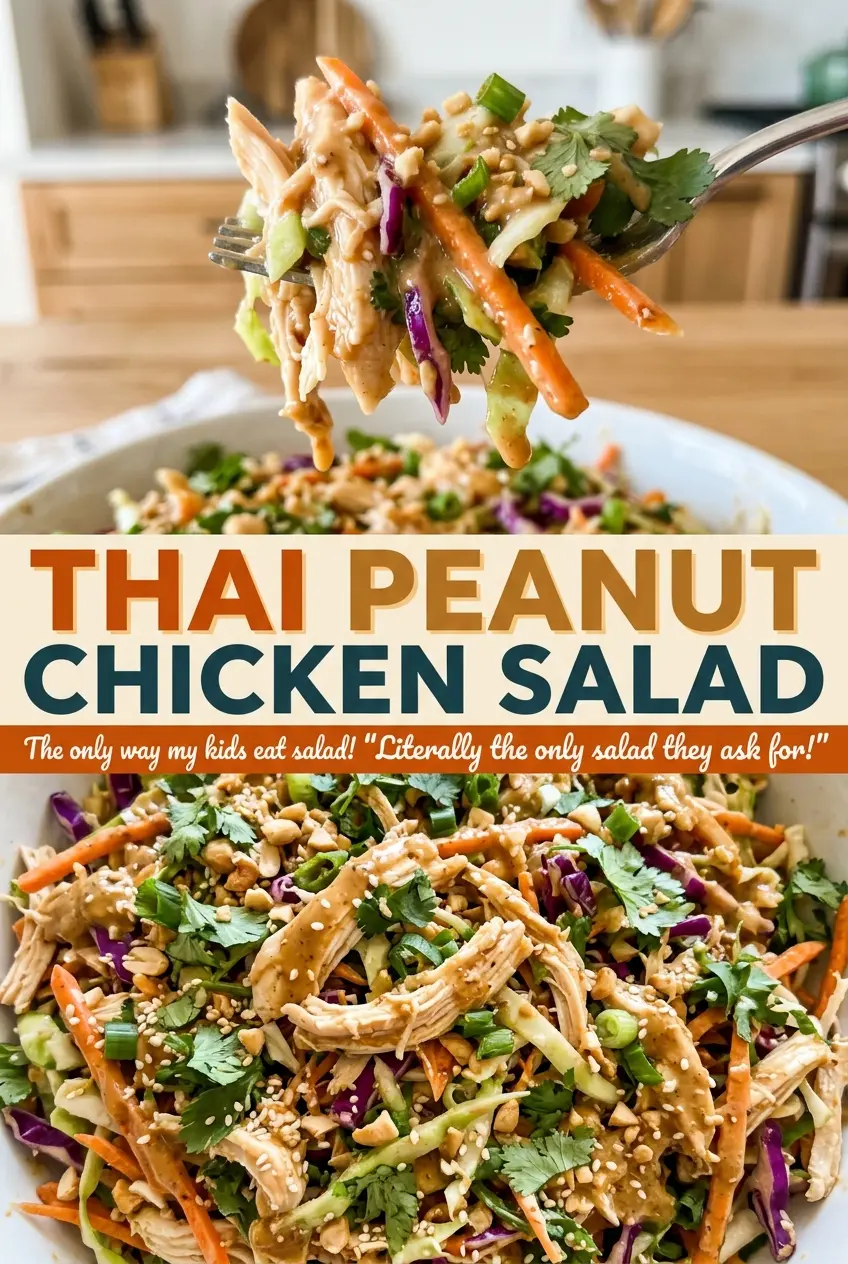
The whisk starts to drag when soy sauce and lime meet peanut butter, and the dressing looks much too thick to coat a bowl of vegetables. A little warm water changes that quickly: it loosens into a smooth, pourable sauce that clings to the cabbage instead of pooling underneath. That’s the small adjustment that makes this Thai peanut chicken salad feel like a meal, not just a pile of slaw.
I like the mix of cool shredded chicken, crisp cabbage, and fresh herbs against the creamy, tangy dressing. The vegetables bring plenty of crunch, while roasted peanuts add another layer of texture right at the end. Keep the chicken cooled before it goes into the bowl, and you’ll have a refreshing salad with a satisfying peanut-lime bite.
Kitchen Note
Use cooled cooked chicken, not chicken that’s still warm from cooking. Warm chicken softens the cabbage sooner, and the cool shreds keep the salad’s crisp contrast intact.
Save this Thai peanut chicken salad for a crisp, colorful lunch with creamy lime dressing and a crunchy peanut finish.
Why Shredded Cabbage Holds This Peanut Dressing So Well
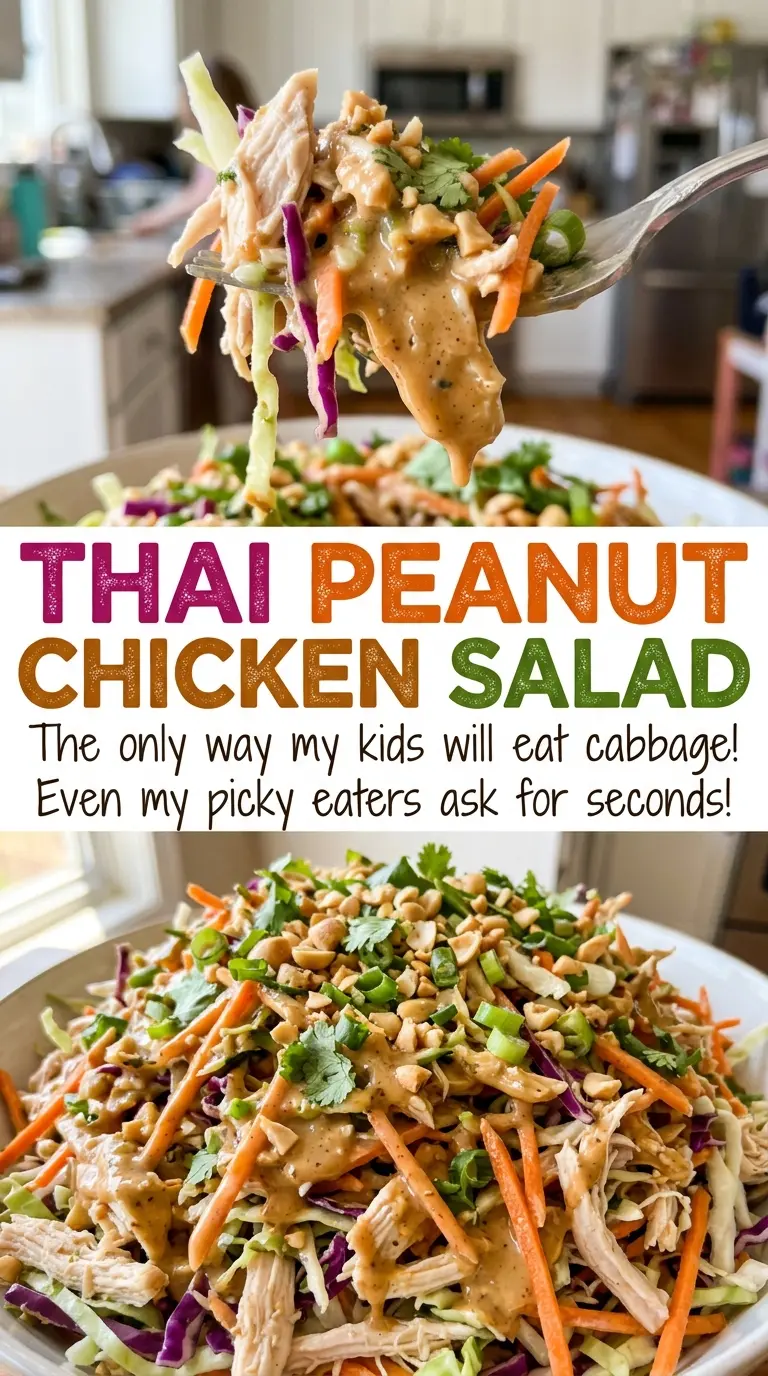
Big pieces of lettuce can leave a thick dressing in patches, but finely shredded cabbage gives this salad lots of edges for the sauce to catch. Green cabbage brings a sturdy crunch, and red cabbage adds color without changing the basic texture. Carrots weave through the shreds, so you get a little sweetness in nearly every bite rather than a separate mound at the bottom of the bowl.
The balance matters, too. Peanut butter makes the dressing rich and substantial; lime juice and rice vinegar keep that richness from weighing down the vegetables. Tossing the ingredients together distributes those contrasting flavors through the whole bowl. The red pepper adds a gentle background heat, while the scallions and cilantro keep the finish fresh. Chop the roasted peanuts last and scatter them over the top so their crunch stays easy to notice.
What Gives the Peanut Dressing Its Savory, Bright Balance
- Creamy peanut butter — This is the body of the dressing, not just a peanut flavoring. A familiar creamy style gives you a consistent base; a natural style also works when it’s stirred thoroughly first, though its texture can be less uniform. For a peanut-free adaptation, sunflower seed butter is a practical swap, with a different, earthier taste.
- Soy sauce, lime, rice vinegar, and honey — Soy sauce brings savory depth, while lime and rice vinegar supply two distinct kinds of tang. Honey rounds their sharpness without making the dressing taste sugary. Fresh lime juice has a livelier aroma than bottled juice; gluten-free tamari can replace the soy sauce if you need that adaptation.
- Toasted sesame oil, ginger, garlic, and crushed red pepper — These are the aromatic notes that make the peanut base taste more layered. Toasted sesame oil is worth keeping because its aroma is concentrated; plain neutral oil won’t bring the same character. Finely grating the fresh ginger helps it blend into the dressing instead of leaving large fibrous pieces.
- Green and red cabbage, carrots, and bell pepper — The cabbage gives the salad its crisp foundation, while the carrots bring sweetness and the thinly sliced pepper adds a fresh, juicy crunch. Shred the vegetables evenly enough that they’re easy to lift together with a fork. There’s no need to seek out specialty produce; fresh, firm vegetables are what matter here.
- Cooked chicken, scallions, cilantro, and roasted peanuts — The chicken makes this a filling main-dish salad, and the scallions and cilantro add a fresh edge that balances the creamy dressing. Roasted peanuts on top give a more pronounced crunch than stirring them into the dressed salad. If you’re using packaged roasted peanuts, chopped pieces are easy to distribute across the bowl.
Whisk the Dressing, Then Toss the Salad Just Before Serving
Start with the Peanut and Lime Base
In a medium bowl, whisk the creamy peanut butter with the soy sauce, lime juice, rice vinegar, honey, toasted sesame oil, grated ginger, minced garlic, and crushed red pepper. The mixture will be thick, and the whisk may catch in the peanut butter at first. Keep whisking until the ingredients look evenly combined, with no visible streaks of peanut butter or honey. A medium bowl gives you room to work without splashing the dressing over the sides.
Whisk in Warm Water Until Pourable
Add the warm water and whisk until the dressing turns smooth and pourable. Look for a consistent texture with no dense peanut-butter pockets stuck to the sides or bottom of the bowl. The finished dressing should move easily off the whisk, rather than dropping in a heavy lump. If it still looks thick, continue whisking until the water is fully incorporated.
Coat the Vegetables and Chicken Evenly
Combine the shredded green and red cabbage, carrots, thinly sliced red bell pepper and scallions, cilantro, and cooled shredded chicken in a large serving bowl. Pour the dressing over the mixture and toss until the vegetables and chicken are evenly coated. Turn the ingredients from the bottom of the bowl up so dressing doesn’t collect underneath. Sprinkle the chopped roasted peanuts over the salad, then serve.
Easy Changes for Different Tables and Tastes
Make the dressing gluten-free
Replace the soy sauce with certified gluten-free tamari. The dressing stays savory and balanced, though tamari can taste a little deeper than the soy sauce in the original version.
Make a peanut-free version
Use sunflower seed butter in place of peanut butter, then top the salad with chopped roasted sunflower seeds instead of peanuts. The dressing will taste earthier and less distinctly peanutty. If this change is for an allergy, use products made without peanut cross-contact.
Make it vegetarian with edamame
Replace the shredded chicken with an equal volume of shelled, cooked edamame. It keeps the salad hearty while adding a soft, buttery bite instead of the chicken’s tender strands. Cool the edamame before tossing it with the vegetables and dressing.
Make-Ahead and Leftovers
- Refrigerator: Refrigerate leftovers in an airtight container and use within 3 days. The cabbage softens and releases moisture as it sits, so the salad is crispest freshly tossed.
- Freezer: Don’t freeze the assembled salad. Cabbage, carrots, and bell pepper lose their crisp texture after thawing.
- Serving: For advance prep, keep the dressing, vegetables, chicken, and peanut topping separate in the refrigerator, then toss them together just before serving. Serve this salad cold; reheating isn’t needed.
Questions That Come Up When Making This Peanut Chicken Salad
Thai Peanut Chicken Salad
Ingredients
Method
- Whisk the peanut butter, soy sauce, lime juice, rice vinegar, honey, sesame oil, ginger, garlic, and crushed red pepper in a medium bowl.
- Whisk in the warm water until the dressing is smooth and pourable.
- Combine the green cabbage, red cabbage, carrots, bell pepper, scallions, cilantro, and chicken in a large serving bowl.
- Pour the dressing over the salad and toss until evenly coated, then sprinkle with the peanuts and serve.
