
The chicken starts to brown, then a quick pour of Buffalo sauce turns the skillet glossy and fragrant. I used to add the sauce too early, which left the chicken steaming instead of giving it those browned edges. Now I let the chicken cook first, then stir in the sauce for just a minute. That small timing change gives these Buffalo chicken wraps enough tangy heat without losing the texture that makes them satisfying.
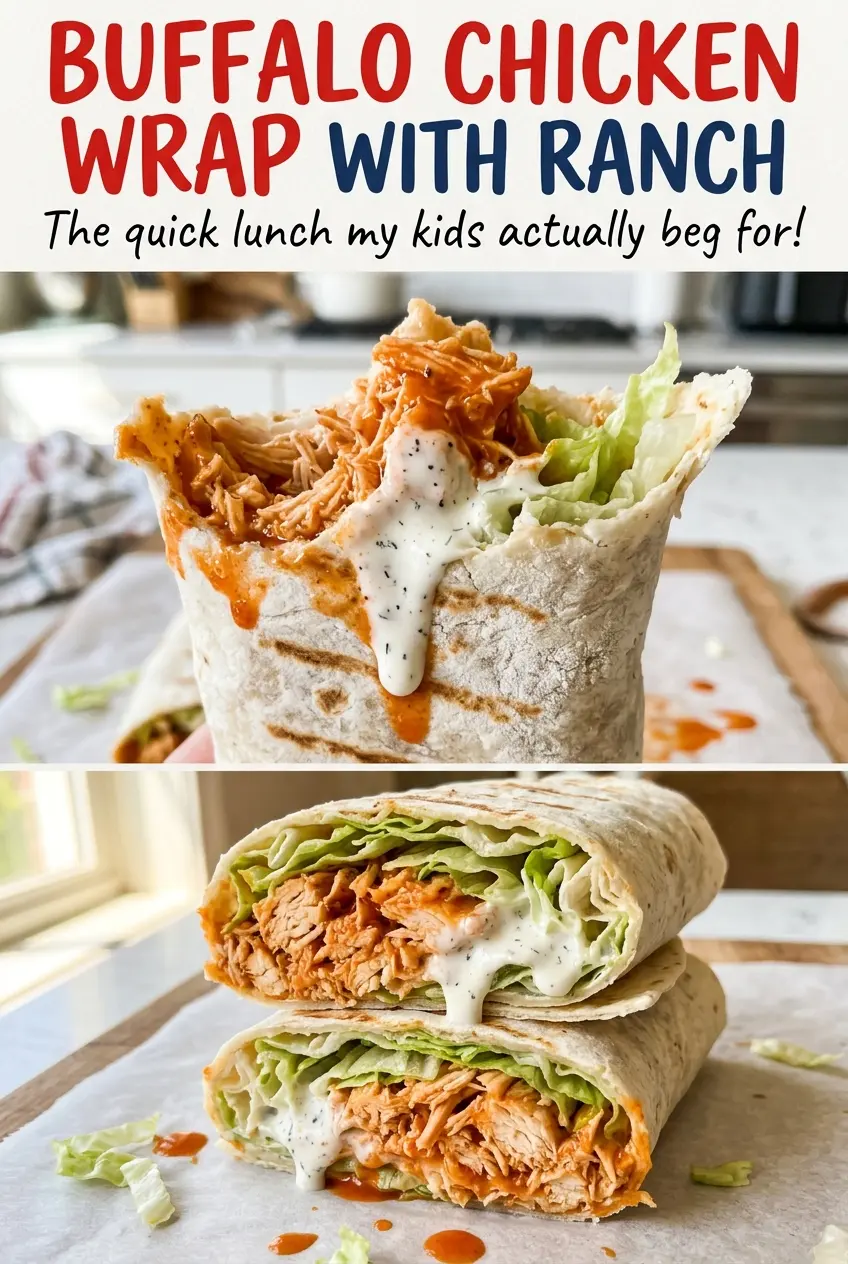
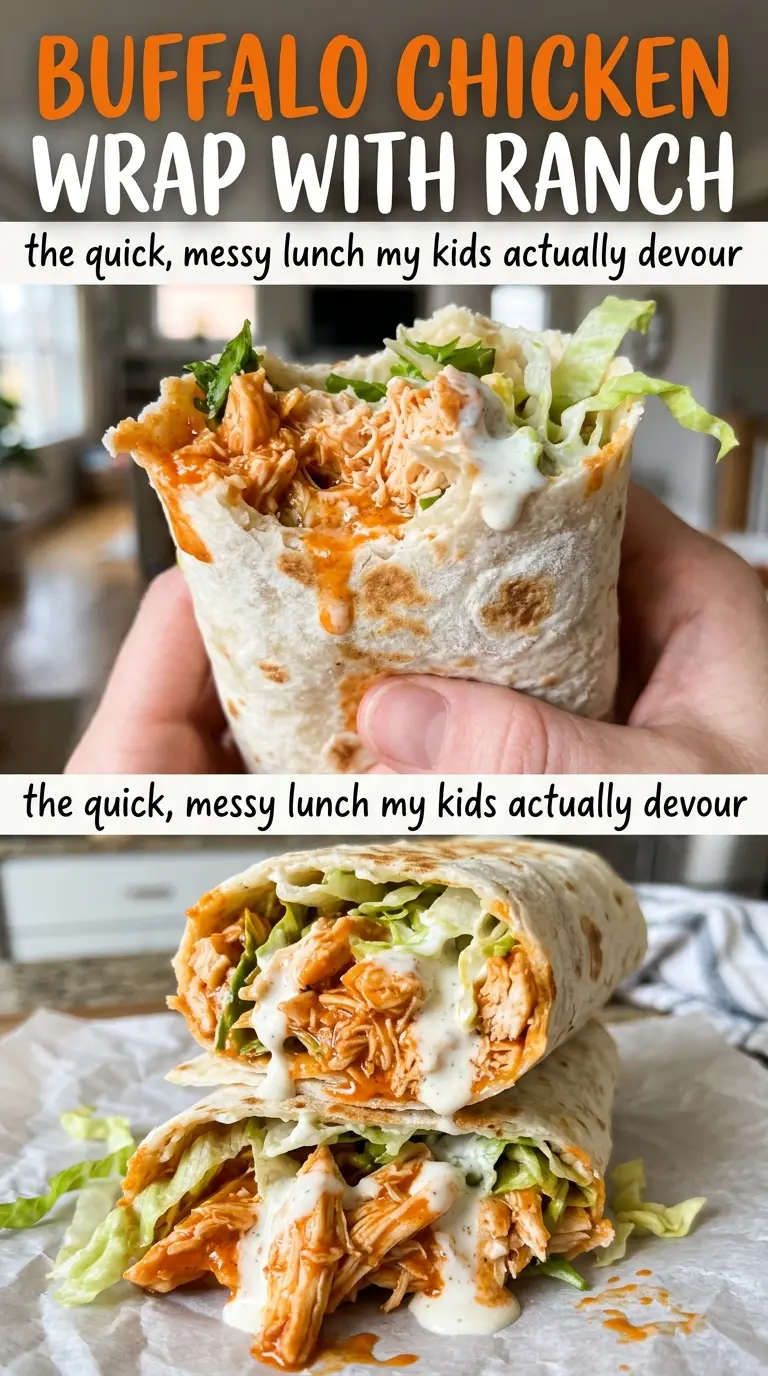
Each wrap gets a cool swipe of ranch, crisp lettuce and celery, and cheddar tucked around the saucy chicken. The contrast matters: the vegetables stay fresh, while the ranch softens the Buffalo heat without covering it up. Cutting the chicken into small strips also makes it easy to divide evenly, so every bite has chicken and crunch rather than a big empty stretch of tortilla.
Warm, pliable tortillas make the whole thing easier to roll. Keep the filling centered, fold in the sides, and roll tightly for a neat wrap that holds together when you pick it up.
Kitchen Note
Keep the filling in a narrow strip down the center of each tortilla. Fold the sides in before rolling, and the wrap is less likely to split or spring open.
Save these Buffalo chicken wraps with ranch for a quick, hands-on meal with crisp celery and a tangy, saucy filling.
Why Buffalo Sauce Goes in After the Chicken Browns
Buffalo sauce brings plenty of flavor, but it’s not what you want coating the chicken from the start. The chicken needs direct contact with the hot skillet to brown. If the sauce goes in early, its moisture gets between the chicken and the pan, and the pieces are more likely to cook in a steamy layer than develop browned edges.
Cooking the chicken first gives it time to color and reach a safe temperature before the sauce is added. Then the one-minute finish is enough to coat the strips and warm the sauce without cooking it down until it clings too thickly. That brief finish also keeps the skillet’s sauce easy to distribute between all four tortillas.
The pan size helps here, too. A 12-inch skillet gives the chicken room to cook in a single layer instead of crowding into a pile. Stir occasionally so the strips brown on more than one side, but give them a little time against the pan between stirs.
What the Ranch, Celery, and Tortilla Each Bring to the Wrap
- Chicken breast — Boneless, skinless breast cooks quickly when cut into even strips and takes on the Buffalo sauce without making the wrap heavy. Buy pieces that are easy to cut consistently; uneven strips finish at different times, so the smaller ones can dry out while the thickest pieces cook through.
- Buffalo wing sauce — This brings the recognizable tang and heat, and its consistency helps it coat the chicken after cooking. Heat varies by brand, so choose one you already enjoy; the sauce is added at the end, which keeps its flavor noticeable rather than muted by a long simmer.
- Ranch dressing — Ranch cools the spicy chicken and gives the filling a creamy layer. A dressing you like by the spoonful matters here, since it’s spread directly onto the tortilla rather than mixed into a larger sauce.
- Celery and lettuce — Finely diced celery gives a crisp, fresh bite in small bursts, while shredded lettuce adds a softer crunch throughout the wrap. Shred the lettuce finely enough to divide among the tortillas without leaving bulky pieces that make rolling awkward.
- Cheddar and flour tortillas — Cheddar adds a savory, familiar bite alongside the ranch; sharp cheddar stands out more, while mild cheddar stays in the background. The flour tortillas need to be pliable for folding, so warming them before filling is more useful than choosing a particularly thick tortilla.
The Quick Skillet-to-Tortilla Sequence
Brown the Chicken Before Adding Sauce
Heat the vegetable oil in a 12-inch skillet over medium-high heat. Add the chicken strips with the kosher salt and black pepper, then cook for 5–7 minutes, stirring occasionally. Look for browned surfaces and check that the thickest pieces reach 165°F. If the pieces are still pale, give them time against the skillet rather than adding the sauce early.
Coat the Strips Without Cooking Down the Sauce
Pour the Buffalo wing sauce into the skillet and stir until the chicken is coated. Let it cook for 1 minute, just long enough for the sauce to warm and cling to the strips. The chicken should look glossy, not dry or heavily reduced. Remove the skillet from the heat after that minute.
Warm the Tortillas Until They Bend Easily
Cover the tortillas with a slightly damp paper towel and microwave them for 20–30 seconds. They should feel warm and flexible when you lift an edge. If they’re stiff, they’re more likely to crack when rolled, so don’t skip the covered warming step. Keep them covered while you work through the filling if they start to cool.
Layer, Fold, and Roll
Spread ranch down the center of each tortilla, then divide the lettuce, Buffalo chicken, celery, and cheddar evenly among them. Leave enough open tortilla around the filling to fold in both sides. Fold the sides inward, then roll the tortilla up tightly from the bottom edge. Serve once assembled so the lettuce and tortilla keep their best texture.
Three Easy Ways to Change the Format or Heat
Make a milder Buffalo wrap
Use less Buffalo wing sauce when coating the cooked chicken, then divide it among the wraps. You’ll get a gentler, less tangy filling, though each tortilla will have less of the sauce that gives this wrap its signature bite.
Turn it into a Buffalo chicken bowl
Skip the tortillas and arrange the lettuce, sauced chicken, celery, cheddar, and ranch in bowls instead. You keep the same cool-and-spicy contrast, but lose the soft tortilla and get a fork-friendly meal.
Make the filling dairy-free
Leave out the ranch dressing and cheddar cheese. The chicken, Buffalo sauce, lettuce, and celery still make a flavorful wrap, but you’ll lose the creamy, cooling contrast, so expect the heat to come through more clearly.
Storage and Reheating
- Refrigerator: Assembled wraps are best the day they’re made. Store leftover chicken separately in an airtight container for up to 3–4 days; lettuce softens and tortillas absorb moisture over time.
- Freezer: Freeze the cooked Buffalo chicken by itself in an airtight freezer-safe container for up to 2–3 months. Thaw it in the refrigerator before reheating; assembled wraps with lettuce and ranch don’t freeze well.
- Reheating: Warm the chicken in a skillet over medium heat or in the microwave until hot throughout, then add it to fresh tortillas with the cold toppings. Reheating a fully assembled wrap makes the lettuce wilt and the tortilla damp.
Questions That Come Up While Making Buffalo Chicken Wraps
Buffalo Chicken Wrap with Ranch
Ingredients
Equipment
Method
- Heat the oil in a 12-inch skillet over medium-high heat. Add the chicken, salt, and pepper, and cook for 5–7 minutes, stirring occasionally, until browned and the thickest pieces register 165°F.
- Pour the Buffalo wing sauce into the skillet and stir to coat the chicken; cook for 1 minute, then remove the skillet from the heat.
- Warm the tortillas in the microwave for 20–30 seconds, covered with a slightly damp paper towel, until pliable.
- Spread the ranch dressing down the center of each tortilla, then divide the lettuce, Buffalo chicken, celery, and cheddar evenly among them.
- Fold in the sides of each tortilla, roll it up tightly, and serve.
