
The asparagus is the part that can turn a quick skillet dinner watery: it releases moisture just as the shrimp are ready to cook. I handle the two separately, giving the asparagus a short covered cook first, then letting the water evaporate before it leaves the pan. That keeps the shrimp from sitting in a puddle while they cook.
For this one-pan garlic butter shrimp and asparagus, the order matters more than any fancy technique. The asparagus gets tender without losing its bite, and the shrimp cook quickly in the butter left in the skillet. Garlic and lemon go in at the end, where they make a bright, buttery finish without masking the seafood.
I keep the shrimp in one layer and turn them just once. When the asparagus goes back into the skillet, a quick toss brings everything together while the shrimp finish cooking through. The result is a warm, glossy skillet with crisp-tender asparagus and plenty of garlic-lemon butter clinging to each bite.
Kitchen Note
Pat the shrimp dry before they go into the skillet; excess moisture makes it harder to cook them quickly in the butter. Keep them in a single layer and turn them once, so they cook evenly without getting handled over and over.
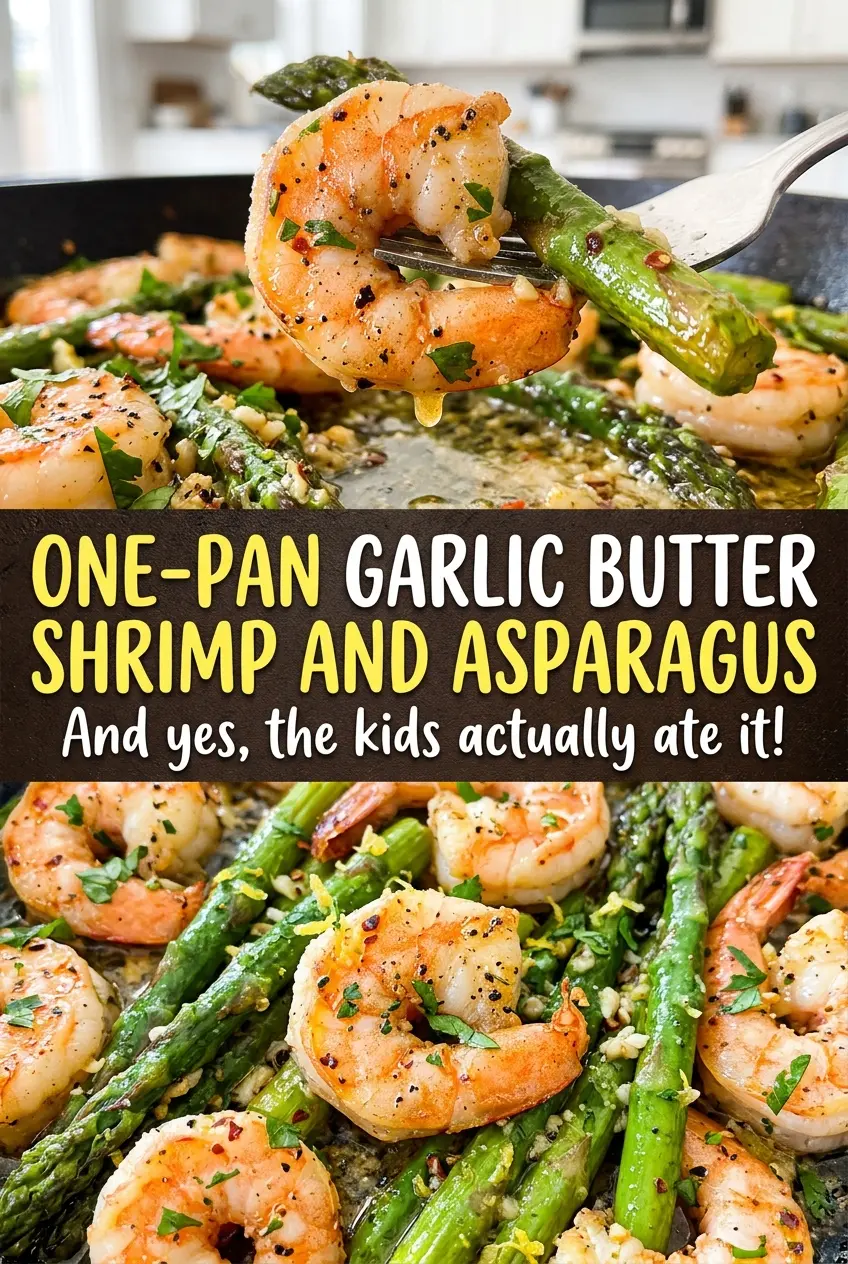
Save this garlic butter shrimp and asparagus for a quick skillet dinner with tender vegetables and a bright lemon finish.
Why the Asparagus Leaves the Pan Before the Shrimp Go In
Asparagus and shrimp need different amounts of time, and asparagus also gives off moisture as it cooks. Covering it briefly with a little water softens the stalks; uncovering the skillet lets that water evaporate. Once the pan is dry again, the asparagus is crisp-tender and ready to wait on a plate while the shrimp cook.
Leaving the asparagus in for the shrimp’s entire cook can push it past crisp-tender. The vegetables keep softening while the shrimp cook, and the extra moisture can dilute the buttery finish. Moving the asparagus out is a small extra step, but it gives each ingredient the cooking time it needs without dirtying another pan.
Use a 12-inch skillet so the asparagus has room to cook and the shrimp can sit in a single layer. If ingredients are crowded, they won’t make as even contact with the hot pan. Bring the asparagus back only after the garlic and lemon are in, then toss everything together until hot.
What the Shrimp, Asparagus, and Butter Each Bring to the Skillet
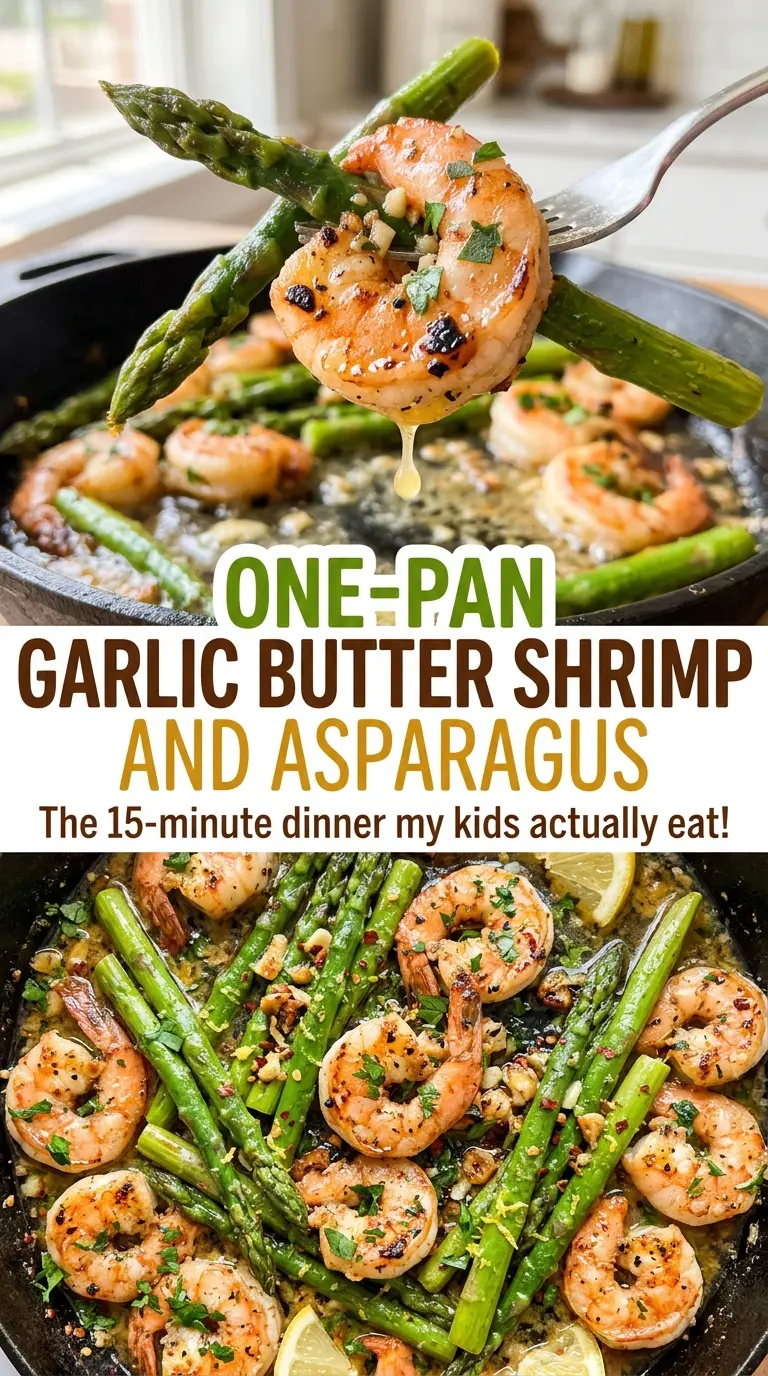
- Large shrimp — The 21–25 count size gives you substantial bites and suits the short skillet cook. Buy peeled and deveined shrimp to keep prep simple, and pat them dry before cooking. Smaller shrimp cook faster, so they’re more likely to overcook before the asparagus is hot again.
- Asparagus — Choose firm stalks with closed tips; thin or thick stalks both work, but keep the pieces close to the same 2-inch length so they cook evenly. Trim off the tough ends before cutting. Its fresh, slightly grassy flavor balances the richness of the butter.
- Unsalted butter and olive oil — Olive oil helps coat the skillet as the asparagus starts cooking, while butter gives the shrimp and garlic their rich finish. Unsalted butter also lets the measured kosher salt season the vegetables and shrimp separately. Use fresh butter rather than a butter substitute if you want the same creamy, rounded flavor.
- Garlic and lemon juice — Minced garlic spreads through the pan sauce, while lemon juice cuts through the butter with a clean, tart note. Freshly minced garlic has a brighter aroma than jarred garlic, though jarred works when convenience matters. Add both near the end so the garlic stays fragrant rather than cooking through the whole process.
The Skillet Sequence That Keeps Both Parts Tender
Start the Asparagus Covered
Heat a 12-inch skillet over medium-high heat, then add the olive oil and 1 tablespoon of butter. Add the cut asparagus with half the salt and pepper, along with the water, and cover the skillet for 3 minutes. The brief covered cook lets the stalks soften without needing a long sauté. Uncover and cook for 1–2 minutes, until the water evaporates and the asparagus is crisp-tender.
Let the Pan Dry Before the Shrimp
Transfer the asparagus to a plate once it reaches that crisp-tender stage. The bottom of the skillet should no longer have visible water; leaving liquid behind would make the next step less direct. Add the remaining butter, then lay the shrimp in a single layer and season with the remaining salt and pepper. If your shrimp overlap, they won’t cook as evenly.
Turn the Shrimp Once
Cook the shrimp for 1–2 minutes per side, turning once. Watch for the flesh to turn opaque rather than translucent, and avoid waiting for a deep brown sear that this quick cook doesn’t require. Shrimp go from tender to rubbery quickly, so keep an eye on the skillet instead of stepping away. They’ll finish in the pan with the asparagus.
Finish with Garlic, Lemon, and Asparagus
Add the minced garlic and stir for 30 seconds, just until fragrant. Garlic can turn bitter if it cooks too long, so have the lemon juice and asparagus ready to go. Stir in the lemon juice, return the asparagus to the skillet, and toss until the vegetables are hot and the shrimp are opaque and have reached 145°F. Take the skillet off the heat as soon as everything is ready.
Small Changes That Shift the Garlic Butter Skillet
A dairy-free skillet with olive oil
Replace the butter with the same amount of olive oil, keeping the olive oil already used for the asparagus. The result is dairy-free and still cooks well in the skillet, but the finish will be lighter and less rich than the butter version.
A gentler garlic finish
Chop the garlic a little more coarsely instead of mincing it finely, then cook it for the same 30 seconds. The larger pieces give a softer, less evenly distributed garlic flavor while keeping the same ingredients and quick finish.
A brighter lemon finish
For a more noticeable lemon note, stir the listed lemon juice in after returning the asparagus rather than before. The same amount of juice lands more directly on the shrimp and vegetables, with a sharper citrus impression against the butter.
Storage and Reheating
- Refrigerator: Refrigerate leftovers within 2 hours and use them within 3 days. The asparagus will soften as it sits.
- Freezer: Freezing is safe, but the asparagus will lose its crisp-tender texture after thawing. Freeze in an airtight container for up to 2 months for best quality.
- Reheating: Warm gently in a skillet over low heat or in short microwave intervals, stirring once, until the leftovers reach 165°F. Avoid a long, high-heat reheat, which can make the shrimp tough.
Questions That Come Up While Cooking Shrimp and Asparagus
One-Pan Garlic Butter Shrimp and Asparagus
Ingredients
Equipment
Method
- Heat a 12-inch skillet over medium-high heat.
- Add the olive oil and 1 tablespoon butter.
- Add the asparagus, half the salt and pepper, and the water; cover and cook for 3 minutes.
- Uncover and cook for 1–2 minutes, until the water evaporates and the asparagus is crisp-tender.
- Transfer the asparagus to a plate.
- Add the remaining 2 tablespoons butter to the skillet.
- Add the shrimp in a single layer and season with the remaining salt and pepper; cook for 1–2 minutes per side, turning once.
- Add the garlic and cook for 30 seconds, stirring, until fragrant.
- Stir in the lemon juice and return the asparagus to the skillet.
- Toss until the asparagus is hot and the shrimp are opaque and have reached 145°F.
