
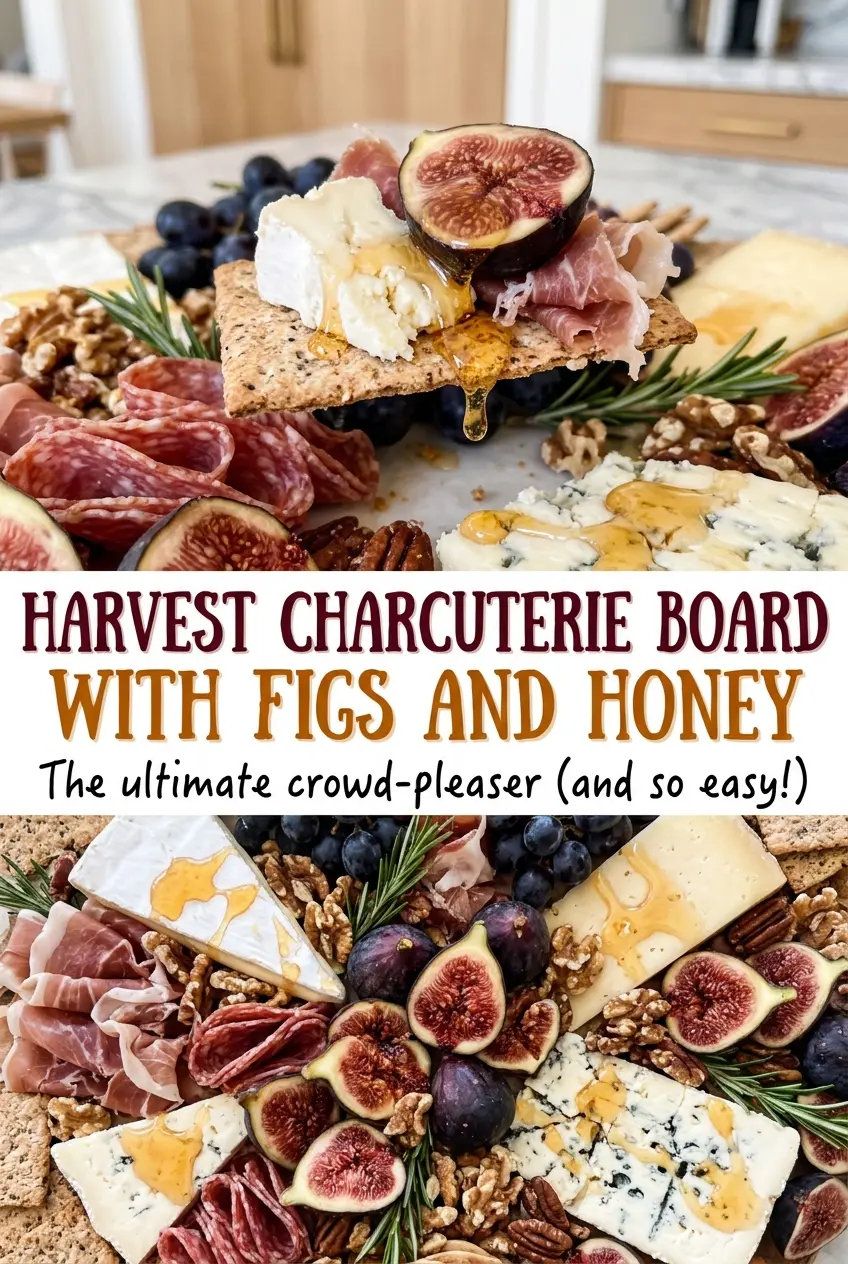
The honey always looks like it needs more room than it does, and the crackers seem to multiply once everything else is on the board. I arrange the cheeses first, then let the meats and fruit fill the spaces around them; that keeps the board generous-looking without hiding the ingredients people are reaching for. This harvest charcuterie board with figs and honey has a mix of creamy Brie, sharp cheddar, salty cured meat, and fresh fruit in every corner.
The small details matter more than elaborate styling. Cut the Brie into wedges and the cheddar into bite-size pieces before arranging anything, so guests can serve themselves without taking the board apart. Fresh figs bring a soft, honeyed sweetness, while grapes and thin pear slices add a cooler, crisp contrast. A little bowl keeps the honey where it belongs, and the toasted walnuts give the crackers and cheese a welcome crunch. It’s a relaxed board for eight that still feels thoughtful when it reaches the table.
Kitchen Note
Dry the rinsed figs and grapes well before they go on the board. Extra water can soften nearby crackers, and a dry surface helps the fruit look fresh instead of slick.
Save this harvest charcuterie board with figs and honey for an easy-to-share spread with creamy cheese, fresh fruit, and a little crunch in every bite.
Why the 18-by-12-inch Board Makes This Spread Easier to Eat
A board can look abundant and still be awkward if everything is stacked in the middle. The 18-by-12-inch surface gives this spread room for the cheese, meat, fruit, honey, walnuts, and crackers without forcing guests to reach over one another’s food. Leave little openings between groups instead of trying to cover every inch. Those gaps make it easier to pick up a cracker or a wedge of Brie without disturbing the rest.
The mix works because no one ingredient has to do all the work. Sharp cheddar gives the board a firm, savory bite; Brie is softer and mild; prosciutto and salami bring salt; figs and grapes lean sweet, while pear adds a crisp note. Honey connects the cheese and fruit, and walnuts give the softer bites some crunch. You don’t need complicated garnishes or extra components to make the contrast clear. Keep the different textures visible, and the board reads as inviting before anyone takes a bite.
What the Cheese, Fruit, and Honey Each Bring to the Board
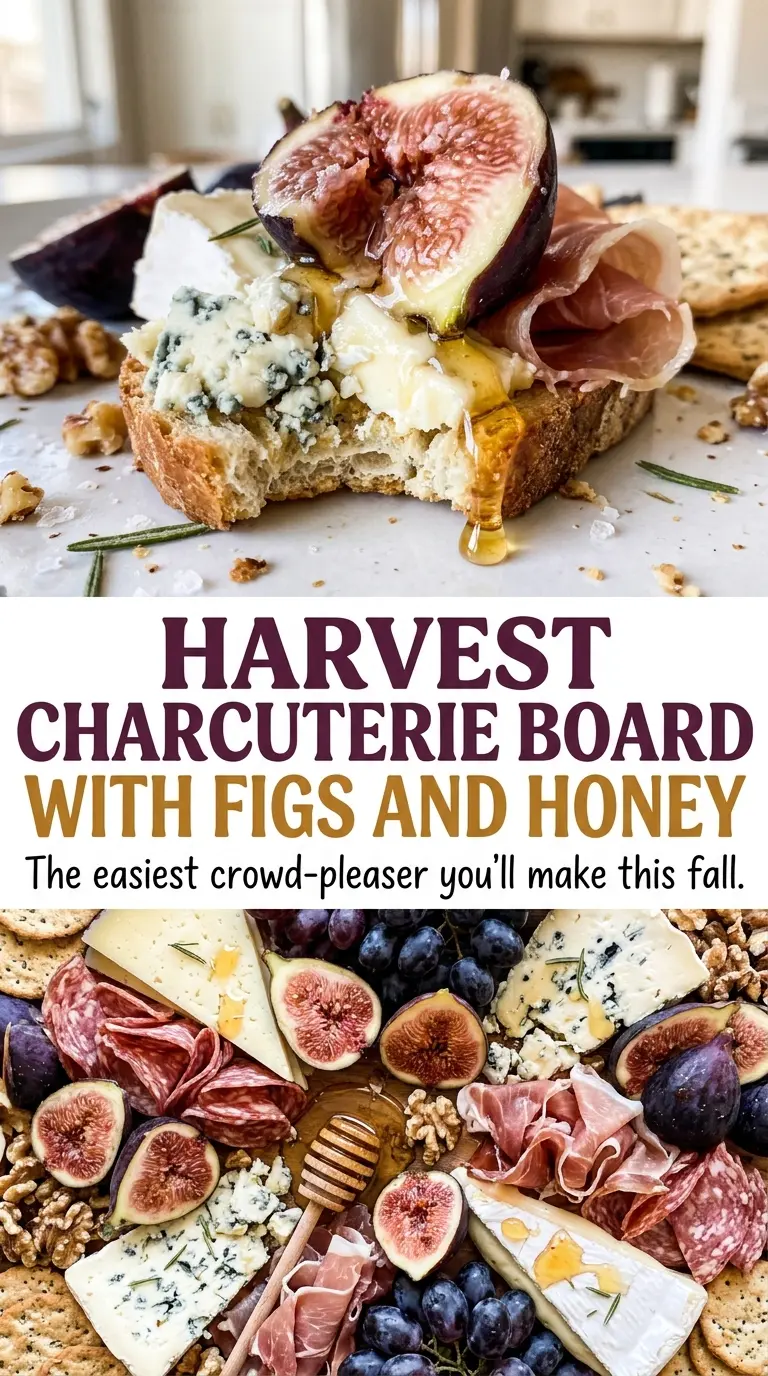
- Sharp cheddar and Brie — The cheddar holds its shape when cut into bite-size pieces, while Brie gives you a soft, creamy wedge. Choose Brie that’s pleasantly soft but still easy to cut; there’s no need to spend extra on an elaborate cheese when these two distinct textures are doing the job. If one cheese isn’t available, you can use more of the other, but the board will lose some of its contrast.
- Prosciutto and salami — Loosely folded prosciutto brings delicate, tender pieces; thinly sliced salami is firmer and easier to pick up. Their different textures are useful here, so keeping both gives the board more variety than doubling up on either one. If you need to leave out one, let the other occupy that part of the board rather than trying to stack it high.
- Fresh figs, grapes, and pear — Figs offer a soft, jammy center, grapes provide juicy little bites, and pear keeps the fruit selection crisp. Freshness matters most with the figs and pear because their texture is so noticeable. If you don’t have pear, arrange the figs and grapes across that space; the board will be sweeter and less crisp.
- Honey and toasted walnuts — Honey is easy to dip into and ties the fruit to the cheeses, while toasted walnuts add a dry, nutty crunch. A small bowl is more practical than pouring honey directly over the board, where it could run into the crackers or meat. The walnuts are already toasted, so they’re ready to arrange.
- Crackers — Choose sturdy crackers that can carry a piece of cheese without bending. A basic, economical box works well; the cheeses and fruit provide plenty of character. Keep the crackers in their own open spaces so they’re easy to reach.
Build the Board in Four Passes, Starting With the Cheese
Anchor the Board With Cheddar and Brie
Set out an 18-by-12-inch serving board, then arrange the bite-size cheddar pieces and Brie wedges on it. Spread the cheeses apart rather than putting them in one cluster, so each one has room to stand out. The Brie wedges should be easy to lift without pulling neighboring pieces along with them. Leave open spaces for the other components instead of filling the board edge to edge at this stage.
Tuck in the Prosciutto and Salami
Loosely fold the prosciutto and place it around the cheeses, then tuck in the thinly sliced salami. The prosciutto should look relaxed rather than pressed into a flat pile. Keep the two meats in separate little groups so guests can choose between their softer and firmer textures. If the board starts to feel crowded, use the open areas rather than layering meat over the cheese.
Arrange the Fresh Fruit Around the Savory Bites
Halve the figs and thinly slice the pear before placing them on the board with the grapes. Distribute the fruit around the cheese and meats so the sweet bites are easy to find from different sides. Thin pear slices are easier to pick up than thick chunks, and halved figs show their soft centers. Keep the fruit in small clusters rather than mixing it into the meat.
Set Down the Honey, Walnuts, and Crackers
Put the honey in a small bowl on the board, then fit the walnuts and crackers into the remaining spaces. Keep the bowl stable and close enough to the cheese and fruit for easy dipping. Add the crackers where they can be reached without leaning across the honey. Serve the finished board immediately.
Two Ways to Adapt the Board Without Losing Its Harvest Feel
Make It a Fruit-and-Cheese Board
Leave off the prosciutto and salami, then arrange the cheeses, figs, grapes, pear, honey, walnuts, and crackers as usual. The result is lighter and more focused on the sweet fruit and creamy cheese, with less salty, savory contrast. This is an omission rather than a direct meat substitute, so the board will feel simpler.
Serve It as Small Tasting Plates
For a seated gathering, divide the same components among individual plates instead of setting out one shared board. Give each plate a little of both cheeses, the meats, fruit, walnuts, and crackers, with honey served from its bowl. The format feels more orderly, though you lose the open, help-yourself look of a single centerpiece.
Making Ahead and Leftovers
- Before serving: Assemble the board just before serving; pear can brown and crackers can soften if they sit out with the other components.
- Refrigerator: Refrigerate leftovers within 2 hours, covered and separated where practical. Use them within 3 to 4 days; crackers may lose their crunch.
- Freezer: Freezing the assembled board isn’t recommended. Fresh fruit and soft Brie lose their best texture after thawing.
- Reheating: No reheating is needed. Serve the chilled leftovers as they are, and keep crackers separate if you want them crisp.
Questions That Come Up When Making This Fig-and-Honey Board
Harvest Charcuterie Board with Figs and Honey
Ingredients
Equipment
Method
- Arrange the cheddar and Brie on an 18x12-inch serving board.
- Tuck the prosciutto and salami around the cheeses.
- Arrange the figs, grapes, and pear around the cheeses and meats.
- Set the honey in a small bowl on the board.
- Arrange the walnuts and crackers in the remaining spaces.
- Serve immediately and refrigerate leftovers within 2 hours.
