
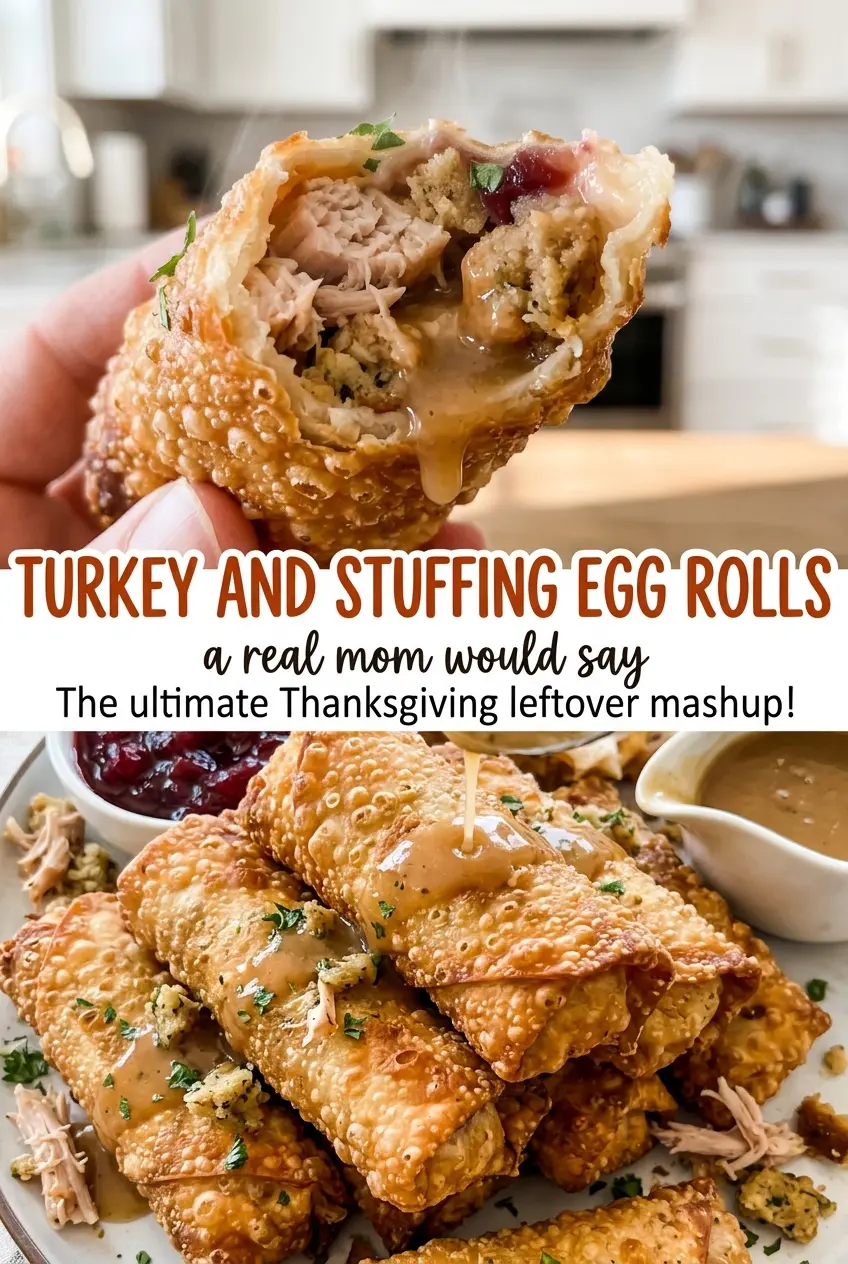
The first clue is the wrapper: it goes from pale to deep gold while the filling stays tucked out of sight. These Turkey and Stuffing Egg Rolls turn cooked turkey, prepared stuffing, and gravy into a crisp little package, but the center needs attention just as much as the shell.
I like that every bite tastes familiar without feeling like another plate of leftovers. Finely chopped turkey mixes into the stuffing instead of falling out in big pieces, and the gravy helps the filling hold together when you portion it. Keep the filling modest inside each wrapper; a snug roll is easier to seal and less likely to split in the oil.
Heating the filling before it goes into the wrappers makes a noticeable difference. The outside still gets its golden crunch, while the center reaches the right temperature without leaving the wrapper in the oil longer than it needs. Set them on a rack after frying and the crisp edges stay crisp as they rest.
Kitchen Note
Give the filling its full five-minute stand after heating. It’s easier to portion once it’s had a moment off the heat, and you won’t be handling a bowl of piping-hot filling while you wrap.
Save these Turkey and Stuffing Egg Rolls for a crisp, golden way to use cooked turkey and stuffing.
Why the Filling Goes Into the Oil Already Hot
An egg roll wrapper can turn golden before a cold, packed center has warmed through. That’s especially easy to miss here: the turkey is cooked, but the stuffing and gravy may be cold from the refrigerator, and the filling is enclosed in a thick layer of wrapper. If you rely on frying alone to warm the middle, you risk over-browning the outside while waiting for the center.
Heating the turkey, stuffing, and gravy together first solves that timing problem. Stirring as it warms helps distribute the heat through the mixture, and checking the filling itself gives you a clear target rather than asking the wrapper’s color to tell you what’s happening inside. Frying then has one main job: crisping the wrapper and bringing the center of each roll to temperature.
That’s also why the amount inside each wrapper matters. A consistent portion spreads across the lower third without forcing the wrapper seams apart. The filling stays contained, the rolls cook evenly, and you can judge their color without wondering whether a bulging center is still cold.
What the Stuffing, Gravy, and Wrapper Each Bring
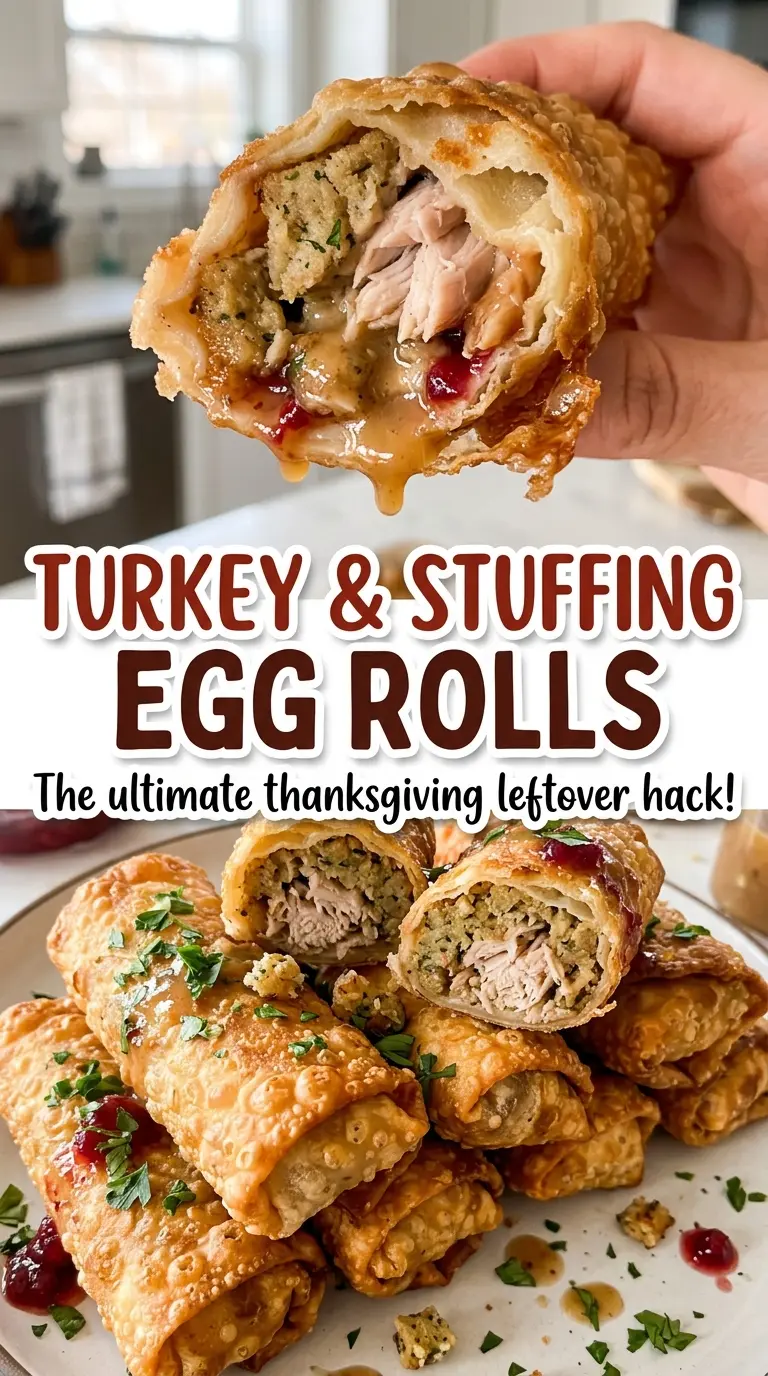
- Cooked turkey — Finely chopping the turkey gives you small pieces that tuck neatly into the wrapper instead of catching on the folds. Leftover roasted turkey works well; avoid large chunks, which make the filling harder to portion evenly.
- Prepared stuffing — Stuffing provides the soft, seasoned base and absorbs some of the gravy. Use prepared stuffing rather than dry stuffing mix, which hasn’t been hydrated and won’t give the filling the same cohesive texture.
- Turkey gravy — Gravy binds the turkey and stuffing and keeps the center from tasting dry. A prepared chicken gravy is a sensible swap if that’s what you have; it changes the flavor slightly but still works with the other filling ingredients.
- Egg roll wrappers — The 7-inch size gives enough wrapper to fold around the filling without leaving a bulky, doughy overlap. Keep the wrappers intact and flexible; a torn corner can leave an opening for filling to escape.
- Egg wash — Beaten egg and water help the final corner stick closed. Brush the top corner rather than soaking the wrapper; the goal is a sealed seam, not a wet, slippery surface.
- Vegetable oil — Vegetable oil is used for the deep-frying, and a deep-fry thermometer is useful because the oil temperature affects how quickly the wrappers brown. A heavy 5-quart Dutch oven gives room to fry a small batch without crowding the rolls.
How to Fill, Seal, and Fry Without a Split Seam
Warm the Filling Evenly
Stir the chopped turkey, prepared stuffing, and gravy together in a large microwave-safe bowl. Microwave on HIGH for 2 to 4 minutes, stirring every minute, until the filling reaches 165°F. The mixture should be hot throughout rather than warm only around the edges. Let it stand before you begin wrapping.
Fold Each Wrapper Into a Snug Parcel
Beat the egg with the water in a small bowl for the wash. Set a wrapper in a diamond shape and place 1/3 cup of filling across the lower third. Fold the bottom corner over the filling, bring the sides inward, then roll snugly toward the top corner. Brush that corner with egg wash to seal, and repeat with the remaining wrappers and filling.
Fry in Small Batches at 350°F
Heat the vegetable oil in a 5-quart Dutch oven to 350°F, monitoring it with a deep-fry thermometer. Fry 3 egg rolls at a time for 3 to 4 minutes, turning them occasionally so they color evenly. They’re ready when the wrappers are crisp and golden and the center of the filling reaches 165°F. If the oil temperature drops, give it time to return to 350°F before adding the next batch.
Drain on a Rack Before Serving
Lift the fried egg rolls onto a wire rack set over a rimmed baking sheet. The rack lets excess oil drain away instead of collecting underneath and softening the wrapper. Let them rest for 3 minutes before serving. Return the oil to 350°F before frying the remaining rolls.
Easy Swaps for a Different Filling
Use Cooked Chicken Instead of Turkey
Replace the turkey with the same amount of finely chopped cooked chicken. Keep the stuffing and gravy; the filling will taste a little milder, but the same wrapping and frying method works.
Try Cornbread Stuffing
Use prepared cornbread stuffing in place of the usual prepared stuffing. It brings a slightly sweeter, softer crumb, so the filling feels more tender; keep the rest of the filling the same so it still holds together for rolling.
Make a Vegetarian Batch
For a vegetarian filling, replace the turkey with an equal amount of cooked, finely chopped mushrooms and use vegetarian gravy and vegetarian prepared stuffing. Cook the mushrooms until their moisture has evaporated before mixing them in; the result is earthier and less meaty, with a filling that stays firm enough to wrap.
Storage and Reheating
- Refrigerator: Store cooled egg rolls in an airtight container for 3 to 4 days. The wrapper softens in the refrigerator.
- Freezer: Freeze cooled egg rolls in a single layer until firm, then transfer them to an airtight freezer container. They keep best for about 1 to 2 months.
- Reheating: Reheat in an oven or air fryer until the center reaches 165°F; dry heat brings back some of the crispness. Microwaving warms them but leaves the wrapper soft.
Questions About Turkey and Stuffing Egg Rolls
Turkey and Stuffing Egg Rolls
Ingredients
Equipment
Method
- In a large microwave-safe bowl, stir together the turkey, stuffing, and gravy.
- Microwave the filling on HIGH for 2-4 minutes, stirring every minute, until it reaches 165°F.
- Let the filling stand for 5 minutes.
- Beat the egg with the water in a small bowl.
- Place a wrapper in a diamond shape and add 1/3 cup filling across the lower third.
- Fold the bottom over the filling, fold in the sides, and roll snugly.
- Brush the top corner with egg wash to seal, then repeat with the remaining wrappers and filling.
- Heat the oil in a 5-quart Dutch oven to 350°F, using a deep-fry thermometer to monitor the temperature.
- Fry 3 egg rolls at a time for 3-4 minutes, turning occasionally, until crisp and golden and the center of the filling reaches 165°F.
- Drain the egg rolls on a wire rack set over a rimmed baking sheet.
- Let the egg rolls rest for 3 minutes.
- Return the oil to 350°F before frying the remaining egg rolls.
