
Apple crisp cheesecake with cookie crust gives you the best parts of two desserts in one clean slice: a buttery, spiced base, a thick vanilla cheesecake layer, tender cinnamon apples, and a streusel top that bakes up golden and crunchy. The contrast is what makes it worth the extra step. Every bite moves from crisp to creamy to soft and back to crunchy again, with caramel tying it all together at the end.
The part that makes this version work is balance. The apples are cooked before they go into the cheesecake, so they soften without leaking juice into the filling, and the cornstarch keeps the layer from turning watery. The streusel goes on chilled, which helps it stay clumpy and bake into those nubby crisp pieces instead of melting into the surface.
Below, I’ll walk through the parts that matter most: how to keep the crust crisp, how to layer the apples without sinking the batter, and how to tell when the cheesecake is done before the center turns dry.
The apple layer stayed neat and the streusel stayed crisp even after chilling overnight. The caramel on top was the perfect finish, and my husband asked if I could make it again for Thanksgiving.
Save this apple crisp cheesecake for the dessert night when you want a crunchy Biscoff crust, silky cheesecake, and caramel on top.
The Mistake That Makes Apple Cheesecake Soggy Instead of Crisp
The biggest problem with layered apple cheesecake is moisture. Raw apples release liquid as they bake, and if that juice goes straight into the filling, the cheesecake bakes up loose in the middle and the crust can turn soft before the center is set. Cooking the apples first changes that. It drives off excess water, concentrates the cinnamon, and lets the cornstarch work before the fruit ever touches the batter.
There’s a second place people lose texture: the oven. If the heat is too high, the cheesecake puffs, cracks, and then sinks hard as it cools. A lower bake and a slow cool-down keep the filling dense and creamy. The wobble test matters here. You want the edges set and the center still moving in a small, slow wave, not sloshing like liquid.
- Cooked apples: They bring flavor and structure without flooding the cheesecake.
- Chilled streusel: Cold butter creates bigger crumbs and a crunchier top.
- Slow cooling: It prevents sudden collapse and keeps the texture even.
What Each Ingredient Is Doing in This Apple Crisp Cheesecake
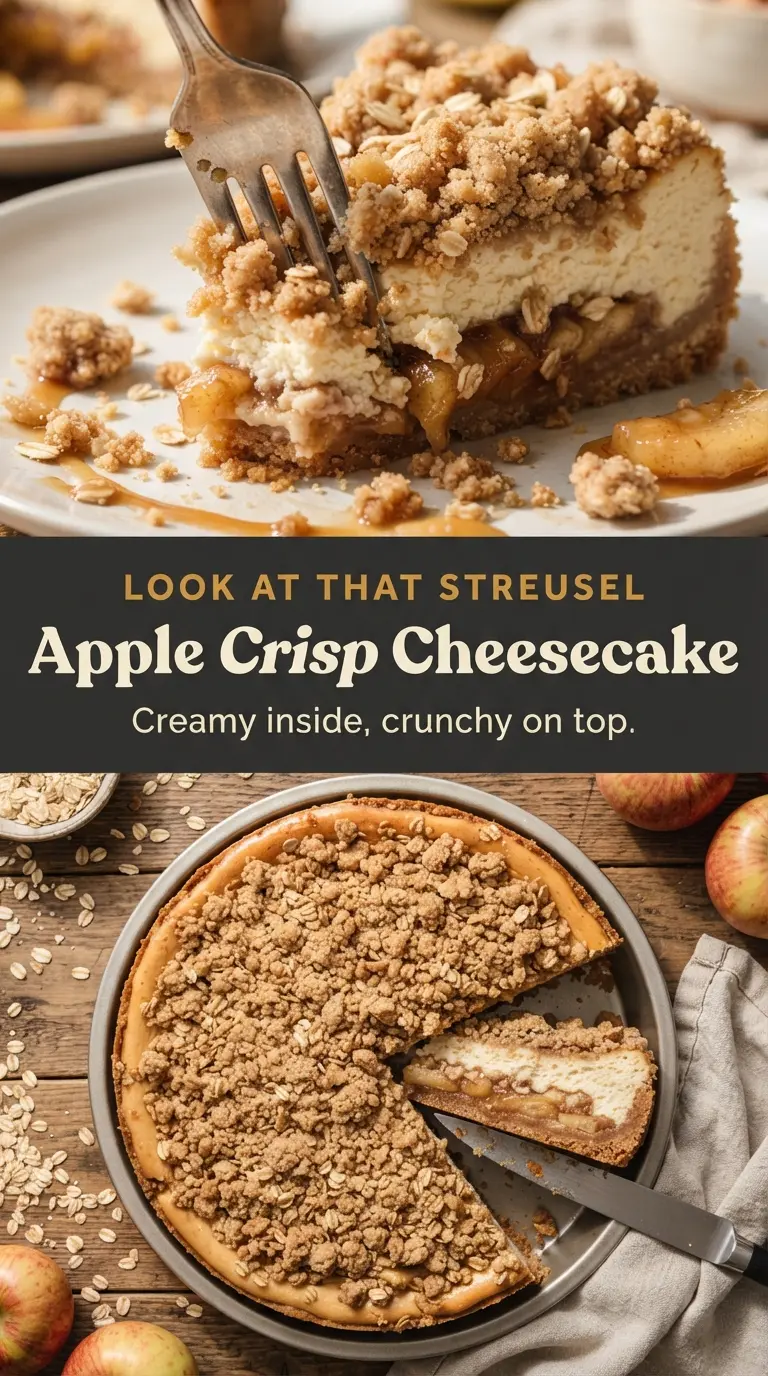
The Biscoff cookie crumbs do more than hold everything together. They add a caramelized spice that plain graham crackers can’t match, and that flavor carries through the whole dessert. You can swap in graham crackers in a pinch, but the final slice will taste lighter and less warm.
Granny Smith apples are the right choice because they stay tart and hold their shape after cooking. Softer apples can work, but they turn mushy and disappear into the cheesecake. For the filling, full-fat cream cheese matters. Low-fat cream cheese brings extra water and a looser set, which is the last thing you want under a fruit layer and streusel topping.
- Sour cream: It loosens the batter just enough for a smooth, dense slice and adds a clean tang that keeps the cheesecake from tasting flat. Full-fat plain Greek yogurt can work, but the texture will be a little less silky.
- Cornstarch in the apple layer: This is what turns the apple juices into a glossy coating instead of a puddle. Don’t skip it unless you want the filling to get wet.
- Rolled oats: Old-fashioned oats give the streusel that crisp, craggy texture. Quick oats make a tighter, softer topping.
- Cold butter for the streusel: The butter needs to stay in pieces long enough to bake into crumbs. If it melts into the dry ingredients before the oven, the topping turns sandy instead of crisp.
Building the Layers Without Letting the Cheesecake Collapse
The Crust That Stays Firm
Press the crumb mixture firmly into the bottom and slightly up the sides of the pan so it has a little wall to catch the filling. Bake it long enough to set the butter, then let it cool before adding anything else. If you pour warm filling onto a hot crust, the butter softens again and the base loses its snap.
Cooking the Apples Until the Juices Tighten
Cook the diced apples with butter, sugar, and spices until they soften at the edges and the pan starts to look syrupy. That’s the point where the flavor deepens and the fruit stops threatening the cheesecake with extra liquid. Stir in the cornstarch and let it bubble for a minute so the thickening actually happens; if you stop too early, the sauce can stay chalky instead of glossy.
Mixing the Cheesecake Batter Gently
Beat the cream cheese and sugar until the mixture looks completely smooth before anything else goes in. If there are lumps at this stage, they will not disappear later. Add the eggs on low speed and stop as soon as they’re mixed in. Overbeating whips air into the batter, and that air expands in the oven and then collapses as the cheesecake cools.
Knowing When It’s Done
The edges should look set and a few inches in the middle should still wobble softly when you nudge the pan. That movement is the sign that the cheesecake will finish setting as it cools. If you bake until the center is firm in the oven, it will end up dry and crumbly once chilled.
Three Ways to Make This Dessert Fit Your Table
Gluten-Free Swaps That Still Hold Together
Use certified gluten-free cookie crumbs for the crust and replace the flour in the filling and streusel with a 1:1 gluten-free baking blend. The texture stays close to the original, though the streusel may bake a little more delicately. Keep the rest of the method the same so the cheesecake still sets with that dense, creamy slice.
How to Make It Less Sweet
Cut the brown sugar in the apple layer by a few tablespoons and use a dark, salted caramel for serving. The cheesecake itself will still taste rich, but the tart apples and extra salt will keep the dessert from landing heavy. This is the version I’d make when I want a sharper finish instead of a candy-sweet one.
What to Do When You Need a Day-Ahead Dessert
This cheesecake actually benefits from an overnight chill, so it’s a good make-ahead dessert. Bake it the day before, cool it completely, then chill it uncovered until cold before covering it lightly. The streusel stays crisp enough for serving the next day, and the slices cut cleaner once the filling has fully set.
Storage and Reheating
- Refrigerator: Store covered for up to 5 days. The crust softens slightly by day two, but the flavor holds well.
- Freezer: Freeze slices tightly wrapped, then placed in an airtight container for up to 2 months. Thaw overnight in the refrigerator for the cleanest texture.
- Reheating: Serve this chilled or at cool room temperature. If you warm it, use just a brief 10 to 15 seconds on a slice, because too much heat will loosen the cheesecake and soften the streusel.
The Questions People Ask Before They Bake This One
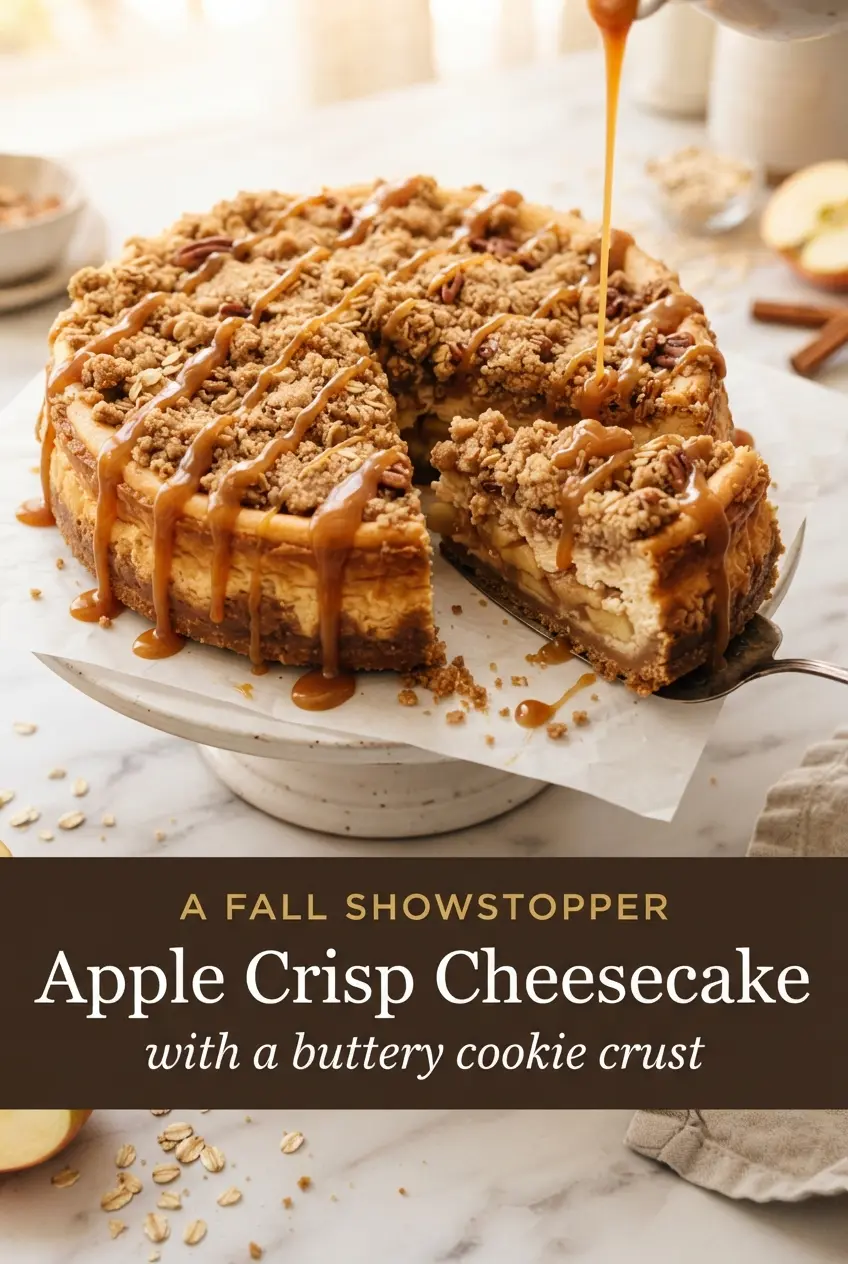
Apple Crisp Cheesecake with Cookie Crust
Ingredients
Equipment
Method
- Heat the oven to 325°F. Wrap the outside of a 9-inch springform pan in two layers of foil and line the bottom with parchment.
- Stir the biscoff cookie crumbs, light brown sugar, melted unsalted butter, and fine salt together, then press firmly into the bottom and 1 inch up the sides.
- Bake 10 minutes and cool 15 minutes.
- Melt 3 tablespoons unsalted butter in a skillet over medium heat, then add diced Granny Smith apples, light brown sugar, ground cinnamon, ground nutmeg, and lemon juice.
- Cook 6–8 minutes, until the apples soften and the juices turn syrupy.
- Stir in the cornstarch and cook 1 minute more, until the liquid thickens and coats the apples, then cool completely.
- Rub the rolled oats, all-purpose flour, light brown sugar, ground cinnamon, cold unsalted butter, and fine salt together with your fingers until clumpy.
- Chill until needed.
- Beat the cream cheese and granulated sugar on medium for 3 minutes, scraping twice, until perfectly smooth.
- Beat in the sour cream, then the eggs one at a time on low, mixing just until each disappears.
- Stir in the vanilla extract, all-purpose flour, and fine salt.
- Pour half the cheesecake batter over the cooled crust, spoon the cooled apples over it in an even layer, then top with the remaining batter and smooth.
- Scatter the chilled streusel evenly over the surface and press lightly so it adheres.
- Bake 65–75 minutes, until the edges are set and the center 3 inches still wobble slightly.
- Turn the oven off, crack the door, and leave the cheesecake inside 1 hour.
- Cool to room temperature, then chill at least 6 hours or overnight.
- Run a thin knife around the edge, release the springform, and serve each slice with warm caramel sauce and a pinch of flaky sea salt.
