
Apple pecan cake bakes up dense, moist, and packed with enough fruit and nuts to make every slice feel substantial. The crumb stays tender instead of gummy because the batter starts out thick on purpose, then the diced apples loosen it as they bake and melt into the cake. A warm brown sugar caramel glaze finishes the whole thing with a soft, glossy ribbon that settles into the ridges of the bundt pan.
What makes this version work is the balance between structure and moisture. The oil keeps the crumb soft for days, while the brown sugar, cinnamon, and nutmeg give the cake a deeper, rounder sweetness than plain white sugar alone. Toasted pecans matter here too; they bring a clean, nutty crunch that holds up against the tender apples instead of turning soft and lost in the batter.
The method below leans on a few small details that keep the cake from failing: how thick the batter should look before the apples go in, when to stop mixing, and how long to cool the glaze so it clings instead of running straight off. Those are the parts worth paying attention to.
The batter looked almost too thick at first, but it baked up perfectly and the apples made the crumb so tender. I also loved that the glaze set just enough to stay on the cake instead of dripping all over the plate.
Pin this apple pecan bundt for the kind of cake that stays moist, slices cleanly, and gets that glossy caramel glaze right down the sides.
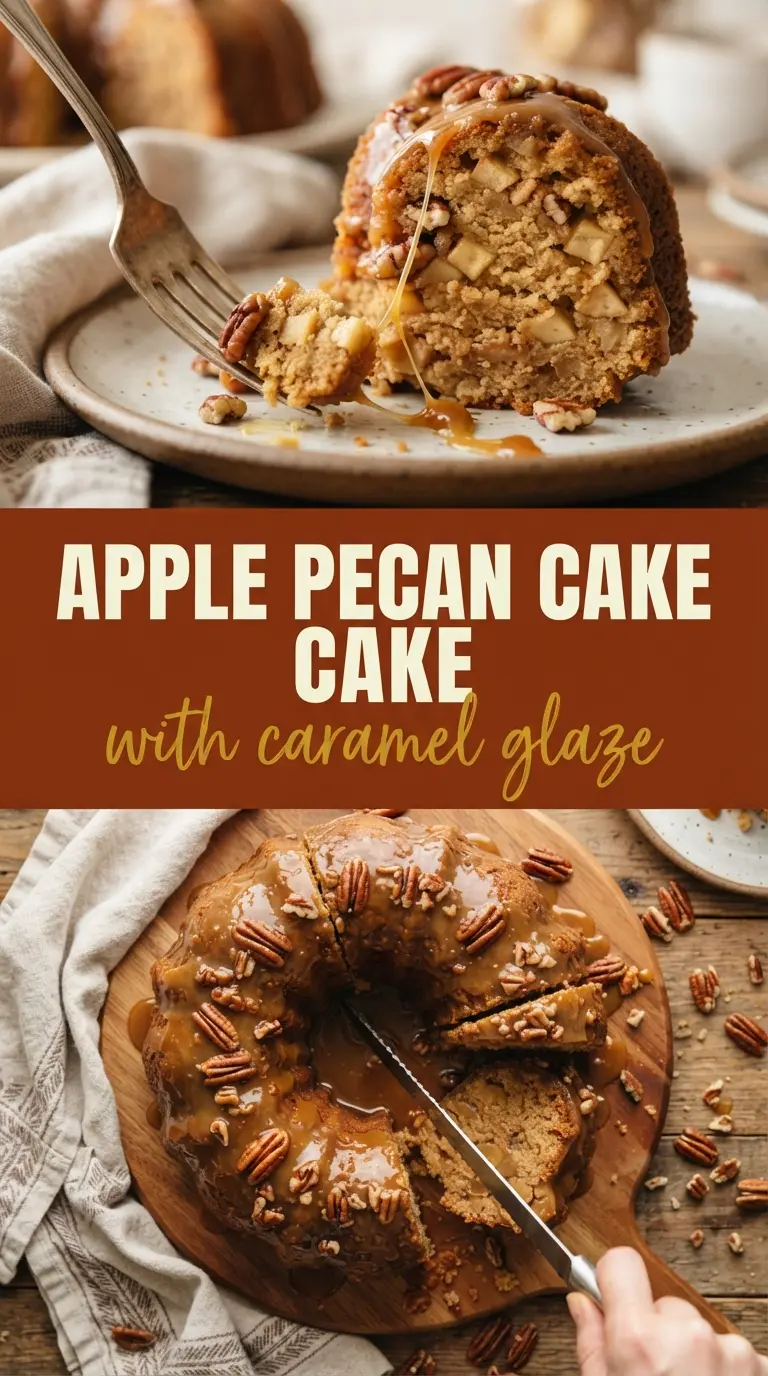
The One Thing That Keeps a Bundt Cake from Baking Up Heavy
A bundt cake like this can go wrong in two opposite ways: it can bake up dry from too much flour, or dense and gummy from overmixing once the apples go in. The batter should look almost stubbornly thick before the fruit is folded through. That’s not a problem. That’s what lets the apples release moisture into the cake instead of making the whole thing collapse.
The other place people lose the texture is the pan. Every ridge needs to be greased and floured well, especially if your bundt pan has deep detail. Apples and brown sugar can stick to the pattern if the pan is even a little bare, and then the cake tears when you turn it out.
- Granny Smith apples — Their tartness keeps the cake from tasting flat, and they hold their shape long enough to keep little pockets of fruit in the crumb. Softer apples can work, but they’ll bake down more quickly and the texture will be less defined.
- Toasted pecans — Toasting wakes up the nut flavor and keeps the pecans from tasting raw inside a rich cake. Don’t skip this step; it’s the difference between a nutty cake and a cake with nuts mixed in.
- Vegetable oil — Oil gives this cake the soft, moist crumb that stays tender for days. Butter tastes lovely, but it firms up as it cools and makes the cake less plush.
- Brown sugar — This does more than sweeten. It brings moisture and that caramel note that ties the apples, glaze, and pecans together. Light brown sugar is the right choice here; dark brown sugar would push the glaze and batter a little too deep and heavy.
How to Keep the Cake Tender While the Glaze Stays Glossy
Mix the Batter Just Until It Comes Together
Whisk the oil, sugars, and eggs until the mixture looks smooth and a little glossy, then stop as soon as the dry ingredients disappear. The batter should be thick enough to hold its shape on a spoon. If you keep stirring after the flour goes in, the cake turns tight and dry instead of tender.
Fold in the Apples and Pecans Last
The apples loosen the batter once they’re added, so fold them in gently and evenly rather than beating them through. You want the fruit coated all the way through, with the pecans scattered in every slice. If the mixture starts to look wet at this point, that’s normal; the apples are doing the work the batter can’t do on its own.
Bake Until the Center Springs Back
At 325°F, the cake needs enough time to set through the middle without overbrowning on the edges. Pull it when the top is deep golden and a skewer comes out with a few moist crumbs, not wet batter. If you wait for a totally clean skewer, the cake usually goes too far and loses that dense, soft crumb.
Cook the Glaze Until It Clings
The glaze needs a brief boil so the brown sugar dissolves fully and the sauce thickens. After three minutes, it should look glossy and slightly syrupy. Let it cool for a few minutes before pouring; if it’s too hot, it runs straight off the cake, and if it sits too long, it turns too thick to spread through the ridges.
Make It With Walnuts Instead of Pecans
Walnuts work well if that’s what you have, but they’re a little earthier and less buttery than pecans. Toast them the same way so they don’t taste flat in the finished cake. The texture stays the same; the flavor just shifts a bit more rustic.
How to Make It Gluten-Free
A good 1:1 gluten-free flour blend can replace the all-purpose flour here, but use one that includes xanthan gum. The crumb will be a little more delicate and less springy, which is normal. Let the cake cool fully before turning it out so it has time to set.
Swap the Glaze for a Simple Powdered Sugar Drizzle
If you want something lighter, whisk powdered sugar with a little milk and vanilla until it falls in ribbons from the spoon. It won’t give you the same caramel depth or set the same way, but it’s a faster finish and still works with the apple and pecan base.
Storage and Reheating
- Refrigerator: Store covered for up to 5 days. The cake stays moist, though the glaze firms up a bit in the fridge.
- Freezer: Freeze slices tightly wrapped for up to 2 months. The glaze may lose a little shine after thawing, but the cake itself freezes well.
- Reheating: Warm individual slices in the microwave for 10 to 15 seconds or let them sit at room temperature. Don’t overheat it, or the glaze can turn sticky and the crumb can dry out at the edges.
Questions I Get Asked About This Recipe
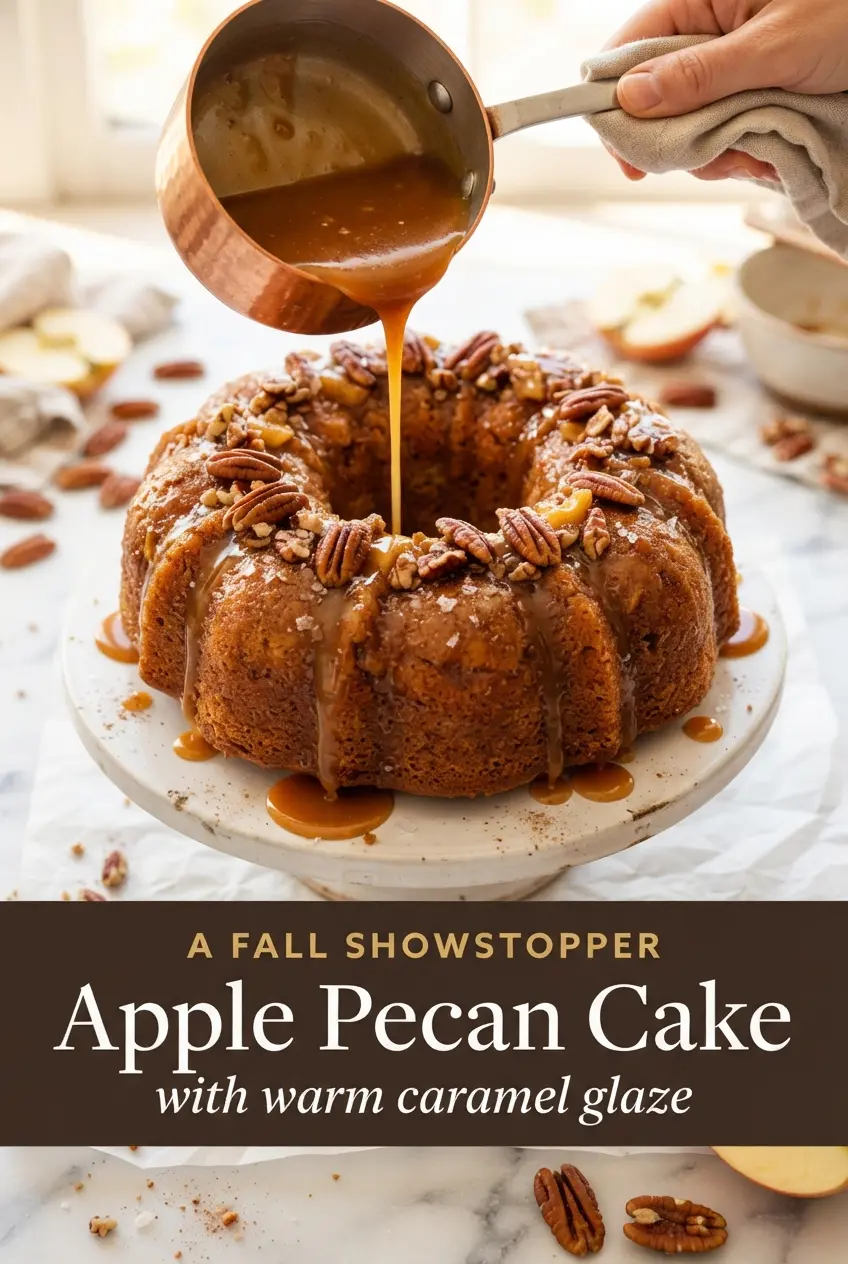
Apple Pecan Cake with Caramel Glaze
Ingredients
Equipment
Method
- Heat the oven to 325°F. Generously grease and flour a 10-cup bundt pan, getting into every crease so the cake releases cleanly (no white flour pockets).
- In a large bowl, whisk the vegetable oil, granulated sugar, and brown sugar until thick and glossy, about 1 minute (it should look slightly lighter).
- Whisk in the eggs one at a time, then whisk in the vanilla, beating until the mixture is smooth and pale (about several smooth strokes each time).
- Add the flour, baking soda, salt, cinnamon, and nutmeg, then fold with a spatula just until no dry streaks remain (batter will be very thick, like cookie dough).
- Fold in the diced apples and toasted pecans, mixing until evenly coated so the fruit loosens the batter (no dry flour around the apples).
- Spoon the batter into the bundt pan and press it level with the back of the spatula. Tap the pan once on the counter to settle (flattened top should look even).
- Bake 60–70 minutes, until the top is deep golden and a skewer inserted into the thickest part comes out with a few moist crumbs (not wet batter).
- Cool in the pan 20 minutes. Invert onto a wire rack and cool 30 minutes more (the cake should feel set and hold its shape).
- Melt the butter in a saucepan over medium heat, then stir in the brown sugar and heavy cream and bring to a gentle boil (bubbles should be steady).
- Boil 3 minutes without stirring, until slightly thickened and glossy (you should see it cling to the spoon).
- Off the heat, stir in the salt and vanilla, then cool 5 minutes so the glaze thickens enough to cling (it should look slightly syrupy).
- Pour the warm glaze over the cake, letting it run down the ridges, then scatter with chopped pecans and flaky sea salt (a soft ribbon should coat the sides).
- Let set 20 minutes before slicing (glaze will look matte and not smear easily).
