
Baked spaghetti casserole lands on the table with everything people want from a comfort-food pasta bake: saucy noodles, a creamy middle, and a cheesy top that pulls into long strands when you scoop it out. The best versions don’t turn into a dry brick or a loose pasta soup, and this one stays right in that sweet spot. It slices cleanly after a short rest, but the center still tastes rich and saucy.
The trick is treating the spaghetti like a casserole component, not just pasta with sauce poured over it. Cooking it a couple minutes shy of done keeps it from going soft in the oven, and mixing part of the sauce into the noodles before layering gives every bite flavor. The ricotta mixture works like a creamy seam through the middle, while the egg and Parmesan help it set instead of disappearing into the pan.
Below, I’ve broken down the part that keeps this dish from getting watery, plus the ingredient swaps and storage notes that actually matter when you’re making it for a weeknight dinner or a potluck.
The spaghetti held its shape and the ricotta layer stayed creamy instead of disappearing. I baked it a little longer to get extra bubbling edges, and my family asked me to put this in the regular dinner rotation.
Pin this baked spaghetti casserole for a cheesy, bubbling dinner with a creamy ricotta layer and a golden mozzarella top.
The Reason This Casserole Stays Saucy Instead of Dry
Most baked spaghetti casseroles go wrong in one of two places: the pasta gets cooked all the way before it ever hits the oven, or the sauce never gets the chance to cling to the noodles. Both mistakes leave you with a pan that tastes fine at the edges and dull in the middle. This version avoids that by undercooking the spaghetti, simmering the meat sauce just long enough to thicken, and layering in a way that keeps moisture where it belongs.
The other piece that matters is the ricotta layer. It should sit between the pasta layers as a creamy cushion, not get stirred into the whole pan. When you mix the egg and Parmesan into the ricotta, it bakes into a soft, set layer that gives each slice structure without turning dense or grainy.
- Spaghetti — Cook it two minutes shy of the package time. That gives it room to finish in the oven without turning mushy. Drain it well so excess water doesn’t thin the sauce.
- Ground beef — Use an 80/20 or 85/15 blend for the best flavor. Leaner beef works, but you may want a drizzle more olive oil in the pan so the onion and garlic don’t stick.
- Ricotta — This is what gives the casserole that creamy middle. Whole-milk ricotta tastes richer and bakes smoother, but part-skim works if that’s what you have.
- Mozzarella — Buy shredded mozzarella if you want an easy melt, or shred it yourself for the best stretch and browning. Pre-shredded cheese still works, but it won’t melt quite as silkily because of the anti-caking coating.
Building the Layers So Every Bite Has Sauce, Cheese, and Pasta
Cooking the Pasta Just Short of Done
Boil the spaghetti in salted water until it’s still firm at the center. You want it bendable but not fully tender, because the oven finishes the job. If you cook it all the way now, the final bake softens it past the point where it still tastes like spaghetti. Drain it well and don’t rinse it; the starch helps the sauce cling.
Making the Meat Sauce Taste Full, Not Flat
Brown the beef with the onion until the onion turns soft and the beef loses all pink color. Let the garlic and Italian seasoning cook for just a short burst until fragrant, then add the marinara and simmer it until the sauce thickens slightly. If the sauce stays thin, the casserole can puddle at the bottom of the dish. Thick sauce clings to the pasta and bakes into layers instead of slipping around.
Assembling for Structure
Toss most of the meat sauce with the spaghetti before layering it into the dish. That coats the noodles from the start, which keeps the bottom layer from tasting dry. Spread the ricotta mixture in an even layer, then add mozzarella before the final pasta and sauce layer. That order gives you a creamy center and a browned top without the cheese disappearing into the sauce.
Finishing the Bake
Bake until the edges bubble and the cheese is melted all the way across the top. A short broil at the end adds those browned spots that make the casserole taste finished, but don’t walk away from the oven for even a minute. Cheese goes from golden to burnt fast under the broiler. Let the pan rest before cutting so the layers settle and the servings hold together.
Three Ways to Adapt This Baked Spaghetti Casserole
Make It With Ground Turkey
Ground turkey works well here if you want a lighter casserole. Add an extra tablespoon of olive oil when browning it, because turkey can dry out faster than beef and needs a little help carrying the flavor of the onion and garlic.
Dairy-Free Version
Use a dairy-free ricotta style cheese and a good meltable plant-based mozzarella. The texture will be a little softer and the top won’t brown quite the same way, but you’ll still get a creamy middle and a satisfying baked finish.
Use Cottage Cheese Instead of Ricotta
Cottage cheese gives you a slightly tangier, looser center. Blend it briefly if you want a smoother texture, or leave it as-is for a more rustic casserole. It’s a smart swap when ricotta is expensive or hard to find.
Storage and Reheating
- Refrigerator: Store covered for up to 4 days. The pasta will absorb a little more sauce as it sits, so the texture gets thicker after the first day.
- Freezer: This freezes well. Cool completely, wrap tightly, and freeze for up to 2 months. For the best texture, freeze in portions or bake from thawed rather than from solid.
- Reheating: Reheat covered in a 350°F oven until hot in the center, usually 20–25 minutes for a smaller portion. A splash of marinara or water on top helps keep the noodles from drying out. Microwaving works for leftovers, but it can make the ricotta layer tighter and the pasta unevenly hot.
Answers to the Questions Worth Asking
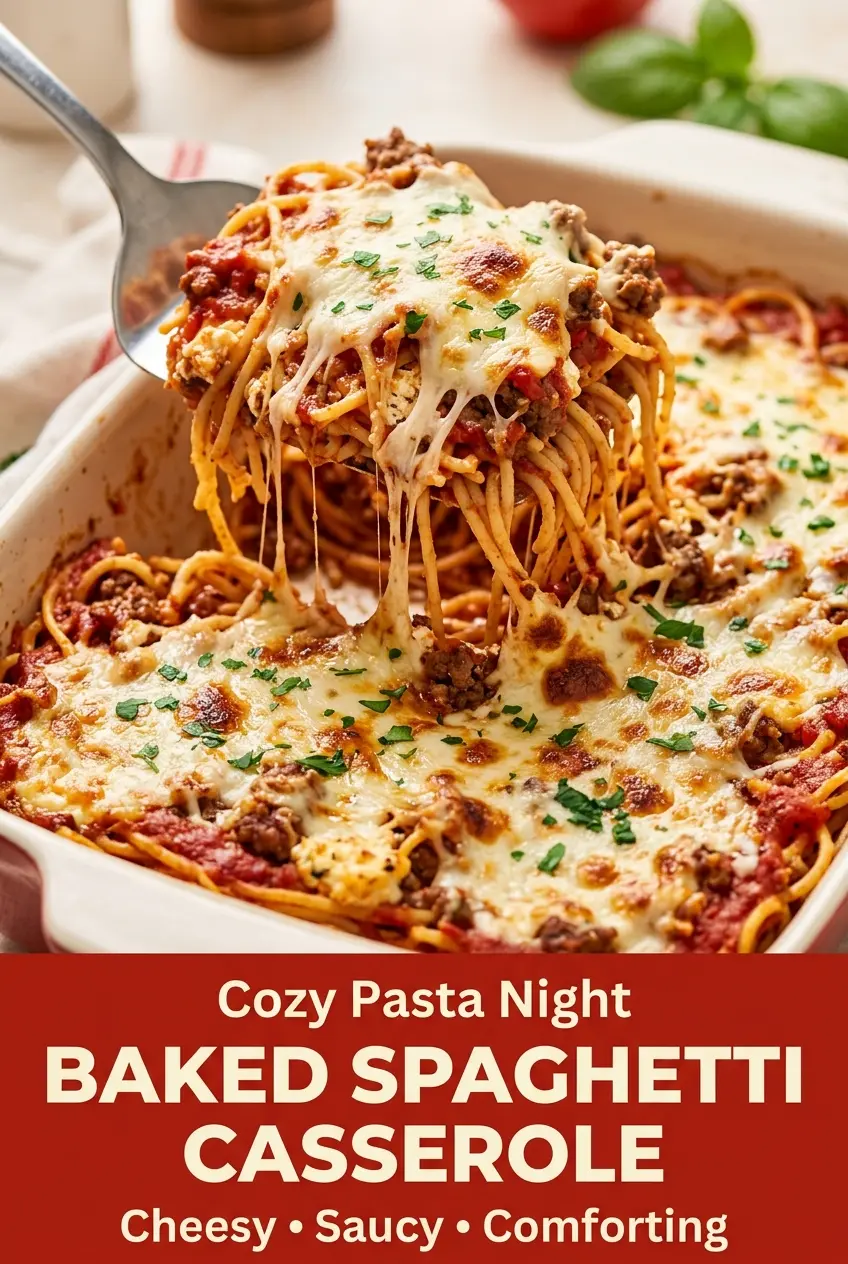
Baked Spaghetti Casserole
Ingredients
Equipment
Method
- Preheat the oven to 375°F and lightly grease a 9×13-inch baking dish so the casserole releases easily after baking.
- Boil the spaghetti in salted water for 2 minutes less than the package directions until it is just underdone.
- Drain the spaghetti well so it doesn’t dilute the marinara in the casserole.
- Heat the olive oil in a large skillet over medium heat, then add the ground beef and yellow onion.
- Cook for 6–8 minutes, breaking up the beef, until no pink remains and the yellow onion is soft (look for softened onion pieces and fully browned beef).
- Stir in the garlic, Italian seasoning, kosher salt, and black pepper, then cook for 30–60 seconds until fragrant.
- Pour in the marinara sauce and simmer for 4–5 minutes until hot and slightly thickened, so the sauce clings to pasta.
- Whisk the ricotta cheese, egg, and Parmesan cheese together in a medium bowl until combined and smooth.
- Combine the drained spaghetti with about two-thirds of the beef marinara and toss until every strand is well coated.
- Layer half the spaghetti mixture in the prepared baking dish, pressing gently into an even layer.
- Spoon the ricotta mixture evenly over the pasta, then add 1 cup shredded mozzarella cheese for a melty top layer.
- Add the remaining spaghetti, then spoon the remaining beef marinara across the top.
- Finish with the remaining 1 cup shredded mozzarella cheese so it bakes into a browned, bubbly cap.
- Bake uncovered for 25–30 minutes at 375°F until the sauce bubbles around the edges and the cheese is completely melted (watch for active bubbling and a fully melted surface).
- Broil for 1–2 minutes, if desired, until the mozzarella develops scattered golden-brown spots, watching closely to prevent burning.
- Rest the casserole for 10 minutes to set the layers, then sprinkle with fresh parsley before serving.
