
Roasted acorn squash gets its best texture in a hot oven: crisped edges, tender centers, and those little caramelized ridges that turn naturally sweet without becoming mushy. The brown butter takes it from a plain side dish to something with depth. It tastes nutty and savory first, then the maple comes through just enough to round everything out.
The trick here is keeping the squash in a single layer and giving it enough heat to brown before it softens too much. Cutting the squash into crescent slices helps the pieces roast evenly and hold their shape, especially since the skin stays on. The sage goes into the butter while it browns, so the leaves crisp up and the pan gets a layered, toasty aroma instead of just melted butter poured over the top.
Below you’ll find the timing that keeps the squash tender instead of watery, plus the small detail that makes the brown butter taste balanced instead of overly sweet.
The squash got these caramelized edges and stayed tender in the middle, and the brown butter with sage made it taste like a restaurant side. I used the maple exactly as written and it wasn’t too sweet at all.
Roasted acorn squash with brown butter is the kind of side that disappears fast — save it for the nights when you want caramelized edges, crisp sage, and a savory-sweet finish.
The Reason Acorn Squash Needs High Heat to Taste Its Best
Acorn squash can go soft and a little bland if it’s roasted too gently. High heat changes that. The cut edges brown before the flesh collapses, which gives you actual contrast instead of just tender squash on a tray.
The other trap is crowding. If the pieces sit on top of one another, they steam and turn watery. A little space between each slice lets the surface dry out and caramelize, and that’s where the flavor comes from.
- Hot oven: 425°F pushes the exterior toward caramelization while the inside stays creamy.
- Single layer: This is the line between roasted and steamed squash.
- Skin-on slices: The skin helps the pieces stay intact after flipping and serving.
What Each Ingredient Is Doing in This Dish
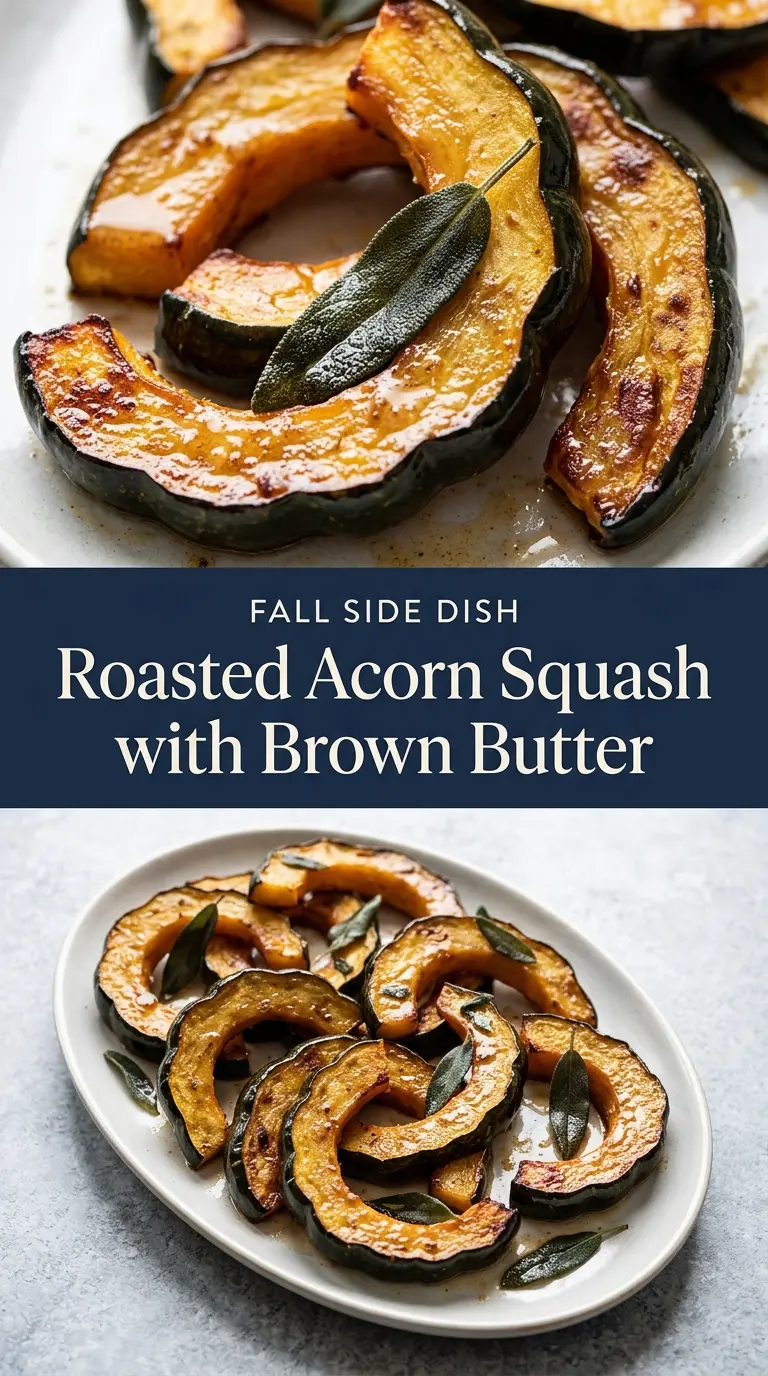
The squash itself is the main event, so choose medium squash with firm skin and no soft spots. Smaller squash usually roast more evenly than very large ones, which can have stringier flesh near the center. Olive oil helps the surfaces brown, and you don’t need anything fancy here.
Unsalted butter matters because you want control over the finish after the squash is done. The sage leaves crisp in the butter and give you a garnish that tastes as good as it looks. Maple syrup is not here to make the dish sweet; it smooths out the browned butter and brings out the squash’s natural sugars.
- Acorn squash: Cut into ¾-inch slices so the pieces roast through before the edges burn.
- Unsalted butter: Use the light color of the pan to watch for amber milk solids; that’s when the nutty flavor shows up.
- Fresh sage: Dried sage won’t give you the same crisp leaves or clean herbal finish.
- Maple syrup: Stir it in after the butter browns so the sugars don’t scorch.
The 20 Minutes That Decide the Texture
Prepping the Squash for Even Roasting
Cut each squash in half lengthwise, scoop out the seeds, then slice into crescent pieces about ¾-inch thick. That thickness matters: thinner slices can dry out before they caramelize, while thicker ones take too long and soften before they brown. Keep the skin on so the slices hold together once they’re flipped.
Roasting Until the Edges Turn Deep Gold
Lay the squash in a single layer and roast for 18 minutes before flipping. You’re looking for the undersides to release cleanly and pick up color, not stick and tear. After the flip, keep roasting until the edges look deeply browned and the centers give easily when pierced with a fork.
Browning the Butter Without Burning the Sage
Melt the butter in a light-colored skillet and add the sage leaves right away. The butter will foam, then quiet down and turn golden before the milk solids sink and turn amber-brown. Pull it off the heat the moment it smells nutty; if you wait for it to look dark in the pan, it’s already past the point you want.
Finishing While Everything Is Still Warm
Stir the maple syrup into the warm brown butter, then spoon it over the squash on the serving platter. The butter should coat the slices without pooling heavily underneath. Finish with the crisp sage leaves right before serving so they stay snappy instead of softening in the sauce.
What to Change When You Need to Work Around the Ingredients
Dairy-Free Version
Use a good plant-based butter that browns well, or swap in olive oil and keep the sage for aroma. You’ll lose the nutty milk-solid flavor that makes brown butter special, but the roasted squash still carries the dish. If you go the oil route, add a tiny pinch more salt at the end to sharpen the finish.
Maple-Free Swap
Use honey in the same amount if that’s what you have. It gives the butter a round, glossy finish, though it tastes a little softer and less woodsy than maple. Add it off the heat just like the syrup so it doesn’t scorch.
Extra Savory Finish
Skip the maple and finish with a squeeze of lemon plus a little flaky salt if you want something less sweet. That version reads more like a holiday vegetable side and pairs well with roast chicken or pork. The lemon brightens the butter instead of competing with it.
Storage and Reheating
- Refrigerator: Store leftovers in an airtight container for up to 4 days. The squash softens a bit, but the flavor holds up well.
- Freezer: It freezes, but the texture turns softer after thawing, so I don’t recommend it if you want the best roasted edges.
- Reheating: Warm in a 400°F oven on a sheet pan until hot. The oven brings back some of the edge caramelization; the microwave makes the squash limp and the butter greasy.
Answers to the Questions Worth Asking
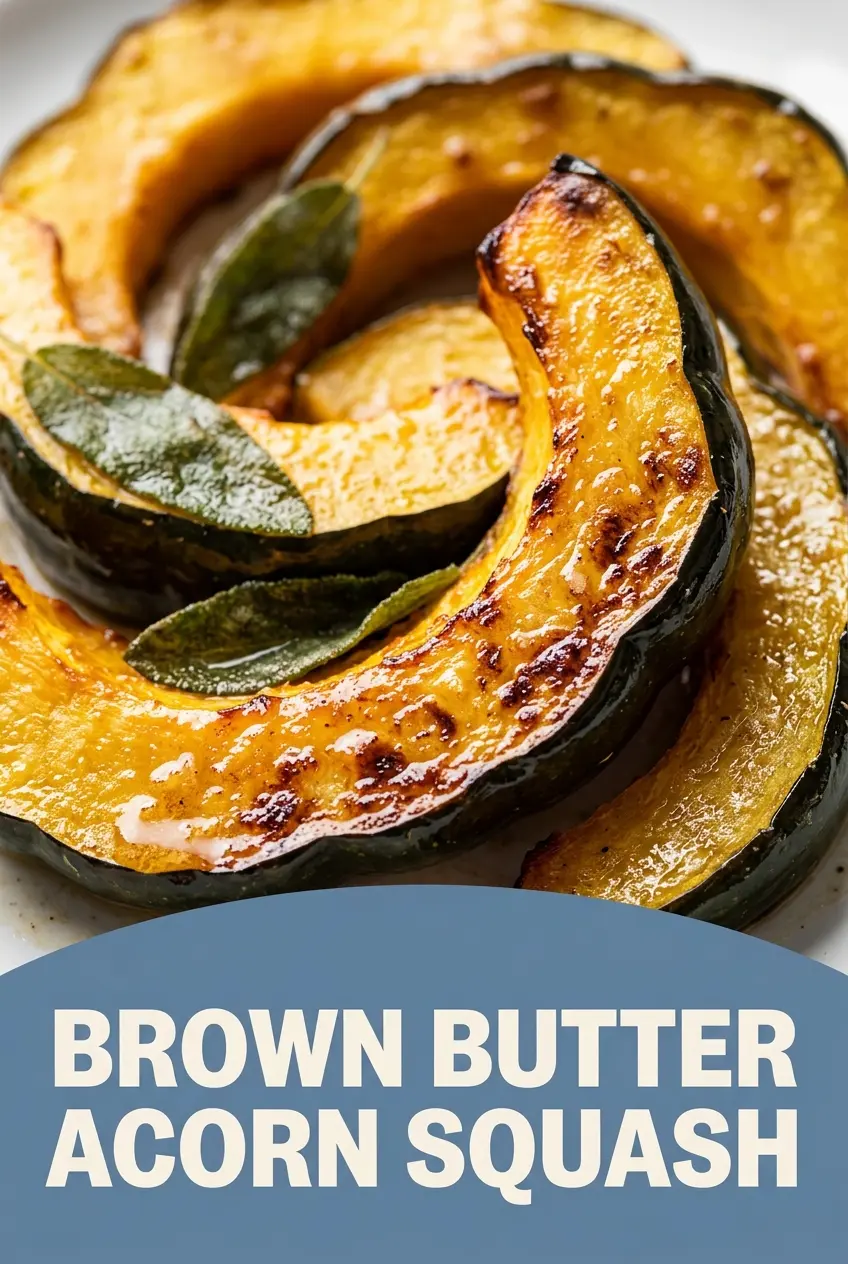
Roasted Acorn Squash with Brown Butter
Ingredients
Equipment
Method
- Preheat the oven to 425°F (220°C) and line a large rimmed baking sheet with parchment paper.
- Wash, dry, and cut each acorn squash in half lengthwise.
- Scoop out the seeds and fibrous centers from each squash half.
- Cut each squash half crosswise into ¾-inch-thick crescent slices, keeping the skin on.
- Arrange the squash slices on the prepared baking sheet in a single layer without overlapping.
- Drizzle the squash with olive oil.
- Sprinkle evenly with kosher salt and black pepper.
- Turn the slices until lightly coated so seasoning clings evenly.
- Roast for 18 minutes, then flip each slice.
- Continue roasting for 12–17 minutes, until tender and deeply caramelized around the edges.
- Meanwhile, melt the unsalted butter in a light-colored skillet over medium heat.
- Add the fresh sage leaves to the skillet.
- Continue cooking for 3–5 minutes, swirling frequently until the butter foams and amber-brown milk solids form.
- Remove the skillet from the heat immediately and transfer the crisp sage leaves to a small plate.
- Stir the pure maple syrup into the warm brown butter.
- Arrange the roasted acorn squash on a serving platter.
- Spoon the maple brown butter over the squash slices.
- Finish with the crisp sage leaves and serve warm.
