
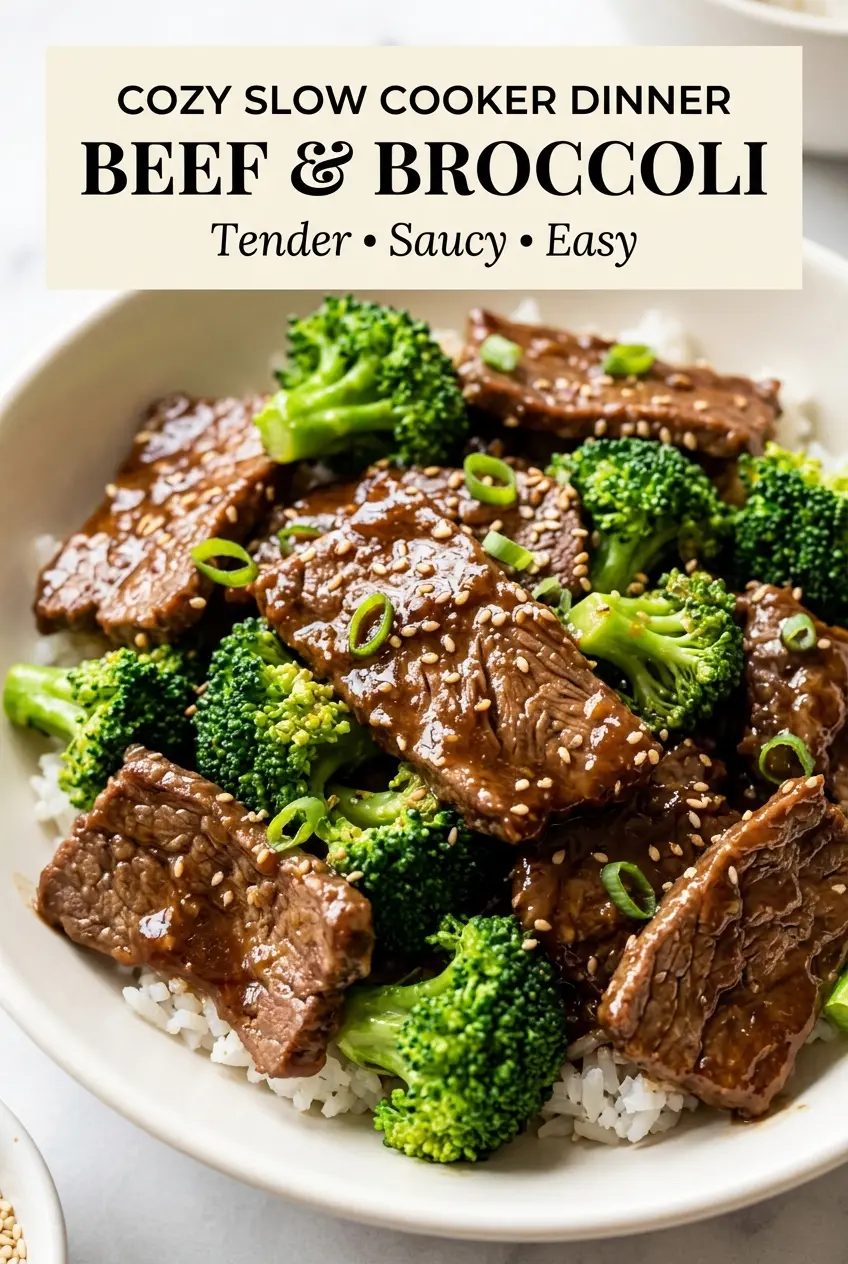
Tender beef, crisp-tender broccoli, and a glossy garlic-soy sauce make this slow cooker beef and broccoli one of those dinners that disappears fast. The beef turns soft without getting shredded, the sauce clings to every slice, and you still get that takeout-style finish without standing over a hot pan. It’s the kind of meal that feels ordered in, but it comes from a few minutes of real work and a slow cooker doing the heavy lifting.
What makes this version work is the timing. The beef gets a long, gentle cook first, which lets flank steak turn tender instead of tight and chewy. Broccoli goes in at the end on purpose. If it cooks the whole time, you lose that fresh bite and the sauce turns muddy. The cornstarch slurry also goes in after the beef is tender, not before, so the sauce thickens cleanly instead of thinning out from extra liquid released by the vegetables.
Below, I’ve laid out the part that matters most: how to keep the beef tender, how to get the sauce glossy instead of watery, and what to change if you want to stretch the dish or adapt it for what’s already in your kitchen.
The beef came out tender instead of stringy, and the sauce thickened up beautifully once I added the cornstarch. I was nervous about the broccoli going in at the end, but it stayed crisp-tender and didn’t turn mushy.
Save this slow cooker beef and broccoli for the nights when you want glossy takeout-style sauce, tender beef, and almost no cleanup.
The One Mistake That Turns Beef and Broccoli Stringy
The beef in this dish needs a gentle cook, not a long one. Flank steak is lean and thin by design, which is great for quick dinners, but it dries out if you leave it in the slow cooker too long. That’s why the beef goes in first with the sauce, then the broccoli gets added near the end once the meat is already tender.
The other trap is adding broccoli too early. It doesn’t just soften; it gives up water and pulls the sauce in the wrong direction. You want the florets to stay bright green with a little bite, and you want the sauce to coat them, not drown them. That final burst of high heat is what gives you a glossy finish instead of a thin, grayish broth.
- Flank steak — Thin slices cut against the grain matter here. If you slice with the grain, the beef will still taste chewy even after a long cook. Sirloin works in a pinch, but flank gives the best tender-yet-meaty texture.
- Low-sodium soy sauce — This gives you the backbone of the sauce without tipping it into saltiness. Regular soy sauce works, but the end result can get aggressive fast once the liquid reduces.
- Brown sugar — This rounds out the salt and builds that classic takeout-style glaze. Honey can stand in, but the sauce will taste a little lighter and less caramel-like.
- Sesame oil — A small amount changes the whole dish. It adds that toasted nutty note you notice right away. Don’t replace it with a neutral oil unless you’re fine losing that layer of flavor.
- Cornstarch slurry — This is what turns the cooking liquid into sauce. Mix it with cold water until smooth before it goes in; if you add cornstarch dry, it clumps and leaves streaks.
- Broccoli florets — Fresh broccoli holds up best. Frozen broccoli can work, but it softens faster and can make the sauce looser. If you use frozen, add it frozen and shorten the final cooking time a bit.
Building the Sauce in the Slow Cooker Without Losing Control
Starting with the Beef and Base
Put the sliced beef in the slow cooker first, then whisk the broth, soy sauce, brown sugar, sesame oil, garlic, ginger, and red pepper flakes together before pouring them over the top. That keeps the seasoning even and saves you from pockets of sugar or garlic at the bottom. The beef should be coated, not swimming; you’re braising it, not poaching it.
Cooking Until the Beef Is Just Tender
Cover and cook on LOW for 4 to 5 hours. The beef should yield easily when stirred, but it shouldn’t be falling apart into shreds. If it goes much longer, flank steak dries out at the edges and loses that clean sliced texture that makes this dish feel like takeout.
Thickening the Sauce the Right Way
Whisk the cornstarch and cold water until it looks smooth and milky, then stir it in after the beef is tender. Give it a minute to disappear into the liquid before adding the broccoli. This step matters because cornstarch needs heat to activate, and adding it too soon can leave the sauce overly thick or slightly pasty by the time the dish is done.
Finishing with Broccoli and a Quick High-Heat Burst
Add the broccoli and cook on HIGH for 20 to 30 minutes, just until the florets are bright green and crisp-tender. The sauce should look glossy and cling to a spoon. If the broccoli is soft and olive-colored, it stayed in too long. That last short cook is where the dish comes together, so don’t walk away and let it go much past the tender-crisp stage.
What to Change When You Need to Work With What You’ve Got
Make It Gluten-Free
Swap the soy sauce for tamari or a certified gluten-free soy sauce. The flavor stays close, and the sauce still gets the same salty-sweet balance. Check your beef broth too, since some brands sneak in gluten through seasonings.
Use Sirloin Instead of Flank Steak
Sirloin works well if it’s sliced thin and added at the same stage. It’s a little less beefy than flank, but it stays tender and gives you a softer bite. Skip stew meat here; the long cook time doesn’t help tough chunks the same way it helps thin slices.
Lower the Sugar Without Ruining the Sauce
Cut the brown sugar back to 2 or 3 tablespoons if you want a less sweet finish. The sauce will still thicken and coat the beef, but it’ll lean more savory than classic takeout-style. Don’t remove it completely unless you plan to add another sweetener, because the sauce needs that balance to taste finished.
Storage and Reheating
- Refrigerator: Store leftovers in an airtight container for up to 4 days. The broccoli softens a bit, but the flavor stays strong.
- Freezer: This freezes reasonably well, though the broccoli will be softer after thawing. Freeze in portions for up to 2 months, and expect the sauce to loosen a little when reheated.
- Reheating: Reheat gently on the stovetop over low heat or in the microwave at medium power. Add a splash of water or broth if the sauce has tightened up. High heat can dry out the beef and turn the broccoli mushy fast.
Answers to the Questions Worth Asking
Slow Cooker Beef and Broccoli
Ingredients
Equipment
Method
- Add the sliced flank steak to a 6-quart slow cooker.
- Whisk the beef broth, soy sauce, brown sugar, sesame oil, garlic, ginger, and crushed red pepper flakes together, then pour the mixture over the beef.
- Cover and cook on LOW for 4–5 hours, until the beef is tender, avoiding substantially longer cooking to prevent dryness.
- Whisk the cornstarch and cold water until completely smooth, then stir the slurry into the slow cooker.
- Add the broccoli florets and gently stir them into the sauce, then cover and cook on HIGH for 20–30 minutes until crisp-tender and the sauce is glossy and thick.
- Sprinkle the sesame seeds and sliced green onions over the top.
- Serve immediately, preferably over steamed rice.
