
Blackened salmon earns its place in the weeknight rotation because it gives you a hard-seared, spice-packed crust in the same time it takes most pans to preheat. The outside gets dark and fragrant, the center stays tender and juicy, and the whole fillet tastes like you put in a lot more effort than you did. That contrast is what makes this version worth repeating.
The seasoning mix here is built for high heat, which matters. Paprika brings color and body, while thyme and oregano add that Cajun-style depth without making the fish taste muddy. A dry surface is just as important as the spice blend; if the salmon goes into the pan wet, it steams before it can blacken. A cast-iron skillet helps, but the real trick is letting the pan get properly hot before the butter goes in.
Below, I walk through the small details that keep the crust from sticking, burning, or sliding off the fish. There’s also a simple way to adjust the heat if you want the flavor bold without the cayenne taking over.
The crust got that deep, smoky color without burning, and the salmon stayed flaky and moist in the middle. I used a little less cayenne for my kids and it still had tons of flavor.
Love that crisp blackened crust on salmon? Save this one for a fast dinner that still feels special.
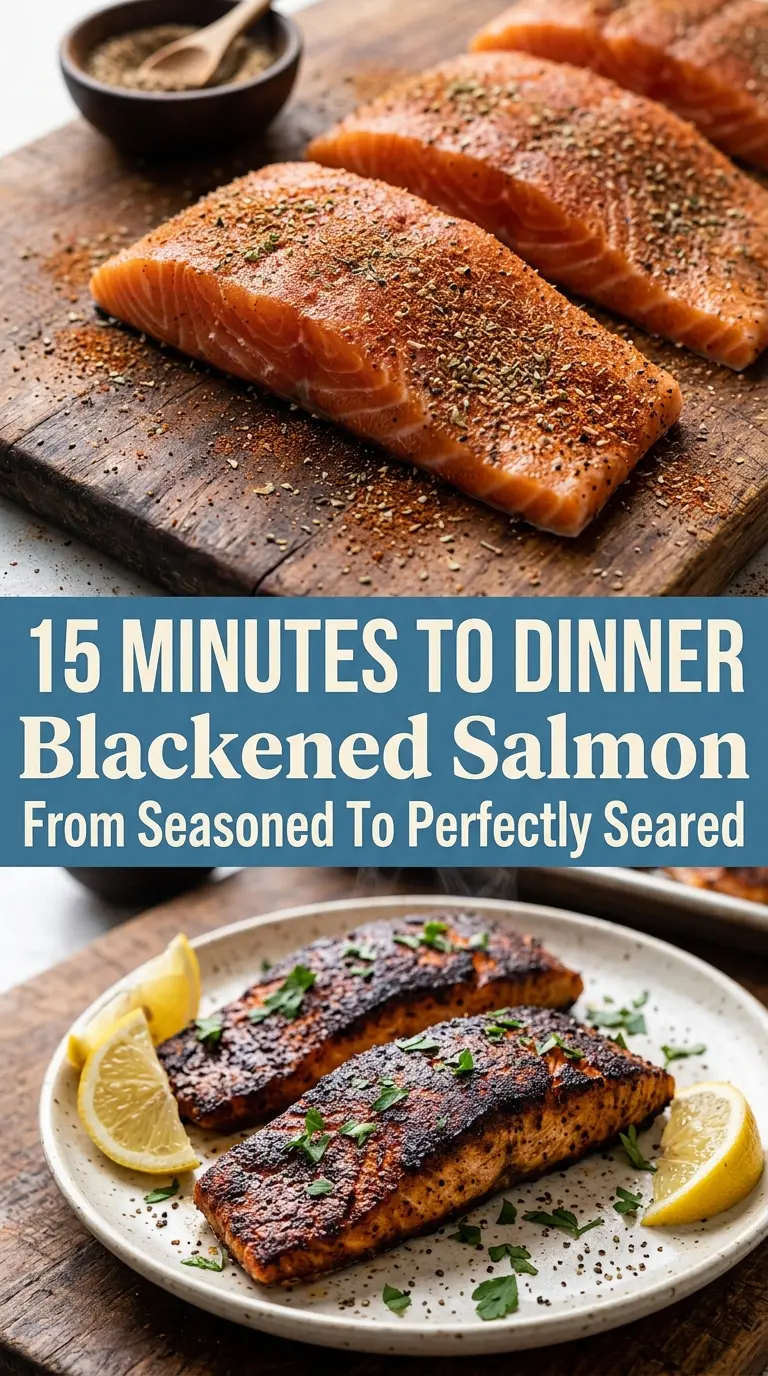
The Reason Blackened Salmon Gets a Crust Instead of a Burnt Spice Layer
Blackened fish fails for two common reasons: the pan isn’t hot enough, or the seasoning goes on too thick and burns before the salmon cooks through. What you want here is a fast sear that toasts the spices and clamps onto the surface of the fish. That only happens when the salmon starts dry and the skillet is already hot before the fillets go in.
The butter matters, but not in the way people think. It adds flavor and helps the seasoning bloom in the pan, yet too much butter can cool the skillet and turn the whole thing greasy. A tablespoon is enough. If the salmon is very thick, give it an extra minute on the first side and don’t rush the flip; the crust will release when it’s ready.
- Salmon fillets — Skin-on or skinless both work, but skin-on fillets are easier to turn and hold up better in a hot skillet. Choose fillets that are similar in thickness so they finish at the same time.
- Paprika — This gives the crust its deep color and a rounded peppery base. Smoked paprika works if you want a woodsy note, but it can dominate, so use it only if you like that flavor.
- Dried thyme and oregano — These herbs bring the Cajun-style backbone. Fresh herbs won’t behave the same way in this spice crust, so stick with dried here.
- Olive oil and butter — The oil helps the seasoning cling; the butter adds flavor in the pan. If you need a dairy-free version, use all olive oil and add a small squeeze of lemon at the end for brightness.
Getting the Pan Hot Enough for the Spice Crust to Stick
Drying and Seasoning the Salmon
Pat the salmon dry until the surface looks matte instead of glossy. That’s the difference between a crust and a wet spice paste. Brush on the oil first, then coat generously with the seasoning mix so every edge is covered. If the spice layer looks caked on, tap off the loose excess; you want a heavy coating, not clumps that scorch in the pan.
Heating the Skillet Properly
Set the cast-iron skillet over medium-high heat and let it get fully hot before the butter goes in. The butter should melt and sizzle right away, not sit there foaming quietly. If the pan is only warm, the salmon sticks and the spices stew in the fat instead of blackening. The surface is ready when a drop of water skitters and disappears almost instantly.
Searing Without Disturbing the Crust
Lay the fillets in the pan and leave them alone for the first few minutes. If you try to move them too early, the crust tears and sticks. After 4 to 5 minutes, the edges should look deeply browned and the fish will release more easily from the pan. Flip carefully and cook just until the salmon flakes and the center is still moist; overcooking is the fastest way to lose that tender texture.
Finishing and Resting
Once the second side is done, pull the salmon off the heat and let it rest for 2 minutes. That short pause keeps the juices inside the fish instead of running onto the plate. Lemon wedges aren’t optional here; the acid cuts through the spice and lifts the whole dish. If the crust looks dark before the center is done, lower the heat slightly on the next fillet and give it a little more time instead of turning up the flame.
How to Adapt This for a Milder, Dairy-Free, or Different Kind of Weeknight
Milder Blackened Salmon
Cut the cayenne in half if you want the same smoky crust with less heat. The salmon still tastes bold because paprika, garlic, onion, and herbs do most of the work. You lose some fire, not flavor.
Dairy-Free Version
Swap the butter for another tablespoon of olive oil. You won’t get the same richness, but you’ll still get a crisp, spice-forward crust. Finish with lemon to bring back some of the brightness butter would normally soften.
Use the Same Seasoning on Other Fish
This blend works on trout, cod, or mahi-mahi, but lean, delicate fish need a shorter cook time and a slightly lower pan temperature. Thick fillets handle the blackening best because they can take the heat without drying out. Thin fillets need more attention and less time in the pan.
Storage and Reheating
- Refrigerator: Store in an airtight container for up to 3 days. The crust softens a little, but the salmon stays flavorful.
- Freezer: You can freeze cooked salmon for up to 2 months, though the texture gets a bit drier after thawing. Wrap each fillet tightly before freezing and thaw it overnight in the fridge.
- Reheating: Reheat gently in a 275°F oven for about 10 minutes, just until warmed through. High heat dries salmon out fast, so skip the microwave if you want to keep the texture intact.
Answers to the Questions Worth Asking
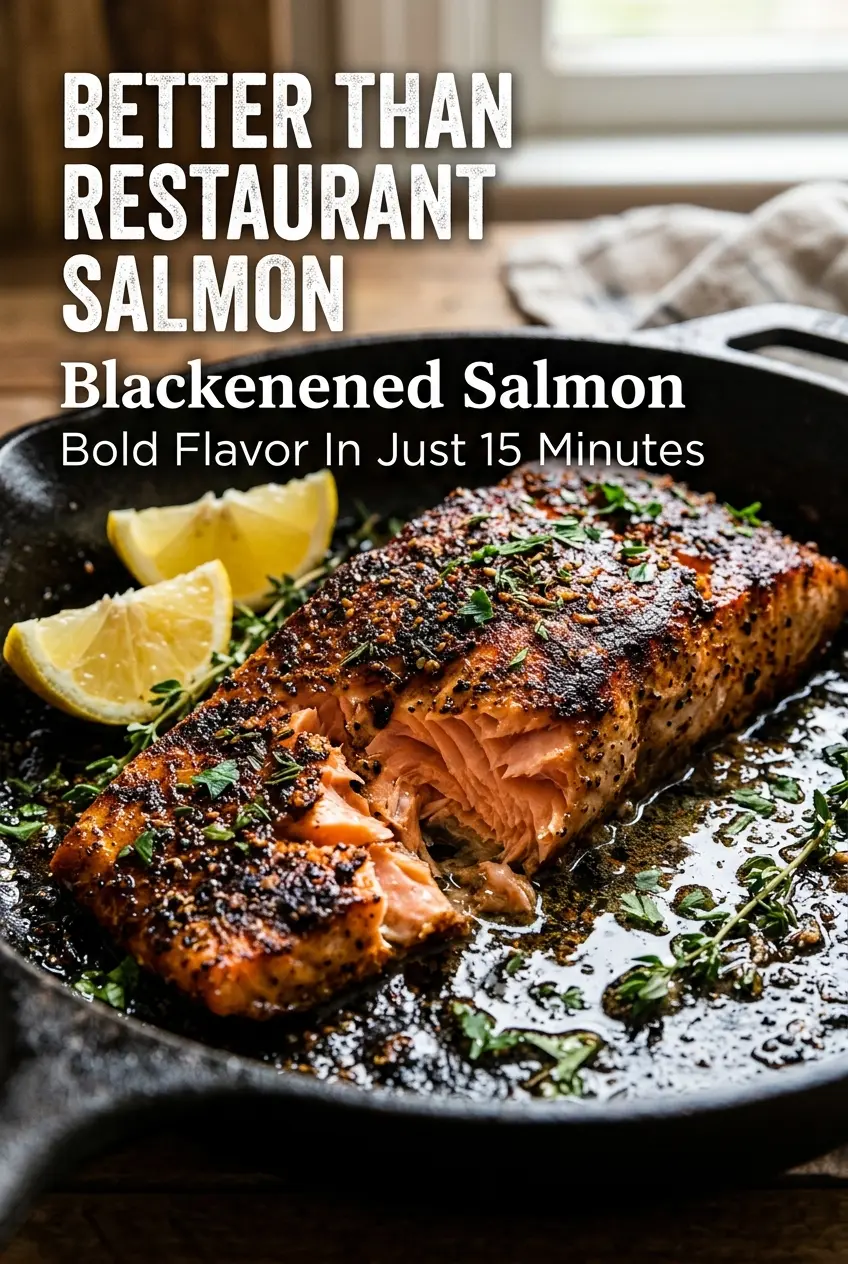
Blackened Salmon
Ingredients
Equipment
Method
- Pat the salmon fillets dry with paper towels.
- In a small bowl, combine paprika, garlic powder, onion powder, dried thyme, dried oregano, cayenne pepper, black pepper, and salt.
- Brush salmon with olive oil on all sides.
- Generously coat each fillet with the blackening seasoning.
- Heat a large cast-iron skillet over medium-high heat until hot.
- Add butter and let it melt.
- Place salmon in the skillet and cook for 4–5 minutes, until the underside is deeply browned.
- Carefully flip and cook another 3–4 minutes until the salmon flakes easily.
- Remove from the heat and rest for 2 minutes.
- Serve with lemon wedges and your favorite side dishes.
