
Garlic butter salmon hits the plate with crisp edges, flaky centers, and a sauce that clings to every bite instead of sliding off into the pan. The butter picks up the garlic just long enough to taste savory and warm, then the lemon wakes everything up so the fish stays rich without feeling heavy. It’s the kind of dinner that looks polished but still comes together fast enough for a weeknight.
The part that makes this version work is the order. The salmon gets seasoned before it ever touches the pan, then the garlic goes in after the fish is cooked so it doesn’t burn and turn bitter. A quick squeeze of lemon at the end keeps the butter sauce bright, and the lemon zest gives it a deeper citrus note than juice alone can manage.
Below, I’ll walk through the sear, the sauce, and the small timing details that keep the fish juicy. There’s also a swap for baking instead of pan-searing if you’d rather keep cleanup even simpler.
The salmon stayed so flaky and the garlic butter thickened just enough to spoon over the top without turning greasy. I liked that the garlic only took 30 seconds and didn’t burn like other recipes I’ve tried.
Pin this garlic butter salmon for a fast, flaky skillet dinner with lemony butter sauce that tastes like you spent far longer at the stove.
The Trick to Keeping Salmon Flaky Instead of Dry
Salmon dries out when it spends too long over heat, and that usually happens because people wait for it to look fully done in the pan. The carryover heat finishes the center after you pull it off, so stopping while the fish still has a little give in the middle keeps it tender. Skin-side down first also buys you time and gives the fillet structure, which helps it release cleanly instead of tearing.
The other common mistake is crowding the pan or chasing a perfect crust before the fish has a chance to cook through. A hot skillet does the job fast, but once the salmon is in, let it sit and develop color. If it sticks when you try to flip it, it usually needs another minute.
What Each Ingredient Is Actually Doing in This Dish
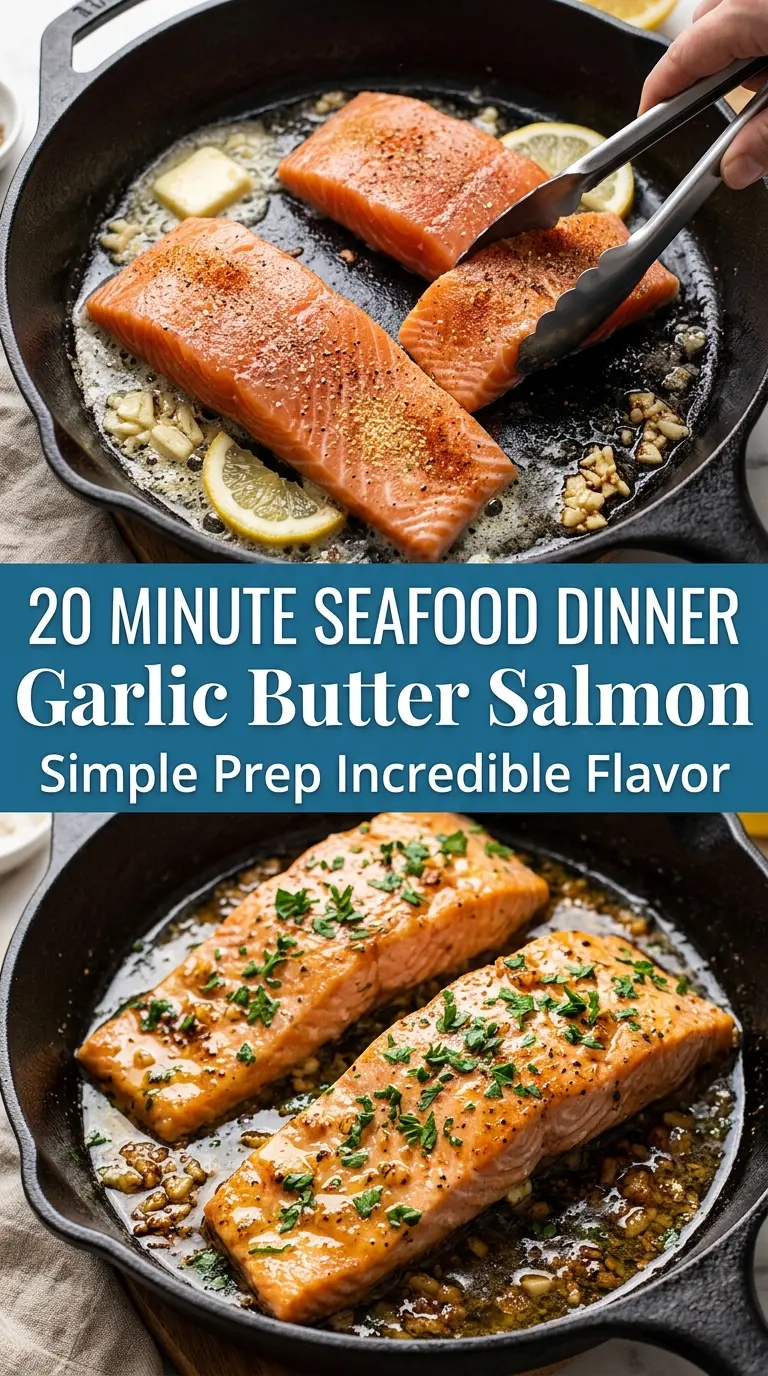
- Salmon fillets — Use center-cut fillets if you can. They cook more evenly and stay juicy through the middle. Frozen salmon works fine as long as it’s thawed completely and patted dry before seasoning.
- Unsalted butter — This is the base of the sauce, so the quality matters more than with the seasoning. Unsalted gives you control, since the salmon is already salted on both sides.
- Garlic — Fresh minced garlic gives the sauce its backbone. Jarred garlic can work in a pinch, but it tends to taste softer and more acidic. Keep it moving in the pan for the short 30-second cook so it turns fragrant, not brown.
- Lemon juice and zest — Juice adds the bright finish, while zest gives the sauce a sharper citrus aroma. If you only have juice, the dish still works, but the flavor will be flatter.
- Paprika — Paprika adds color and a gentle savory note without overpowering the salmon. Smoked paprika changes the whole dish and gives it a deeper, woodsy edge if that’s the direction you want.
How to Build the Sauce Without Burning the Garlic
Seasoning the Fish
Pat the salmon dry first. Moisture is the enemy of browning, and wet fillets steam before they can sear. Sprinkle the paprika, salt, and black pepper over both sides so the seasoning hits the flesh before the butter does its work. If the salmon is heavily salted in advance, pull back a little on the added salt or it can taste sharp.
Getting the Sear
Set the skillet over medium-high heat and add part of the butter only after the pan is hot. Lay the salmon in skin-side down and leave it alone for 4 to 5 minutes so the skin crisps and the flesh firms up. If you move it too early, it sticks and tears. When it’s ready, it lifts with almost no resistance and the edges look opaque about two-thirds of the way up the sides.
Finishing in Garlic Butter
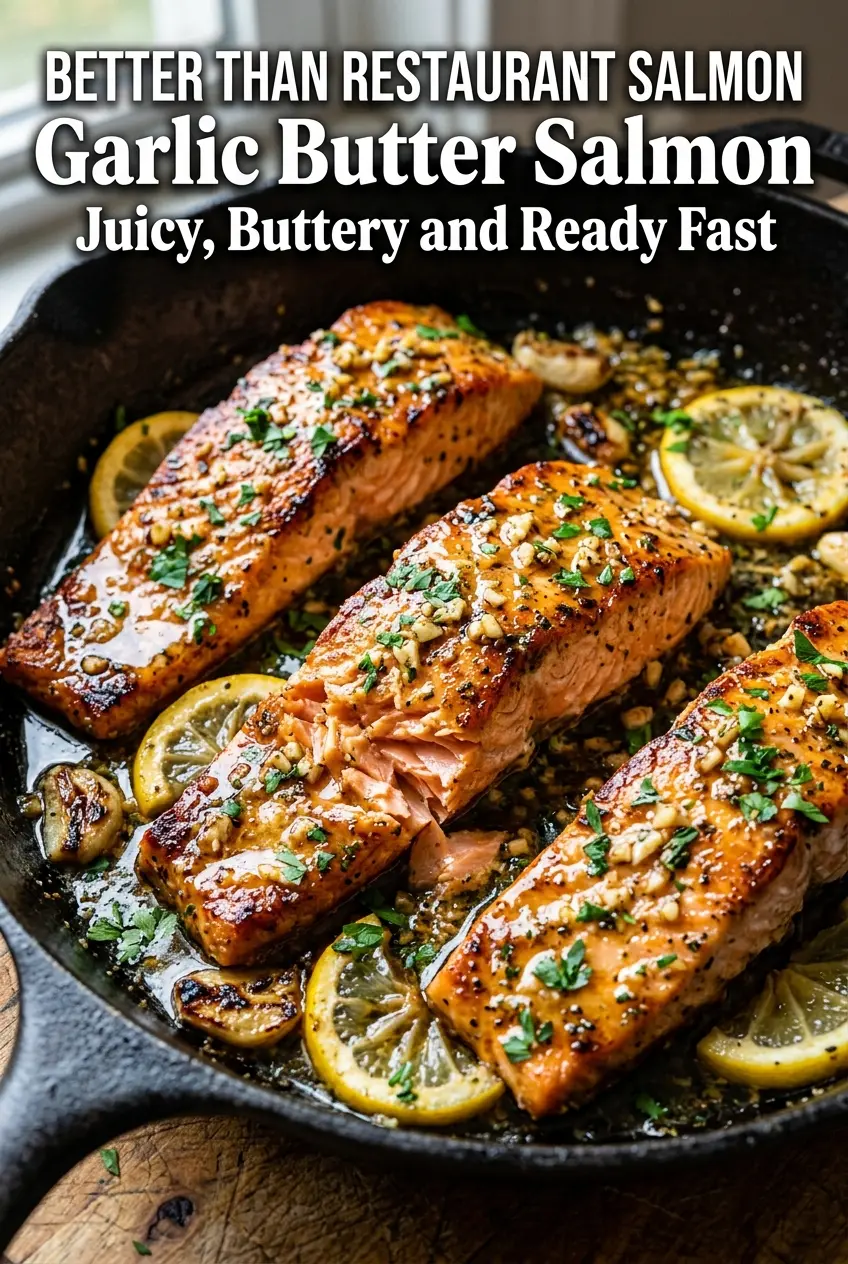
After the salmon comes out, lower the heat before adding the rest of the butter and the garlic. That lower heat keeps the garlic sweet and fragrant instead of bitter. Stir in the lemon juice and zest right after the garlic smells warm, then return the salmon and spoon the sauce over the top for about a minute. That final baste is what gives the fish its glossy finish and pulls the whole dish together.
Three Practical Ways to Change It Without Losing the Point
Oven-Baked Garlic Butter Salmon
If you’d rather not sear the fish, bake the seasoned salmon at 400°F until it flakes easily, then spoon the garlic butter over the top. You lose the crisp skin, but you gain a more hands-off method that works well for thicker fillets and keeps the timing simpler.
Dairy-Free Version
Swap the butter for a good plant-based butter or a mix of olive oil and a little dairy-free butter alternative. You’ll lose some of that classic richness, but the garlic, lemon, and paprika still carry the dish.
Extra Lemon, Lighter Finish
Add a little more lemon zest and an extra squeeze of juice at the end if you like a brighter sauce. That makes the butter taste lighter and cleaner, which is a good move if you’re serving the salmon with rice, potatoes, or anything buttery on the side.
Storage and Reheating
- Refrigerator: Store leftovers in an airtight container for up to 2 days. The salmon stays tasty, but the texture gets a little firmer after chilling.
- Freezer: Freezing cooked salmon isn’t my first choice here. The sauce separates a bit and the fish can dry out after thawing.
- Reheating: Warm it gently in a covered skillet over low heat with a small splash of water or butter. High heat is what turns leftover salmon chalky, so keep the heat low and stop as soon as it’s warm through.
The Things That Trip People Up With This Dish
Garlic Butter Salmon
Ingredients
Equipment
Method
- Pat the salmon fillets dry with paper towels, then season both sides with paprika, salt, and black pepper.
- Set the salmon aside while you preheat your skillet.
- Heat a large skillet over medium-high heat.
- Add 2 tablespoons butter and let it melt.
- Place salmon skin-side down and cook for 4–5 minutes, until the surface looks opaque at the edges.
- Carefully flip and cook another 3–4 minutes, until the center flakes easily.
- Remove salmon and set aside.
- Reduce heat to medium.
- Add remaining butter and minced garlic, cooking for 30 seconds until fragrant.
- Stir in lemon juice and lemon zest.
- Return salmon to the skillet and spoon the garlic butter sauce over the fillets for 1 minute, letting the sauce coat the tops.
- Garnish with parsley and lemon slices, then serve immediately.
