
Juicy chicken thighs, caramelized potatoes, and roasted vegetables all on one pan is the kind of dinner that earns repeat status fast. The chicken skins turn crisp at the edges while the vegetables pick up the drippings underneath, so nothing tastes flat or one-note. You get a full meal with hardly any cleanup, and the oven does most of the work.
The key here is giving the vegetables enough space to roast instead of steam. Chicken thighs hold up better than breasts at the higher oven temperature, and the bone-in cut stays flavorful through the long bake. The potatoes and carrots go in with the chicken because they need the full 35 to 40 minutes, while broccoli and bell pepper roast into shape without turning mushy.
Below, I’ll walk through the timing that keeps everything cooked through at the same moment, plus the small adjustment that gets you crispier skin without drying out the chicken.
The chicken skin got crisp and the potatoes soaked up all the drippings. I used broccoli and carrots exactly as written, and everything came out at the same time, which never happens in my house.
Save this sheet pan chicken thighs dinner for a no-fuss night when you want crisp chicken and roasted vegetables on one pan.

The Reason Some Sheet Pan Dinners Come Out Pale and Soft
The difference between a roasted dinner and a pan of damp vegetables usually comes down to crowding and timing. If everything is piled together, the vegetables release moisture faster than the oven can evaporate it, and you end up steaming instead of browning. A hot oven helps, but space on the pan matters just as much.
Chicken thighs are the right cut for this job because they stay juicy long enough for the potatoes and carrots to catch up. Bone-in thighs also bring more flavor to the pan, which matters here because the seasoning is simple and the drippings do some of the heavy lifting. The broccoli and bell pepper go in from the start in this version, but if your florets are large or your pan is crowded, tuck them around the edges where the heat runs a little stronger.
- Chicken thighs — Bone-in thighs stay juicy at 425°F and tolerate the longer roast much better than breasts. Skin-on thighs give you the best pan finish because the skin renders and browns instead of drying out.
- Baby potatoes — Halving them gives enough surface area for browning while keeping the centers creamy. If you use larger potatoes, cut them into 1-inch chunks so they cook on the same schedule as the chicken.
- Broccoli florets — Fresh broccoli roasts best here. Frozen broccoli turns soft and watery, so skip it unless you add it near the end and accept a softer result.
- Olive oil — You need enough oil to coat the vegetables lightly and help the seasoning cling. A neutral oil works too, but olive oil gives the pan a little more flavor.
- Garlic powder, onion powder, paprika, Italian seasoning — These create a dry seasoning blend that browns better than a wet marinade. Fresh garlic tends to burn before the chicken finishes, so powder is the better call here.
The 40 Minutes That Decide the Texture
Building the Pan
Line a large sheet pan with parchment, then spread the potatoes and carrots in a single layer before adding the chicken. The vegetables under the chicken will steam, so keep the thighs mostly on open space and let the vegetables sit in the exposed areas. Drizzle with oil and season everything evenly, then toss the vegetables so they’re lightly coated and not patchy with dry spice.
Roasting for Color, Not Just Doneness
Roast at 425°F until the chicken reads done and the potatoes are tender when pierced with a knife, usually 35 to 40 minutes. The chicken skin should look deep golden and taut, and the broccoli should have browned tips without collapsing. If the pan is watery near the end, it usually means it was crowded or the vegetables were cut too large.
The Crisp Finish
Broil for 2 to 3 minutes only if you want extra crispy skin. Watch it the whole time because thighs can go from bronzed to burnt fast under the broiler, especially if the skin is already close to done. Let the pan rest for 5 minutes so the juices settle back into the chicken instead of running onto the cutting board.
What to Change When You Need to Work Around the Pantry
Make It Dairy-Free and Gluten-Free Without Changing the Method
This recipe is already naturally dairy-free and gluten-free as written, which is part of why it works so well for a weeknight dinner. Keep an eye on any packaged seasoning blend you swap in, though, because some Italian seasoning mixes include anti-caking agents or added flavoring. The core method doesn’t need to change.
Swap the Vegetables Based on What Cooks at the Same Speed
Cauliflower, Brussels sprouts, green beans, and zucchini all work, but they don’t all need the same time. Dense vegetables like Brussels sprouts can roast from the start, while zucchini needs to go in later or it turns soft. Match the cut size to the cook time, not just the vegetable you have on hand.
Use Boneless Thighs if That’s What You Bought
Boneless thighs cook faster and won’t need quite as much time as bone-in pieces, so start checking them earlier. You’ll lose a little of the deep pan flavor that bones bring, but the texture stays forgiving and juicy. Watch the vegetables closely because they may be done before the chicken if the thighs are boneless.
Storage and Reheating
- Refrigerator: Store leftovers in an airtight container for up to 4 days. The skin will soften, but the flavor holds up well.
- Freezer: This freezes best without the broccoli, which can turn mushy after thawing. Freeze the chicken and potatoes for up to 2 months, then add fresh vegetables when reheating if you want better texture.
- Reheating: Reheat on a sheet pan at 375°F until hot, about 15 to 20 minutes. The microwave works in a pinch, but it softens the skin and makes the vegetables limp.
Answers to the Questions Worth Asking
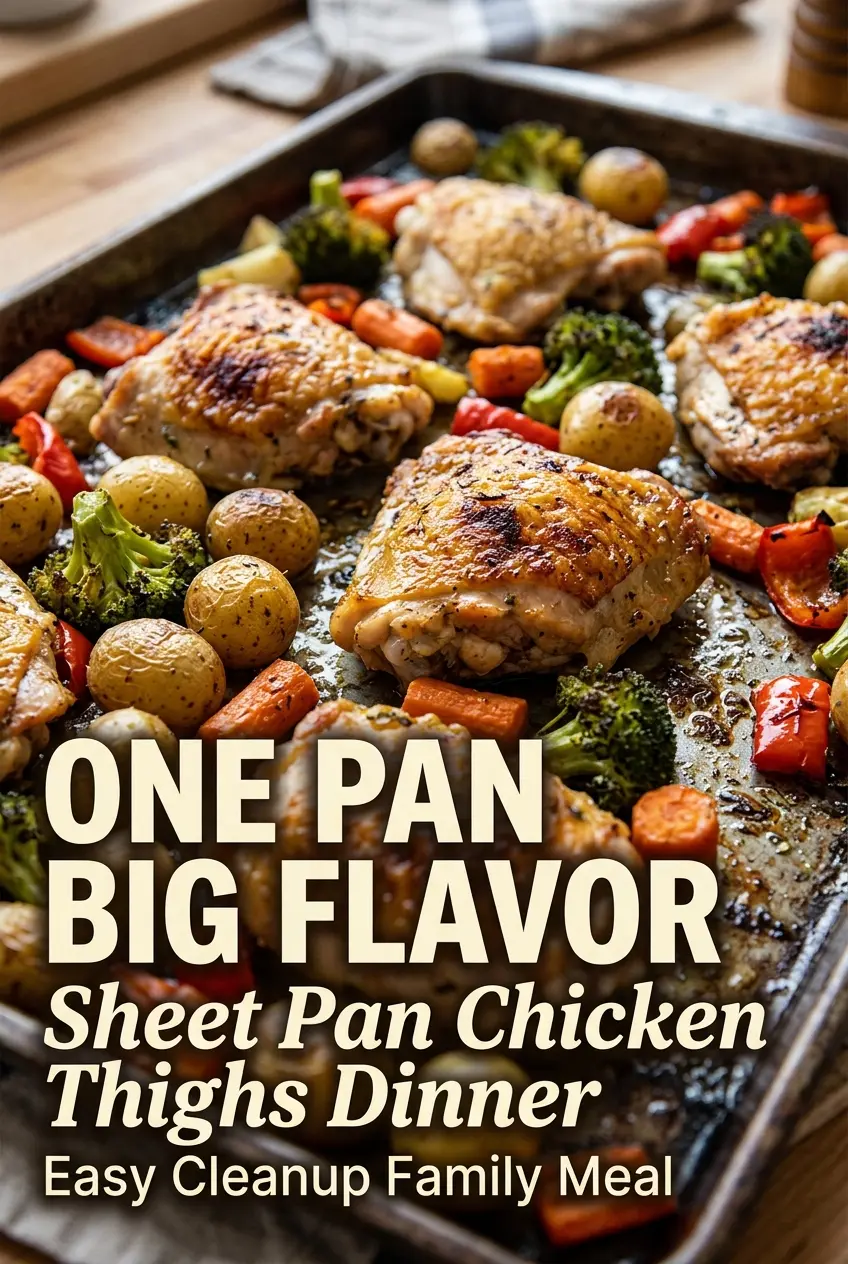
Easy Sheet Pan Chicken Thighs Dinner with Roasted Vegetables
Ingredients
Equipment
Method
- Preheat the oven to 425°F (220°C). Set it up so the sheet pan can go in hot for even roasting.
- Line a large sheet pan with parchment paper. This helps prevent sticking and keeps cleanup minimal.
- Place the chicken thighs, baby potatoes, carrots, broccoli florets, and red bell pepper on the pan. Arrange in a single layer so the vegetables roast instead of steam.
- Drizzle the olive oil over the chicken and vegetables. Lightly coat everything for better browning.
- Combine the garlic powder, onion powder, paprika, Italian seasoning, salt, and black pepper. Mix until the spices are evenly distributed.
- Sprinkle the seasoning mixture evenly over everything. Make sure chicken and vegetables get coated all over.
- Toss the vegetables gently. This redistributes oil and spices while keeping the chicken in place.
- Roast for 35–40 minutes. Cook until chicken is cooked through and vegetables are tender with browned edges.
- Broil for 2–3 minutes if extra crispy skin is desired. Watch closely to avoid burning the spices.
- Let rest for 5 minutes. Resting helps juices settle so the chicken stays juicy.
- Serve directly from the sheet pan. Scoop chicken and roasted vegetables together while everything is hot.
