
Melt-In-Your-Mouth Caesar Chicken earns its spot in the dinner rotation because the chicken stays juicy while the top turns savory and browned, with just enough cheesy crust to make each bite feel complete. The Caesar dressing does more than add flavor here. It brings fat, salt, and seasoning in one ingredient, which is why the chicken bakes up tender instead of drying out in the oven.
The part that makes this version work is the balance between the creamy dressing and the Parmesan. Parmesan gives you that sharp, salty finish, but it can turn gritty if you use a heavy hand or a dressing that’s already too thick. A short broil at the end adds color fast, but it’s optional — the chicken is already done when it reaches temperature and the juices run clear.
Below you’ll find the small details that matter most: how to keep the topping from slipping off, when to broil, and the easiest swaps if you need to use what’s already in the fridge.
The topping baked into a golden crust and the chicken stayed so tender I could cut it with a fork. I used thin chicken breasts and it was done right on time, which never happens with baked chicken at my house.
Save this Caesar Chicken for a creamy baked dinner with a crisp, golden Parmesan top.
The Reason Caesar Chicken Stays Juicy Instead of Drying Out
The mistake with baked chicken breast is usually the same: too little fat, too much heat, and no barrier between the meat and the oven. Caesar dressing fixes the first two problems at once because it coats the chicken in a creamy layer that helps hold in moisture while the outside bakes. Parmesan then firms up on top and gives the chicken a salty crust instead of a bland, pale coating.
Thin, even chicken breasts matter here. If one side is much thicker than the other, the thinner end overcooks before the thicker center is done. Pound the breasts gently if needed so they cook at the same pace. The chicken is ready when it reaches 165°F in the thickest part, not when the topping looks browned.
What Each Ingredient Is Actually Doing in This Dish

- Caesar dressing — This is the moisture and seasoning base. A full-fat dressing gives the best texture because it bakes into a creamy coating instead of separating. If you use a thinner dressing, expect a looser topping and a little less browning.
- Parmesan cheese — Parmesan adds the salty, nutty finish that makes the top taste baked instead of just coated. Grated Parmesan works better than the shelf-stable powdered kind because it melts and browns more cleanly.
- Chicken breasts — Boneless, skinless breasts are the right choice here because they cook quickly and hold up to the rich topping. If yours are very thick, cut them in half horizontally or pound them to an even thickness so they finish at the same time.
- Mozzarella — This is the soft melt that helps the top stay creamy and gives you those stretchy browned spots. It’s not essential, but it makes the finish more satisfying. Shredded mozzarella from a block melts better than pre-shredded, which can be coated with anti-caking starch.
- Garlic powder, onion powder, Italian seasoning, black pepper — These round out the dressing so the topping tastes seasoned from the inside out. They matter more than salt here because Caesar dressing and Parmesan already bring plenty of salt.
How to Bake It So the Topping Turns Golden, Not Greasy
Build the coating first
Mix the Caesar dressing, Parmesan, garlic powder, onion powder, black pepper, and Italian seasoning until it looks thick and spoonable. That blend should cling to the chicken instead of running off in a thin layer. If it seems loose, add a little more Parmesan. If you start with watery dressing, the topping will slide into the pan and the chicken will roast underneath instead of baking under a proper crust.
Cover the chicken evenly
Arrange the chicken in a lightly greased baking dish, then spread the topping over each piece in an even layer. Leave no big bare patches, but don’t pile it on so thick that it can’t brown. The coating should look like a creamy cap on each breast. Uneven coverage is what gives you one dry edge and one over-rich edge on the same piece.
Bake until the center reaches temperature
Bake at 375°F until the thickest part of the chicken hits 165°F. This usually takes 30 to 35 minutes, but the thermometer matters more than the clock. If the topping looks finished before the chicken is done, keep baking — undercooked chicken is the one problem no amount of browned cheese can fix. Broil only at the end, and watch it closely because the top goes from golden to dark in a minute.
What to Change When You Need a Different Version
Make it gluten-free without changing the texture
Use a gluten-free Caesar dressing and check that your Parmesan and seasonings are certified gluten-free if that matters for your kitchen. The texture stays the same because the baked topping comes from the dairy, not from flour or breadcrumbs.
Skip the mozzarella for a sharper, firmer top
Leave off the mozzarella if you want the Parmesan to brown more directly and the top to taste a little less mellow. You’ll lose some of the gooey finish, but the crust gets a little more savory and crisp.
Use chicken thighs for a richer dinner
Boneless, skinless thighs work well if you want a juicier result with a little more richness. They usually need a bit longer in the oven than breasts, so use temperature rather than time and bake until they’re fully cooked through.
Lighten it up with a thinner topping
Use a little less dressing and more Parmesan if you want a slightly lighter coating that still clings well. The chicken will bake up a bit less creamy, but you’ll get a firmer crust and a cleaner finish on the plate.
Storage and Reheating
- Refrigerator: Store leftovers in an airtight container for up to 4 days. The topping softens a bit, but the chicken stays moist.
- Freezer: This freezes fairly well for up to 2 months, though the dairy topping may separate slightly after thawing. Wrap portions tightly and freeze in a single layer first if you can.
- Reheating: Reheat covered at 325°F until warmed through, or use the microwave in short bursts if you’re in a hurry. The common mistake is blasting it on high heat, which dries out the chicken before the center warms.
Answers to the Questions Worth Asking
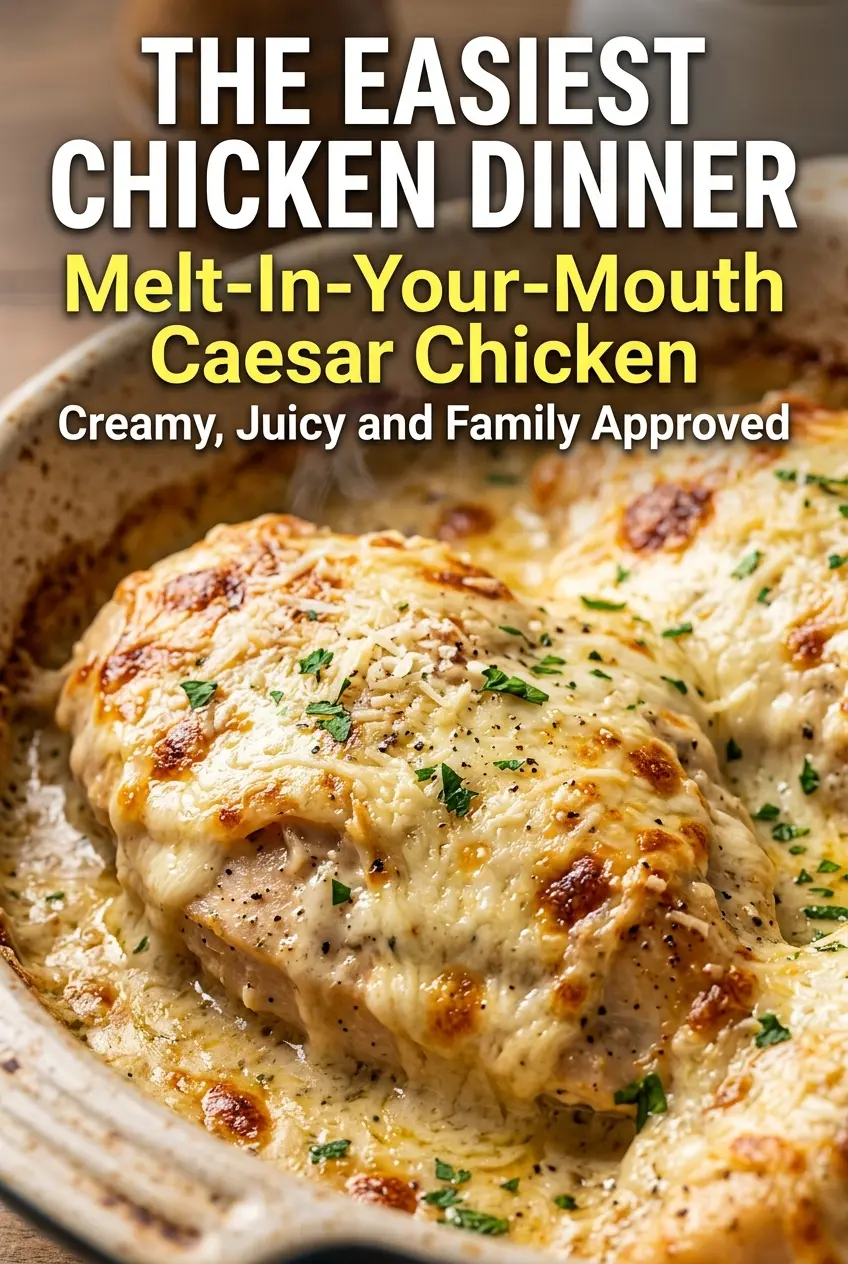
Melt-In-Your-Mouth Caesar Chicken
Ingredients
Equipment
Method
- Preheat the oven to 375°F (190°C).
- Lightly grease a 9×13-inch baking dish.
- Arrange the chicken breasts in the dish.
- In a bowl, combine Caesar dressing, Parmesan cheese, garlic powder, onion powder, black pepper, and Italian seasoning.
- Spread the mixture evenly over the chicken.
- Sprinkle the mozzarella cheese on top.
- Bake for 30–35 minutes, or until the chicken reaches 165°F internally.
- Broil for 2–3 minutes for a golden top if desired.
- Garnish with the parsley before serving.
- Serve with roasted vegetables, rice, or a fresh salad.
