
Roasted butternut squash and feta salad is the kind of bowl that disappears fast because every bite hits a different note: sweet caramelized squash, salty feta, crisp greens, toasted pecans, and tart cranberries. The warm squash softens the greens just enough, and the maple-Dijon vinaigrette pulls everything together without turning it heavy. It eats like a meal, but it still feels bright and balanced on the plate.
The part that makes this version work is the contrast. Roasting the squash in a single layer gives you browned edges instead of steamed cubes, and that matters more than almost anything else here. A little smoked paprika adds depth without making the salad taste smoky in an obvious way, and the vinaigrette leans on Dijon to keep the maple from going flat.
Below, I’ve broken down the one roasting mistake that ruins texture, the ingredient swaps that actually hold up, and a few ways to adapt this salad depending on what you’ve got in the pantry.
The squash came out caramelized on the edges and the maple-Dijon dressing tied everything together without making the greens soggy. I added the feta at the end like you said and it stayed nice and creamy.
Pin this roasted butternut squash and feta salad for a lunch or holiday side with caramelized squash, creamy feta, and a tangy maple-Dijon finish.
The Reason the Squash Needs Space on the Pan
The biggest mistake with roasted squash salad is crowding the pan. When the cubes sit too close together, they release steam and go soft before the edges have a chance to brown. You want deep caramelization here, because that roasted flavor is what keeps the salad from tasting like plain greens with toppings.
Cut the squash into even ¾-inch cubes so everything finishes at the same time. If the pieces are much smaller, they can collapse into mush by the time the edges color. Turn them once during roasting, but don’t keep stirring them around — every extra movement costs you browning.
- Butternut squash — Fresh squash is worth the peeling and cutting here because it roasts into tender, sweet cubes with crisp edges. Pre-cut squash works in a pinch, but check that the pieces are uniform so some don’t burn while others stay firm.
- Smoked paprika — This adds quiet depth and a little warmth to the squash. Regular paprika works too, but you’ll lose that subtle savory edge that makes the finished salad taste more layered.
- Feta — Buy a block if you can and crumble it yourself. Pre-crumbled feta is fine, but block feta has better moisture and a creamier bite, which matters when it hits warm squash.
- Pecans and pumpkin seeds — These are your crunch. Toasted nuts taste more pronounced and stay crisp longer, so don’t skip that step if you want the salad to hold its texture.
- Maple syrup and Dijon — The dressing needs both. Maple gives the sweetness, and Dijon keeps it from tasting one-note while helping the vinaigrette emulsify instead of separating immediately.
Roasting, Whisking, and Assembling Without Wrecking the Texture
Getting the squash deeply browned
Heat the oven fully before the squash goes in, then spread the cubes in a single layer on parchment. Tossing with olive oil, salt, pepper, and smoked paprika before roasting coats every surface and helps the edges color. Roast until the pieces are tender and the bottoms show deep golden browning; if they still look pale, give them a few more minutes instead of pulling them early. Under-roasted squash tastes flat and turns mushy once it hits the greens.
Building the vinaigrette
Whisk the olive oil, apple cider vinegar, maple syrup, Dijon, garlic, salt, and pepper until the dressing looks glossy and unified. Dijon is doing the heavy lifting here, because it helps hold the oil and vinegar together. If the dressing separates fast, keep whisking for another few seconds or shake it in a jar until it thickens slightly. Taste it before you dress the salad; if it tastes sharp on its own, it usually settles into balance once it meets the sweet squash and salty feta.
Assembling at the right moment
Put the greens in a wide bowl so everything can be tossed lightly instead of crushed. Add the squash while it’s still warm, then layer in the feta, pecans, cranberries, onion, and pumpkin seeds. Drizzle on the vinaigrette just before serving and toss gently, using the lightest motion you can manage so the squash stays in pieces. If you dress the greens too early, the leaves will wilt and the salad loses the crisp contrast that makes it work.
Three Practical Ways to Adapt This Salad
Make It Dairy-Free Without Losing the Contrast
Skip the feta and add sliced avocado or a sprinkle of dairy-free feta-style crumbles if you like that salty bite. You won’t get the same creamy tang, so lean harder on the dressing and keep the vinegar bright. The salad still works because the squash, nuts, and cranberries already carry a lot of the flavor.
Swap the Pecans for Another Crunch
Walnuts, almonds, or even pepitas can stand in for pecans. Toast them first so they taste full and stay crisp against the warm squash. If you use a seed instead of a nut, the salad gets a slightly earthier, less buttery finish, which can be a nice change.
Turn It Into a Bigger Meal
Add cooked quinoa, farro, or lentils to make this salad substantial enough for dinner. Grain salads need a little more dressing, so whisk up an extra half batch and toss it in while the squash is still warm. That warmth helps the grains pick up flavor instead of sitting there separately.
Storage and Reheating
- Refrigerator: Store the components separately for up to 3 days. Once dressed, the greens soften fast, but the squash and vinaigrette hold up well.
- Freezer: This salad doesn’t freeze well assembled. You can freeze roasted squash cubes on their own, then thaw and rewarm them before building fresh salad.
- Reheating: Warm the squash in a 350°F oven or a skillet just until heated through. Don’t microwave it for too long or the cubes turn watery and lose the browned edges.
Answers to the Questions Worth Asking
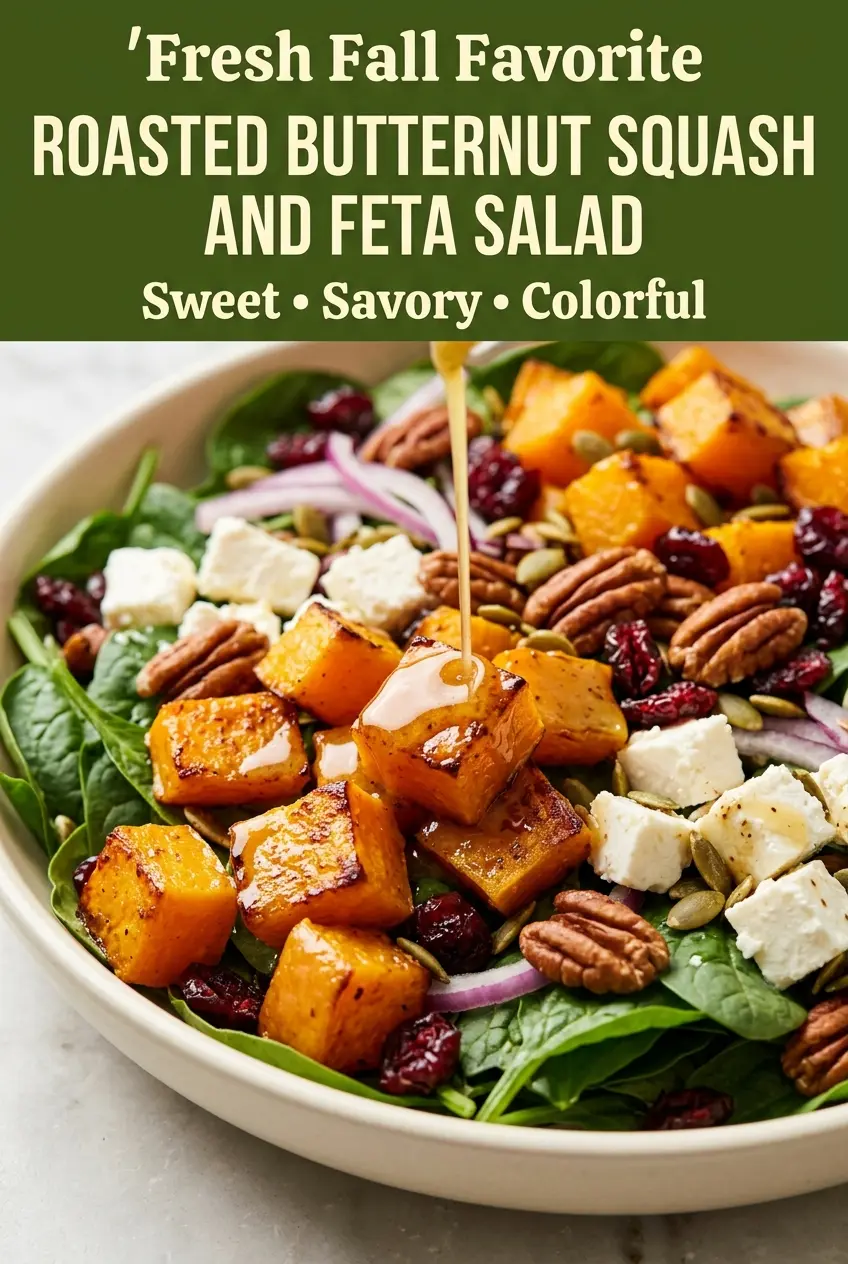
Roasted Butternut Squash and Feta Salad
Ingredients
Equipment
Method
- Preheat the oven to 425°F and line a large baking sheet with parchment paper.
- Toss the butternut squash with olive oil, kosher salt, black pepper, and smoked paprika until evenly coated.
- Spread the butternut squash in a single layer on the prepared baking sheet so the pieces have space to caramelize.
- Roast for 25–30 minutes at 425°F, turning once, until tender with deeply caramelized golden edges.
- Whisk the extra-virgin olive oil, apple cider vinegar, pure maple syrup, Dijon mustard, minced garlic, kosher salt, and black pepper until emulsified.
- Arrange the baby spinach or mixed greens in a large shallow serving bowl.
- Add the warm roasted butternut squash, crumbled feta cheese, toasted pecans, dried cranberries, thinly sliced red onion, and pumpkin seeds.
- Drizzle the maple-Dijon vinaigrette over the salad just before serving.
- Toss gently until lightly coated, keeping the roasted squash pieces intact as they mix.
